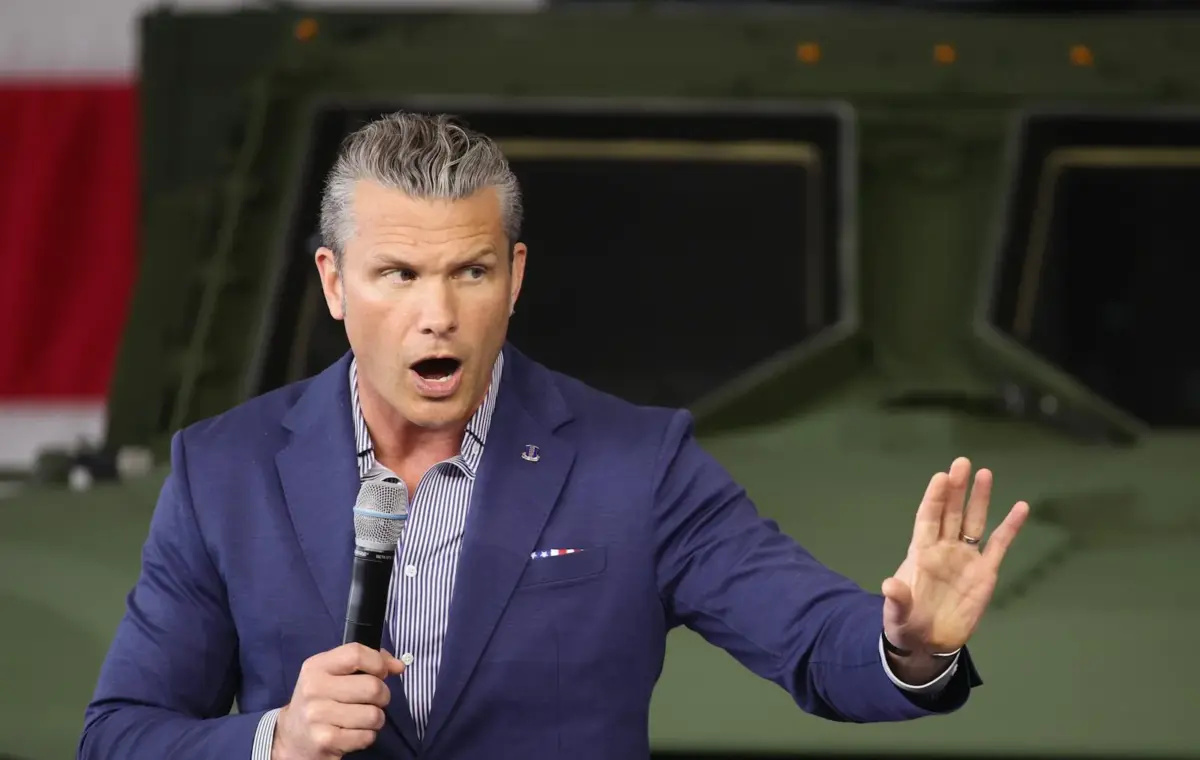
Defense Secretary Pete Hegseth’s decision to fire numerous top generals has put America’s military between a rock and a hard place in its war against Iran.
The Army has been without a chief of staff since Hegseth fired General Randy George in April; he has forced out at least three senior officers that were believed to be in the running to be George’s replacement, according to current and former officials that spoke with The New York Times.
All in all, Hegseth has forced out at least half a dozen senior officers, according to inside sources that spoke with the Times, who say this purge has damaged the service’s expertise and has eroded its top ranks.
Those affected include General James Mingus, the Army vice chief of staff that Hegseth forced out last year with little explanation, and General David Hodne, whom Hegseth hired and then fired just eight months later.
Other axed officers include Major General William Green, General Christopher Donahue, and General James Slife, the Air Force vice chief of staff.
General CQ Brown Jr. was also fired from his position as the chairman of the Joint Chiefs in the early weeks of Donald Trump’s second term, and General David Allvin retired early last fall.
Army Secretary Daniel P. Driscoll, the Army’s top civilian leader, is also believed to be on his way out in the coming months, according to the Times, which reported that Driscoll has already moved out of the large family house he was renting outside Washington.
“Hollowing out the most battle-tested and most lethal, proven leaders in a time of war means troops are less safe and we’re less likely to win,” Representative Pat Ryan, Democrat of New York and a former Army intelligence officer, told the daily newspaper. “We’re doing generational damage to the sense that the military is an apolitical trusted organization that swears an oath to the Constitution, not to a president.”
Hegseth’s decision to undermine top military leadership has left a definitive vacuum in the highest echelons of the Army. At the time of Hegseth’s confirmation, there were 10 four-star generals on active duty. Now, there are just five—the smallest number to lead the service in years.
Meanwhile, the Army’s Middle East bases have been battered by Iran’s seemingly endless supply of cheap drones since late February. The conflict has so far killed at least 18 U.S. servicemembers and wounded more than 776 others. It has also taken an enormous toll on daily life in the U.S., inflaming the cost of practically everything as shipping companies contend with rising oil costs.
The Financial Times reported Tuesday that farmers in America’s Corn Belt region are facing their toughest economic crisis in 40 years. Last month, the American Farm Bureau Federation, an industry group, projected that without government intervention, farmers growing nine principal crops will face $32 billion in losses in 2027, after losing an estimated $31 billion in 2026.
“This is the worst financial downturn in the sector since the 1980s,” John Hansen, president of Nebraska Farmers Union, told FT.
Matt Bailey, who grows corn and soybeans in eastern Nebraska, told FT the strain was a result of rising input costs. Bailey said that 10 years ago, phosphorus-rich fertilizer used at planting time cost $470 per ton; the same product now costs more than $900. “Where do you start with that? How do you budget for that?” Bailey said.
The alarm bells have been blaring for months. Trump’s war with Iran halted trade through the Strait of Hormuz just as farmers in the Northern Hemisphere would typically order fertilizer for the upcoming planting season. The American Farm Bureau Federation has warned that the shock to the fertilizer supply chain would drive prices even higher and threaten food security and national security.
That’s not the only reason farmers may not be happy with Trump. Last week, the American Farm Bureau Federation voiced concerns that Trump’s plan to import tariff-free beef would create long-term damage to the already struggling American beef industry. On Monday, the group urged the Trump administration to resume trade talks with Canada after Trump detonated negotiations.