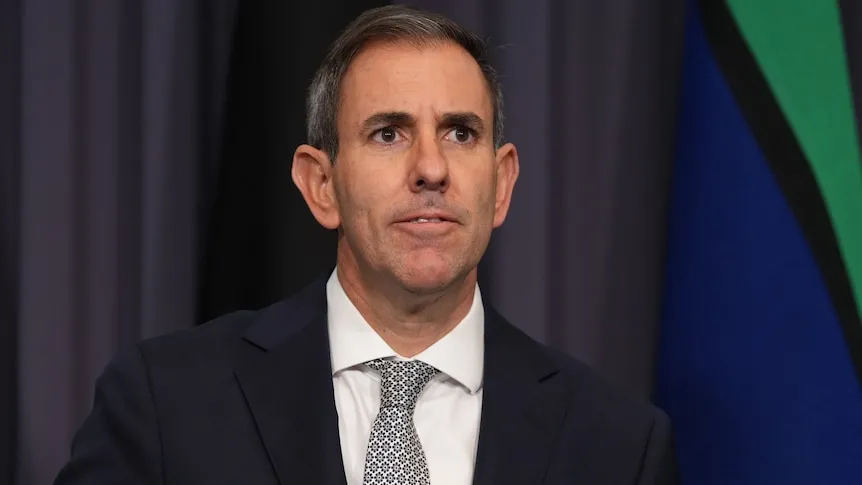
Treasurer Jim Chalmers has proposed a workaround to the minimum discretionary trust tax. (ABC News: Ian Cutmore)
The federal government has proposed a workaround for small businesses who were worried about paying state stamp duties when they restructure out of discretionary trusts to avoid the proposed minimum tax.
They will instead be able to restructure their affairs without actually changing their trust structures, remaining exempt from the tax as long as they do not vary their distributions.
The draft legislation is open for consultation for two weeks.
Small businesses could avoid being stung by stamp duty when they restructure to escape Labor's minimum tax on discretionary trusts, under a workaround proposed by Treasurer Jim Chalmers.
Draft laws to enact the 30 per cent trust tax were released for feedback on Thursday. The tax is the last of the major tax changes from the May federal budget to be legislated.
Fears about stamp duty had been raised with the government during consultation, with small business lobby COSBOA warning those who used discretionary trusts could be left with "an impossible choice between a higher tax burden or a costly restructure".
The workaround would allow trustees to avoid an official restructure, exempting them from the tax if they agreed to shift their existing beneficiaries to a fixed-income structure.
Stamp duties are collected by states and territories when property is transferred or transacted.
Financial assets count as property, so small business restructures usually trigger stamp duty.
Small businesses affected by the change are in limbo as states decide whether to waive stamp duty fees.
Many businesses were expected to restructure to avoid the new trust tax.
Labor's tax applies only to discretionary trusts, a type of financial vehicle which gives their owners flexibility to shift income between an array of companies and beneficiaries and across time.
The government has argued the trusts are used to minimise tax.
By restructuring into a company structure or a "fixed" trust, which doles out income in steady proportions, trustees would forfeit the flexibility benefits but avoid the new tax.