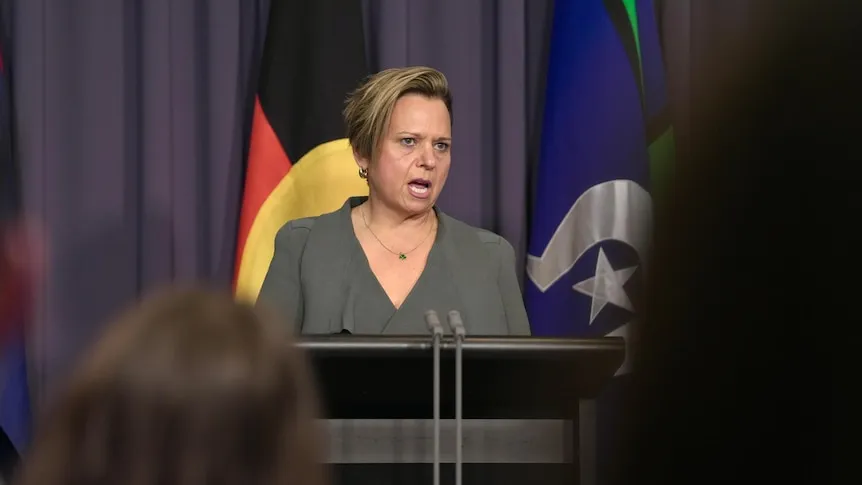
Attorney-General Michelle Rowland outlined a second tranche of privacy laws for consultation. (ABC News: Simon Beardsell)
The attorney-general says the government is not currently considering an import ban on smart glasses, which have the ability to record covertly.
It comes as the government reveals its draft privacy reforms, which include a "right to erasure" from large social media platforms and search engines.
The government says it plans to rollout an initiative called IDLock to give people more control over how their identity documents are used for verification online.
The federal government is not currently considering an import ban on smart glasses but has signalled the devices could be restricted by local councils, as it unveils a draft of sweeping new privacy laws including the "right to erasure".
Attorney-General Michelle Rowland today released draft legislation designed to bolster privacy protections, as well as address risks related to artificial intelligence (AI) and wearable tech such as smart glasses.
She also announced a new initiative, IDLock, to allow individuals to have more control over how their personal documents were being used for verification online.
Ms Rowland acknowledged community concerns about potential harmful use of smart glasses but said the government was not currently planning an import ban, despite calls from the Greens and independents to halt imports for 12 months until privacy laws are strengthened.
"We are not specifically, in this consultation, consulting on an import ban," she told reporters today.
"The Privacy Act consultation does not go to issues of import restrictions; however, we are not ruling anything out in terms of other measures we can take."
The government's consultation paper, released alongside the draft legislation, highlights the laws are designed to be technology-neutral to apply to potential privacy breaches from emerging technologies, including smart glasses.
Last week, Brisbane City Council banned people from secretly filming with AI smart glasses and other wearable recording devices at public pools.
"I would like other councils to consider what kind of public areas they have in their sphere of influence where this could apply," Ms Rowland said, citing council-run childcare centres as an example.
Education Minister Jason Clare's office told the ABC smart glasses were already covered by the ban put in place, saying any personal device capable of taking, storing or transmitting an image is not allowed in childcare centres.
The devices, worn as eyewear with a small computer embedded in them, have been labelled "pervert glasses" by critics because they can covertly record and live stream interactions.