Account subscription benefits alongside Premium Stories, Editorials,
Opinions and more. Unlock these with Subscription
The View From India
Looking at World Affairs from the Indian perspective.
First Day First Show
News and reviews from the world of cinema and streaming.
Today's Cache
Your download of the top 5 technology stories of the day.
Science For All
The weekly newsletter from science writers takes the jargon out of science and puts the fun in!
Data Point
Decoding the headlines with facts, figures, and numbers
THEdge
At the cutting edge of education and careers
Health Matters
Ramya Kannan writes to you on getting to good health, and staying there
Gender Agenda
Stories from beyond the binary.
The Hindu On Books
Books of the week, reviews, excerpts, new titles and features.
Updated – August 28, 2026 09:43 pm IST – NEW DELHI
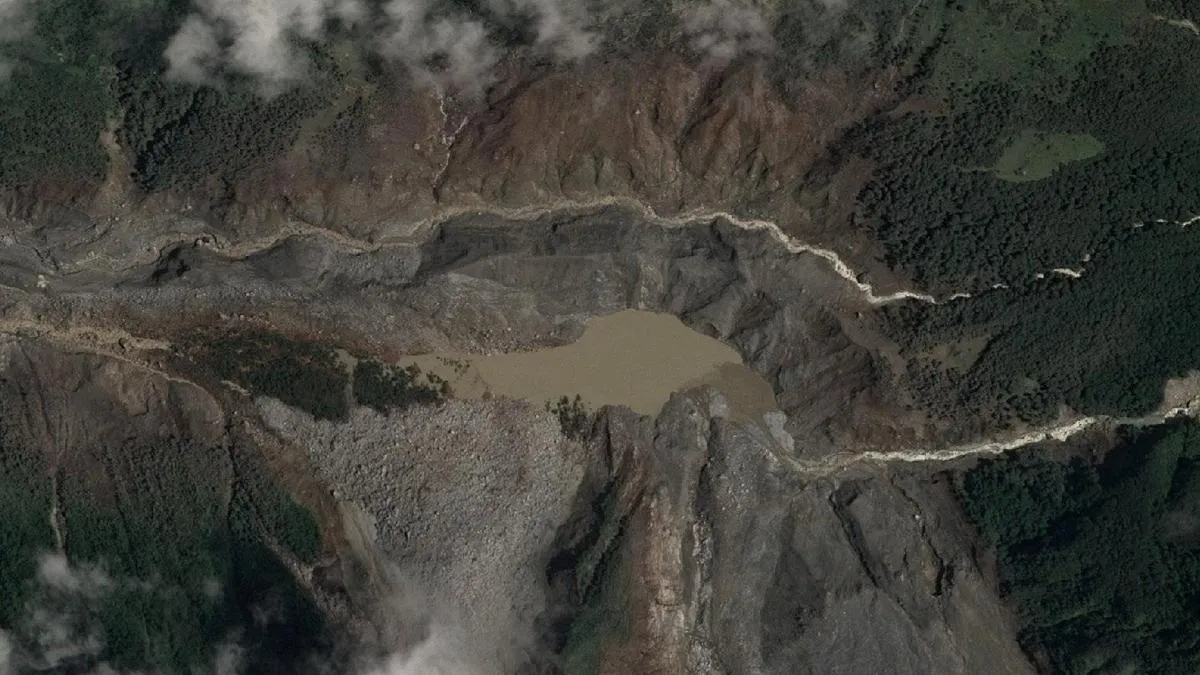
A satellite image shows one of two lakes at the site of the glacial collapse in the border area between Nepal and Tibet Autonomous Region, China, on August 28, 2026.
| Photo Credit: Reuters
Two more glacial lakes have formed in Nepal, near the apparent source of the ice-rock avalanche that triggered flooding in Nepal’s Bhote Koshi-Trishuli river system on Wednesday (August 26, 2026).
Also read: Nepal flash flood updates on August 28, 2026
While the formation of the lakes is known, information on the potential water outflow is unavailable, said Krishna Vatsa, Member and Head of the National Disaster Management Authority (NDMA). “One is 19.80 hectares, and the other is 7.28 hectares. We don’t have any estimates of the volume, but there are moraines [piles of debris deposited by a moving glacier],” he told The Hindu. “These are lakes that have formed in Nepal, and we don’t have direct knowledge of what’s happening there. We need to keep monitoring. These are natural formations, and so we can’t entirely predict how they evolve,” he added.