By STACY LIBERATORE, US SCIENCE & TECHNOLOGY EDITOR
Published: 15:10 BST, 31 August 2026 | Updated: 18:19 BST, 31 August 2026
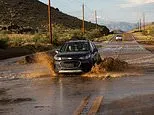
Flood watches have been issued for nearly seven million Americans as torrential rain threatens to unleash sudden walls of water with little warning.
Parts of Arizona, Utah and Colorado were under alerts Monday, with many remaining in effect through the evening and covering Phoenix, the Grand Canyon, Zion National Park, Moab, Aspen, Vail and Durango.
It comes after one hiker was found dead and at least 14 others were reported missing when flash floods tore through the Grand Canyon Saturday afternoon.
Deep monsoonal moisture, repeated storms and ground saturated by earlier rain have created the dangerous conditions.
Parts of southern Arizona could receive one to three inches of rain, with the strongest storms dumping more than an inch in an hour, the National Weather Service said.
Forecasters warned that runoff could transform dry washes and narrow slot canyons into ‘raging killer currents’ while overwhelming roads and low-water crossings.
Rivers, creeks, urban drainage systems and recent wildfire scars also face an increased risk of flooding.
Residents and tourists were told to monitor alerts and reconsider plans to hike, boat or paddleboard in slot canyons and normally dry washes.
Parts of Arizona, including the Grand Canyon (above), Utah and Colorado, were under flood watches on Monday
The flooding threat is being caused by deep monsoonal moisture fueling repeated, slow-moving thunderstorms.
Some storms could dump more than one inch of rain per hour, with isolated totals of one to three inches.
Soil already saturated by earlier storms cannot absorb much more water, causing rapid runoff into rivers, creeks, dry washes and slot canyons.
Steep terrain, low-water crossings, poor urban drainage and wildfire burn scars further increase the risk of sudden flash flooding.