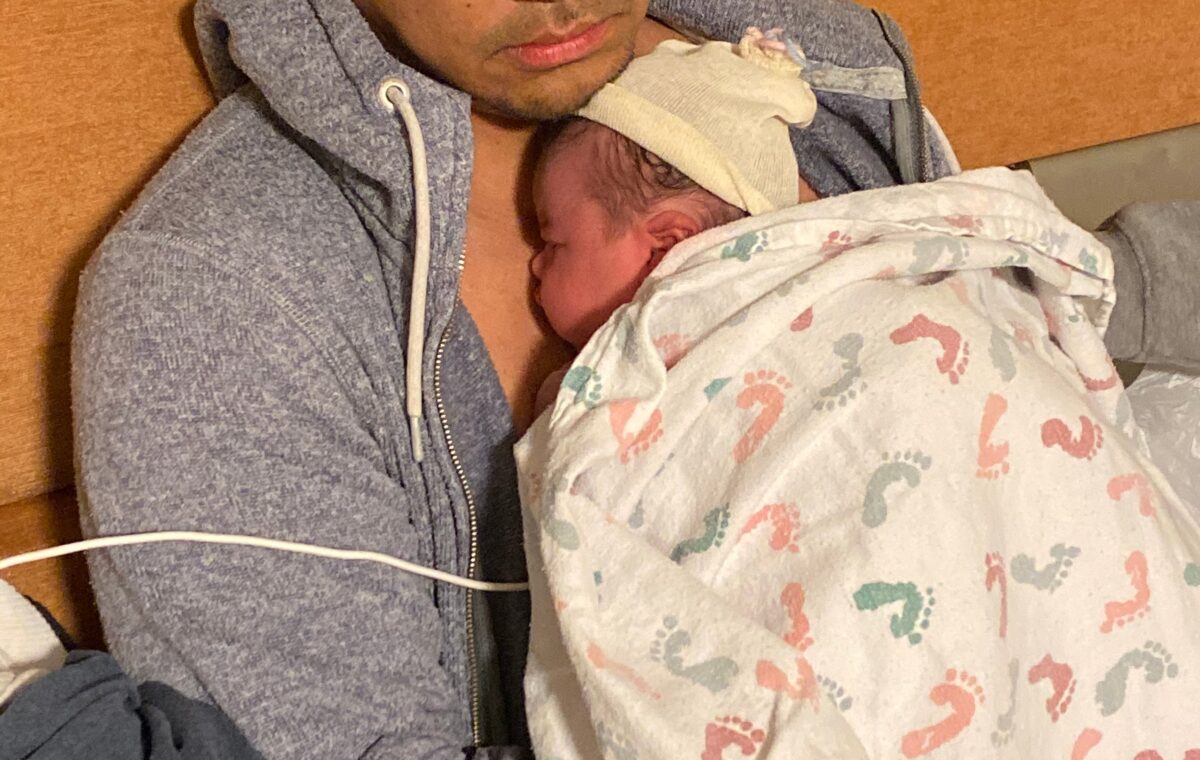
His name was Henry. A beautiful baby boy, born in a San Diego hospital in February.
Once we got the call from our adoption agency that Henry’s birth mother was in labour, my husband and I grabbed our go-bag, jumped into our car, and drove throughout the night – over 400 miles from San Francisco to San Diego – arriving just in time to witness his birth and cut the umbilical cord.
By 3am, I was living the greatest moment of my life, holding him in my arms for his first skin-to-skin, feeling his first few breaths in rhythm with mine. I can relive those 16 minutes over and over again; it was the happiest I’ve ever been.
I was finally a father. This was the baby we’d been waiting for, and the awful, ridiculous, painful adoption journey that we’d been on for the past four years was coming to an end.
The next day, his birth mother signed off on her rights, giving us her blessing to care for her child moving forward. We were cleared to leave the hospital with our new baby.
It wasn’t long, however, before we got a call from our social worker informing us that the father of the baby had come back just to contest the adoption. He did not want two “f*****s” to raise his son.
For the brief time we had Henry, I called one lawyer after another, looking for any way to keep custody. The answer was the same: “Right now you’re a glorified babysitter and if the baby’s father is unwilling to sign his rights, you have to give the baby back. Otherwise, you’ll be arrested for kidnapping.”
A few days later, I was handing Henry back to his mom and grandmother. The baby’s father was nowhere to be found. Henry gripped my thumb one last time before he was put into their car, my heart going with him.
We never saw Henry again. I wouldn’t wish the pain and suffering on anyone.
My husband and I have still barely recovered from losing Henry, but that wasn’t the end of our attempts to adopt. We tried for four more years after that, before officially calling it quits in 2024.
In total, that’s eight grueling years of background checks, financial and medical evaluations, home visits and interviews, parenting classes and Baby CPR and First Aid certifications, over $50,000 out of pocket for social workers and lawyers, and so many painful failed matches with birth mothers.
This is the dark side of private adoption that rarely gets discussed publicly. Just keep waiting, just keep paying, and maybe a birth mother will choose you and you’ll get to be a parent.
This disproportionately affects the LGBTQ+ community. There are 2.57 million LGBTQ+ adults in the U.S. parenting children, and same-sex couples are seven times more likely to adopt and 10 times more likely to foster than non-same-sex couples.
Adopting from the nonprofit foster care system is theoretically more accessible, but four in 10 (41%) LGBT adults disagree or strongly disagree that it’s equally accessible to everyone, regardless of gender identity or sexual orientation. And more than a third of LGBT adults say the discrimination they may face within the foster care system is a major barrier between them and a child who needs a home.
In 2024, after eight years of trying to prove again and again that we were good enough to be parents, we had nothing to show for it but heartache and regret. We didn’t have eight more years to waste.
Source: Read the original article on www.huffingtonpost.co.uk