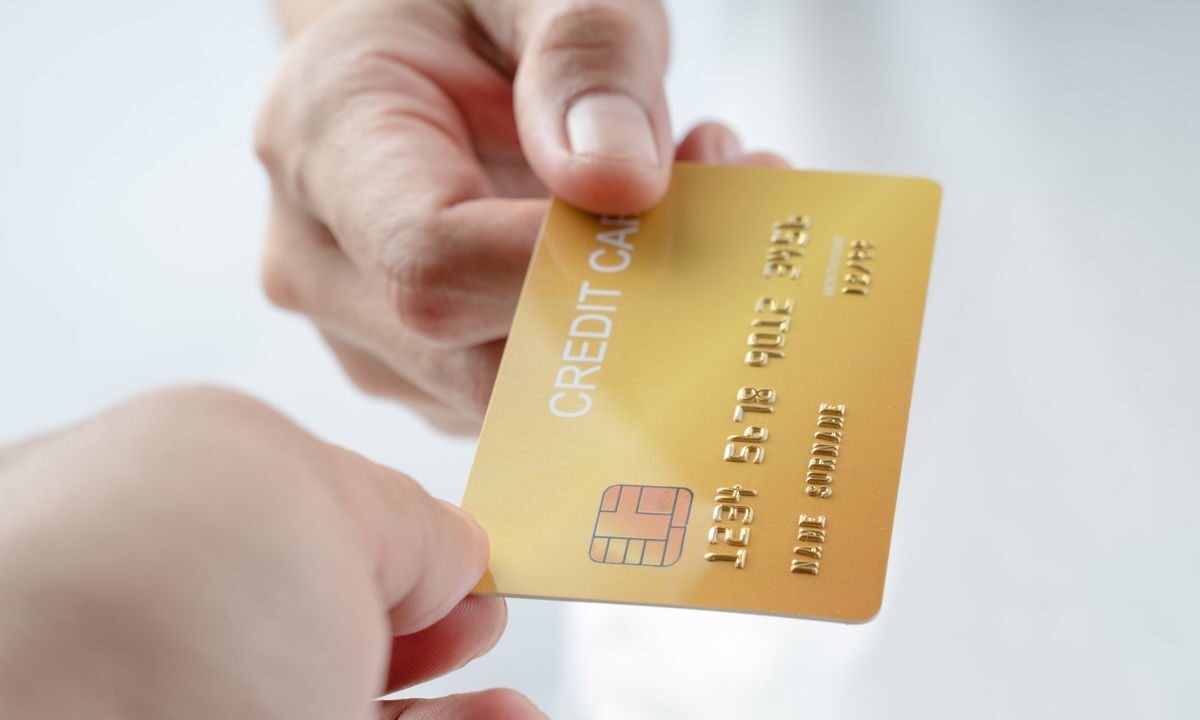
Back from the dead to pay for someone's grocery run?
When you purchase through links on our site, we may earn an affiliate commission. Here’s how it works.
For a layman, the date printed on a credit card looks like a hard stop, but that might not always be the case.
Researchers at the University of Massachusetts Amherst found that a 'zombie card' past its expiration date can be persuaded to complete a contactless purchase at a real checkout terminal, creating a real security threat.
The irony is that it is not that EMV cryptography is not bypassed in any way, but rather that card expiry is enforced in a different way for contactless payments, as a policy check between two parties rather than as a fixed property of the card itself, and interestingly, the parties do not always know who is the one checking.
Building on the last part, a contactless transaction involves a card, a point-of-sale terminal, the merchant's bank, a card network, and the issuer. Each holds a fragment of the decision that eventually results in a successful or declined card transaction.
The EMV contactless flow is only selectively authenticated: some fields travel between the card and terminal in unencrypted text and are linked to cryptographic verification later, opening a potential attack vector for users with physical access to an expired card.
The exposure here is not that those fields can be read, since the expiry date is printed on the card anyway, but that it can be changed with relative ease. The Application Expiration Date that the terminal reads sits in the unprotected portion.
In the Visa configuration the team tested, that field is not covered by the card's digital signature and is subsequently not cryptographically bound to the expiry value the issuer sees in the online authorization request.
Sign up to the TechRadar Pro newsletter to get all the top news, opinion, features and guidance your business needs to succeed!
While this should not be the case, it opens an attack vector for a device between the card and the terminal that processes the charge by simply modifying the expiry value to one that is still valid. The issue is compounded by a second issue: cards carry an expiry date inside the digital certificate used to establish the card-to-terminal conversation, and researchers have found that the certificate outlasts the printed date on the plastic. In essence, a check that might have caught the problem is looking at a clock set further ahead.
The scope of the attack, however, is narrow: it affects Visa contactless cards only, with Mastercard, Discover, and American Express rejecting the altered expiry outright. It also requires physical access to the card and two smartphones to pull it off, making it a slightly more complex endeavor, to say the least.
The irony is that EMV does have a protection that would essentially undo such an attempt altogether: Relay Resistance Protocol, which measures timing to detect an inserted relay and can stop the transaction altogether, but it remains optional and was not enabled on any of the terminals or cards the researchers tested.
The team notified Visa and the relevant banks in May 2025 and again in December 2025, supplying a reproduction guide, transaction traces, and a video. Visa's report passed initial triage, and the company's red team was reproducing it.
However, as of publication, neither Visa nor the notified banks had confirmed a mitigation attempt, and Visa also did not respond to a press request from The Register for comment.