Keeping pace with Hollywood’s awards horserace. Sign up for the newsletter here.
Find this story in your account’s ‘Saved for Later’ section.
Keeping pace with Hollywood’s awards horserace. Sign up for the newsletter here.
With SubwayTakes, YouTube is having its breakthrough moment — a tipping point that, years from now, will mark the moment the television Establishment finally welcomed the creator economy, or at least its more polished YouTube-facilitated shows, into Hollywood as its equal.
That’s certainly the story YouTube would like to tell, anyway. CEO Neal Mohan argued in a May guest column for The Hollywood Reporter that creators “deserve the same acclaim as other creative professionals.” So when SubwayTakes landed a Primetime Emmy nomination for Outstanding Short Form Comedy, Drama or Variety Series last month, it seemed to offer an end to years of supposed snubbing. “A milestone for the entire creator community,” host Kareem Rahma called it. But the Emmy nod isn’t, in itself, a milestone. What it actually represents is much smaller: a win for YouTube’s awards campaigning, confined for now to a category that’s spent most of its existence as the Emmys’ junk drawer. It may well be a prelude to YouTube becoming a larger force in Emmys land, but there’s no guarantee that will happen.
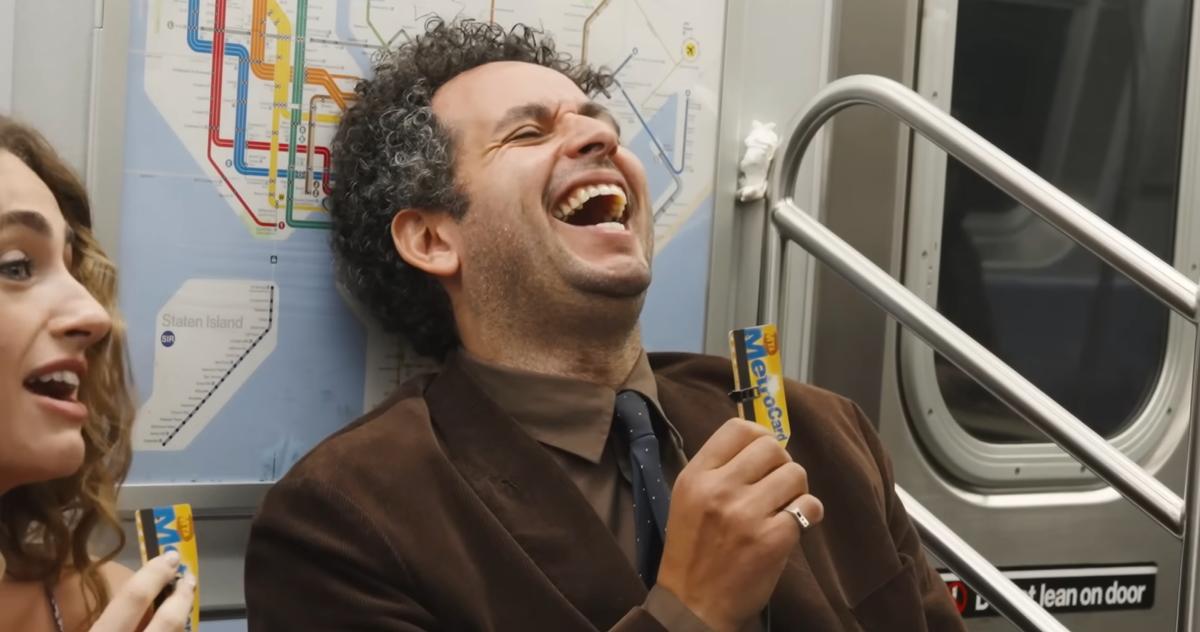
SubwayTakes’s nomination is indeed a triumph for the show, an archetype of the new-media circuit in which Rahma holds court on a New York City subway car, receiving comedians, celebrities, occasional politicians, and even, from time to time, non-fame-seeking everyday New Yorkers, all bearing ostensibly hot takes that are more often lukewarm. (Every so often you do get a genuine scorcher, like Jennifer Lopez’s declaration that you gotta be born in New York — a city famously made up of immigrants — to qualify as a real New Yorker.) But SubwayTakes is the lone breakthrough in a slate YouTube pushed as part of its second formal Emmys campaign. Their cohort is universally nonfiction, typically interview- or stunt-based, and similar to traditional talk shows and the kind of infotainment that once filled cable channels like History and Discovery. All are designed to be optimized as social-media clips, formats that now make up a sizable chunk of the YouTube ecosystem.
Aside from SubwayTakes, YouTube’s contenders included short-form category runs for Julian Shapiro-Barnum’s Celebrity Substitute and Cleo Abram’s HUGE* If True, a Hosted Nonfiction Series pursuit for Michelle Khare’s Challenge Accepted, and pushes for Brittany Broski’s Royal Court and Sean Evans’s Hot Ones in Outstanding Variety Series, the category where Saturday Night Live, Jimmy Kimmel, and Stephen Colbert compete. Compare this to last year, when YouTube pushed just three shows. Before the platform got into campaigning — holding FYC events, organizing publicity tours, and hiring an awards strategist — hopeful YouTubers generally had to take matters into their own hands, self-submitting and funding the push themselves, as Hot Ones previously did for two Emmys cycles.
The main complication with the SubwayTakes narrative is that it isn’t technically the first pure YouTube show to get a Primetime Emmy Nomination. Setting aside other Emmy branches — Ms. Rachel picked up her first Children’s & Family Emmy nomination last year; Cleo Abram has already been nominated at the Daytime Emmys; and Johnny Harris’s Newpress won a craft category at the News & Documentary Emmys, making Harris one of the first independent journalists to win there — digital-native shows like Epic Rap Battles of History and Honest Trailers, both products of an earlier YouTube era and still publishing today, were already recognized in an earlier iteration of this category as far back as 2016. This year, SubwayTakes shares its category with YouTube native The Randy Rainbow Show and its politically flavored musical spoofs, which have now been nominated six times since 2019.
But even a SubwayTakes win in 2026 wouldn’t constitute the paradigm shift YouTube is trying to position it as. The issue is the category, Outstanding Short Form Comedy, Drama or Variety Series. Conceived in 2011 as part of the Primetime Creative Emmys — the more specialized, technical cousin to the main awards ceremony that usually takes place the weekend before — under the original name Outstanding Short-Format Live-Action Entertainment Program, the slot honored a mishmash of programming: early online shows led by Hollywood-familiar talent like Between Two Ferns With Zach Galifianakis (distributed through the Will Ferrell and Adam McKay co-founded Funny or Die), live-event programming like the Super Bowl halftime show, and digital offshoots of existing TV shows like 30 Rock: The Webisodes. The category was retired in 2016 and replaced with two short-form categories in the main Primetime Emmys, a Comedy/Drama offshoot that mostly covered web-series spinoffs of existing shows (like Fear the Walking Dead: Flight 462), and a Variety Series bucket that started accommodating YouTube-first programming made by digital-native Hollywood outsiders including Honest Trailers and Epic Rap Battles of History. The two categories merged again in 2021.
The wobbly, back-and-forth nature of this category’s existence reflects the Emmys’ not particularly committed relationship with anything that doesn’t resemble traditional television. The category feels like an afterthought, a dollar-store bucket where all kinds of stuff gets tossed together with little making sense side by side. It can include online promos for Better Call Saul and Only Murders in the Building, late-night-show extras, Carpool Karaoke (the record holder, with seven noms and five wins), and, strangely, I Think You Should Leave, nominated for seasons two and three and winning only for the latter. Because just about anything can get slotted in there, it makes a natural home for SubwayTakes to compete and break through. But it’s hard to shake the sense that not much thought goes into who gets recognized in this category — or that the recognition carries much weight.
What we’re really looking for when it comes to a sea change in the relationship between the Emmys and YouTube is an equivalent to Netflix getting Establishment validation of the streaming model in 2013, when House of Cards earned acting, directing, and Outstanding Drama nominations. For YouTube, then, the bar to clear is recognition among the marquee categories. (A shrinking pool, sadly, given how the Emmys keep shoving more categories off the telecast.) Hot Ones and Royal Court getting nominations in the Outstanding Variety Series slot alongside, and possibly above, The Daily Show, Jimmy Kimmel Live!, and SNL would represent a real gate-crashing moment, not just an instance where the Emmy Establishment welcomes creators by shoving them into a back room.
YouTube and the creator economy face a taller task than Netflix once did. Netflix was disruptive, but its earliest originals were hardly alien to the TV Establishment. Despite their digital provenance, House of Cards and Hemlock Grove (which got Main Title Music and Visual Effects noms in 2013 as well) were scripted, long-form episodic programs that emerged from the same basic production ecosystem as traditional television: conventional writers’ rooms and creative hierarchies, professional actors and directors, and unionized crews. Netflix financed and released content differently, but it was still making television as we know it. On YouTube, even the most polished, television-shaped shows are a different kind of beast: different formats mostly made by talent operating outside the traditional Hollywood structure. While the Emmys’ slowness to warm up to the creator economy is partly old-fashioned snobbery, it also reflects a more existential question about what community the Academy ultimately serves.
Creator-economy advocates would argue that the stuff they produce is where younger audiences (and maybe, eventually, the rest of us) are going, so it’s only logical that the Emmys should head off this inevitability. But separate from being a historical record of television, the Emmy Awards are also fundamentally a work event: the industry’s once-a-year gathering to recognize its labor pools. For now, YouTube and the slices of the creator economy it represents largely exist outside that world. (Though the boundaries are increasingly porous as television personalities move in the other direction, with former Daily Show host Trevor Noah and former CNN anchor Don Lemon building their own creator businesses after their network contracts ended.) Bringing creators fully into the Emmys, then, would signify a more fundamental change in what, or more specifically whom, they are supposed to represent than a bid for relevance.
Creators, moreover, don’t really need the Emmys to add further value to their businesses, especially at the rate things are going with traditional television. That community is already navigating a period of serious instability, from shrinking production numbers and megamergers likely to shed more jobs to Paramount threatening to pull out of California. If YouTube and the creator economy believe themselves to be the future of television, all they need to do is wait it out. Why should the Emmys help usher that along?
For YouTube, the logic behind going through the trouble of campaigning is straightforward: Some of its premiere talent covets this kind of recognition, so backing them makes sense if you’re building a reputation as the best home for digital creators. More broadly, it also fits into YouTube’s larger effort to position itself as the “future of television,” a brand push it’s been pursuing for a few years now. It is of a piece with the recent deal YouTube struck with NBCUniversal to add Peacock programming to its premium tier at no extra cost; the deal to stream the Oscars starting in 2029; all the sports rights it’s been gobbling up, including NFL games; and ongoing efforts to build out a presence at Cannes and TIFF. All this plugs into YouTube’s macro-strategy of deepening relationships with blue-chip advertisers, years after they were briefly scared off by the graphic videos and misinformation circulating through its inventory, as the platform is now figuring out how to deal with the deluge of AI slop. Getting to claim that it’s home to Emmy-recognized creations only adds to its value narrative, especially useful now that the Emmy-winning Netflix, too, is nipping at its heels for those same brand dollars.