This is read by an automated voice. Please report any issues or inconsistencies here.
See more from the L.A. Times in Google Search. Set us as preferred
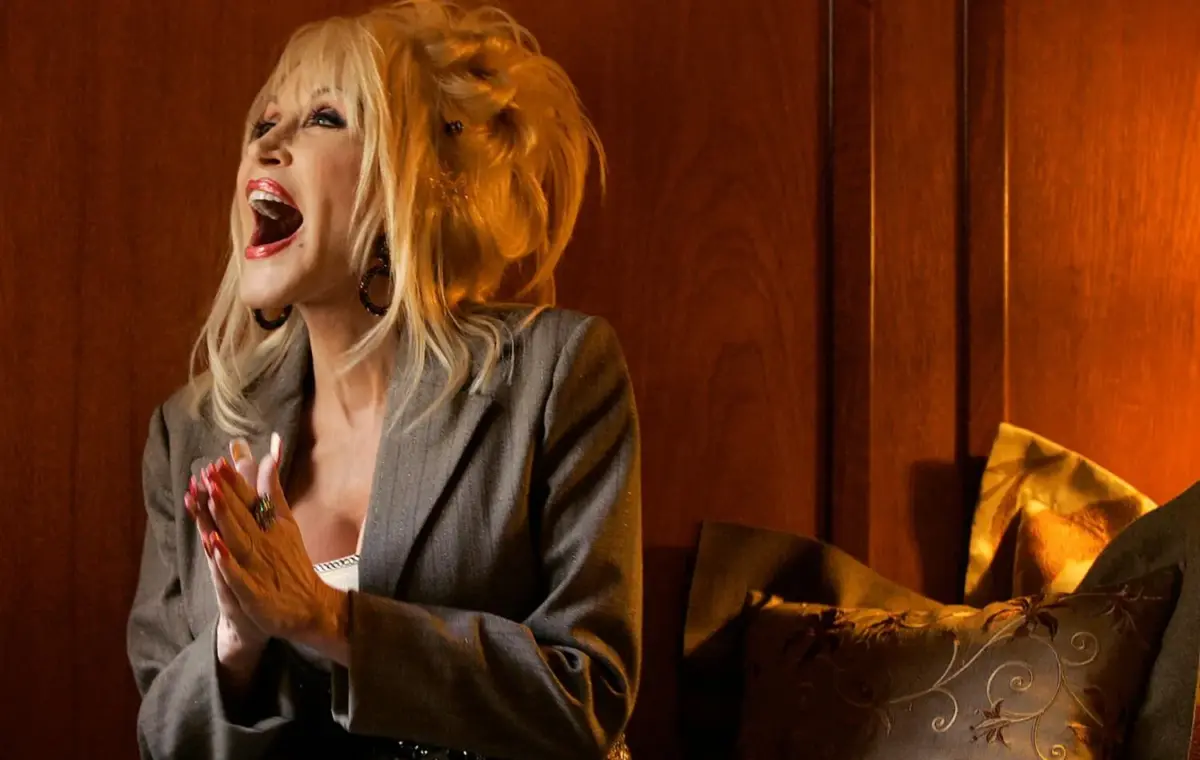
Dolly Parton, the singer and songwriter from Locust Ridge, Tenn., who willed herself into being the very symbol of country music stardom, has died in Nashville.
Parton died peacefully Tuesday, her nephew Bryan Seaver announced in a press release shared with The Times. Seaver also announced her death in a video shared to the singer’s Instagram page. She was 80.
The fabled entertainer died after a series of health issues that led her to postpone several performing commitments. In September 2025, she missed the announcement of a Dollywood attraction to recover from a kidney stone. Later that month she delayed her residency at Caesars Palace — her first residency on the Las Vegas Strip in more than 30 years — due to unspecified “health challenges.”
Over the course of a flamboyant 50-plus-year career as a songwriter, recording artist, actor and businesswoman, Parton reinvented the American success story through a combination of grit and wit, faith and sex appeal, virtuosity and plainspokenness, empathy for the human condition and plastic surgery.
She seized on the roles that American culture allowed for women in the spotlight — waif, trollop, fallen woman, country girl in over her head — and played them to the hilt, achieving artistic and financial heights few female performers have ever reached. By the time of her death, she was said to be one of the few things that Americans of most every persuasion could agree on.
One of the most honored musicians in modern history, Parton earned 10 Grammy Awards, two Academy Award nominations, a Primetime Emmy, 10 Country Music Assn. awards, and in 1999 she was enshrined in the Country Music Hall of Fame.
In 2005 President George W. Bush presented Parton with the National Medal of the Arts, and a year later she was given a Kennedy Center for the Arts Award for her lifetime contribution to the arts. Parton logged some 25 gold or platinum records and 25 No. 1 songs on the country chart. Parton also won a Liseberg Applause Award, the biggest prize in the theme park industry, for her fabled tourist attraction Dollywood.
Parton’s rags-to-riches tale reads like a classic country music story-song. But before it became mythical, it was only incredibly hard.
Parton bowed out of contention for the Rock Hall of Fame, but her strident independence, embrace of artifice and reinvention all scream rock ‘n’ roll.
Dolly Rebecca Parton was born in Locust Ridge, Tenn., in the Great Smoky Mountains, on Jan. 19, 1946. Her father was a tobacco sharecropper and she was the fourth of 12 children. In her autobiography, “Dolly: My Life and Other Unfinished Business,” Parton related how her parents were so poor they paid the doctor who delivered her with a sack of cornmeal.
Raised in a one-room cabin with no electricity, she listened to the Grand Ole Opry on a battery-powered radio. When she was 7 she started writing songs; a year later she picked up the guitar. At 10 she was singing on a Knoxville radio and TV program, “Cas Walker Farm & Home Hour.”
The Parton family was musical, and there were always banjos, fiddles, mandolins and guitars around the cabin. Her voice, a birdlike soprano with an animated trill, hadn’t changed much from her youth: “I sound like a little girl singing all these Lord-awful songs,” she told “Fresh Air’s” Terry Gross in 2001.
On a Friday night in 1964, Parton became the first in her family to graduate from high school. The next afternoon she was on a bus heading for Nashville, targeting a career in country music.