Published
Sep 5, 2026 9:00 AM EDT
Get the Popular Science daily newsletter💡
Breakthroughs, discoveries, and DIY tips sent six days a week.
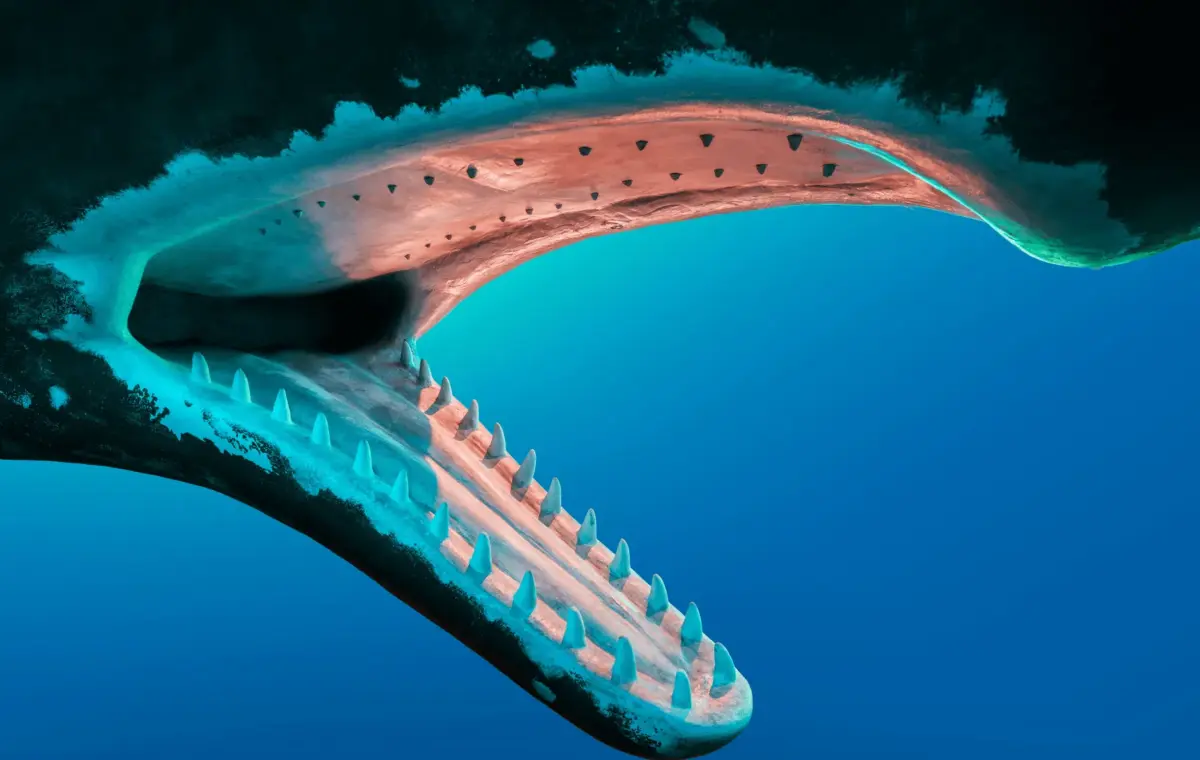
Imagine this: A giant sperm whale (Physeter macrocephalus) has just swallowed you whole.
It might seem like a bizarre scenario to envision, but you’d hardly be the first. In the Bible’s Book of Jonah, the belly of a whale is the setting for the prophet Jonah’s three days of repentance and prayer. In the 1940 Disney film Pinocchio, Geppetto manages to rig up a cozy living space inside the stomach of Monstro the sperm whale, complete with amenities including a small fire and a fishing setup for seafood that drifts in. Even his pet goldfish, Cleo, is swimming inside the microcosm of her highly ironic fishbowl.
Surviving inside of a giant sea creature has become a classic “fish tale” of human resilience and redemption. In the latest reimagining of this theme, the upcoming movie Whalefall, a scuba diver is swallowed by a sperm whale and has exactly one hour to escape before his oxygen runs out.
But for all our fascination with extended whale-squatting, one fact remains: it has never actually happened. The few close calls with whale ingestion have involved humpback whales, a species physically incapable of swallowing a person. In all cases, the whale spat the person up as quickly as you might cough up a bug that flew into your mouth.
“I wouldn’t call that swallowed,” Shane Gero, a whale biologist and Lead Biologist at Project CETI, tells Popular Science. “I would call that a mistake by both the mammals involved.”
So, if it’s never actually happened, is it even possible?
Whalefall is the film adaptation of a 2023 novel of the same name by Pulitzer Prize winning author Daniel Kraus, and arrives in theaters on October 16.Protagonist Jay Gardiner is on a diving expedition to find the remains of his late father, a mariner who died at sea. Suddenly, Jay is swallowed by a giant sperm whale, with only an hour of oxygen remaining in his scuba tank. To try and survive, Jay deploys a series of highly resourceful, increasingly MacGyver-esque maneuvers, including using the beak of a squid to cut through the whale’s stomach lining, and navigating his climb up into the whale’s throat using the glow of a jellyfish.
The ordeal is an adrenaline-fueled adventure for Jay, but could any of it ever happen? Gero, who has studied sperm whales for over 20 years, thinks it’s highly improbable, starting with the swallowing part.
“To my knowledge, no one has ever been eaten by a sperm whale,” he says.Gero hypothesizes that after some generous suspension of disbelief about sperm whales’ feeding habits and anatomy, there could be a situation where “the largest sperm whale ever” could accidentally ingest a human.
“I think anatomically, maybe you could shove a slender human down the throat of a very large, male sperm whale,” he says. “Would it happen? Very unlikely. Certainly not with scuba gear and a scuba tank making the human that much bigger.”
Yet Gero, who has read the novel, praised the book’s meticulous efforts to make the science line up, including its explanation for why a sperm whale would be anywhere near a scuba diver. Sperm whales usually feed at about 3,000-feet-deep at the bottom of the ocean, an area not typically occupied by scuba divers. The book reconciles this by having a giant squid (Architeuthis dux) struggling at the surface to escape being eaten by the sperm whale. When the whale comes to the surface to eat the squid, the squid latches onto Jay, who is then pulled into the whale’s mouth. But even after accepting this explanation, Gero notes that sperm whales use echolocation, which would likely distinguish a human as unusual prey, not a potentially tasty morsel.
“Eating a human by accident seems very unlikely, but it makes for a really exciting story,” Gero says.