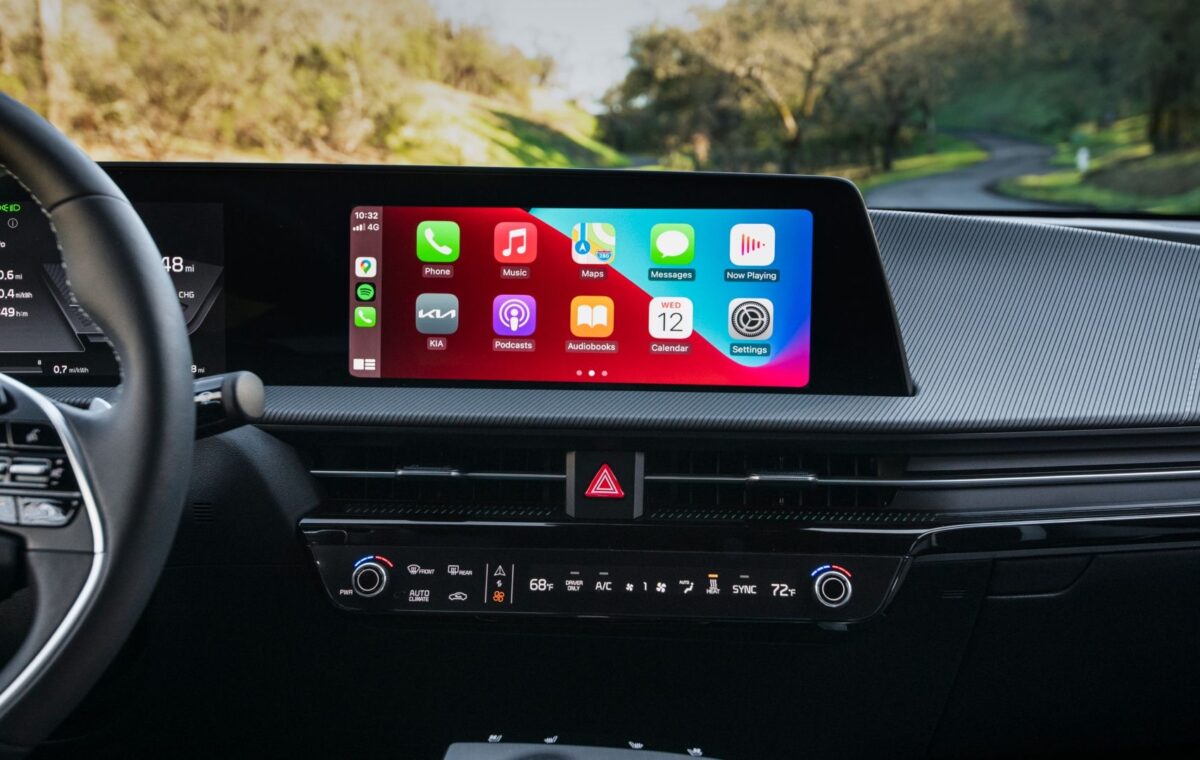
About 10 years ago, a software update for your vehicle, as if it were your smartphone, was rare enough to make the news. Tesla owners were often the only ones who were aware of it and talking about it. In 2018, Consumer Reports tested a new Model 3 and clocked its stopping distance from 60 miles per hour at 152 feet, seven feet longer than a Ford F-150. Tesla responded with a wireless update to the anti-lock braking software, a fix that allowed the Model 3 to stop in 133 feet without a physical repair.
Today, a car can update itself in the middle of the night while it sits parked in the driveway and the owner sleeps. There's no phone call to the dealership, no appointment to schedule, and no waiting room involved.
Berg Insight, a research firm that tracks the connected car market, found that 83% of new cars sold worldwide in 2025 had a built-in cellular connection, up from 79% the year before. In North America, that number was even higher, with 94% of new cars sold in 2025 having the built-in cellular connection necessary to receive updates wirelessly, or over the air (OTA).
OTA stands for over-the-air. It describes any update your vehicle downloads and installs through its own cellular connection or a paired Wi-Fi network. No dealer visit or USB drive is required. Instead, the manufacturer issues new software for your vehicle, which downloads in the background and installs once it's parked and turned off. Some updates finish in minutes, while others ask the vehicle to sit still overnight so nothing interrupts the install.
OTA updates can span a wide range of applications, from new menu optimizations on the infotainment screen to, as with Tesla, updates that change how the vehicle performs on the road. Because onboard computers control steering, braking, and acceleration in most modern vehicles, those systems can be “eligible” for an OTA update. A survey of secure OTA update practices lists them among the safety-critical systems automakers can now update remotely, alongside battery management and driver-assist calibration.
Kia issued an OTA update in January 2026 for certain EV9 models to “improve the processing logic of the vehicle control unit,” which was causing false warning lights to illuminate. EV9 owners with a Kia Connect account received the automatic fix in about nine minutes. They did not need to visit a Kia dealer at all.
BlueCruise, Ford's hands-free highway driving system, received a similar update in 2026, though it was not a recall but an enhancement to the system and its capabilities. Ford rolled out BlueCruise version 1.4 to hundreds of thousands of eligible 2024 F-150 owners, upgrading trucks that originally shipped with version 1.2. The update lets the system stay hands-free longer and work through curves that previously forced the driver to take over, changes Ford detailed when it rolled out the update.
Every Ford and Lincoln vehicle sold today in North America supports OTA updates.
You can fix your car, or find out if you have enough trunk space.
NHTSA's 2024 annual recall report shows the number of vehicles remedied through OTA updates, rather than a dealership repair. According to NHTSA’s 2024 report, Faraday Future, Stellantis, Ford, GM, and Honda were among the top automakers when it came to the number of recalls remedied by an OTA update. Fast forward a year to NHTSA's 2025 annual recall report, which indicates that more and more manufacturers are relying on OTA updates to address recalls, with Aston Martin and BMW leading the list.
Greg Brannon, AAA's director of automotive engineering, told Newsweek that OTA availability is changing the entire recall-closure process, cutting the cost, complexity, and burden repairs used to place on vehicle owners.
That said, no matter how extensive an OTA update is, it doesn't make routine service optional or obsolete. Many components, including tires and brakes, still need a technician's eyes on them at regular intervals, no matter how current the car's software is. Software updates cannot replace physical suspension components or flush vital fluids that have aged, like the transmission and coolant.
Although the number of remedies delivered via OTA updates will likely keep increasing, anything mechanical still needs a classically trained automotive technician to diagnose and fix.
With new car prices at an all-time high, I’ve resolved to keep my current vehicle as long as possible.
Every brand handles this a little differently, but the basic path is usually the same. Somewhere in the infotainment settings is a screen that shows the current software version and whether a new one is pending. Here's where to check on three of the most common brands on the road.