This is read by an automated voice. Please report any issues or inconsistencies here.
See more from the L.A. Times in Google Search. Set us as preferred
California voters are sharply divided over a ballot measure to impose a one-time tax on billionaires to help fund healthcare programs, a proposal already triggering a fierce and expensive political fight as the November election approaches, according to a poll released Friday.
More than half of likely voters oppose a separate measure that would require Californians to provide identification when voting and election officials to verify registered voters are U.S. citizens, the survey showed.
The two controversial proposals are among the 14 ballot measures Californians will decide in the Nov. 3 election. Proposition 40, which would impose the tax on billionaires’ assets, has reached the precipice of nationwide debates over economic inequality and liberal overreach. The Republican-led voter ID measure, Proposition 39, emerged amid President Trump’s baseless claims of widespread voter fraud.
Among likely California voters, 48% support Proposition 40, compared with 41% who oppose the proposed wealth tax and 11% who are undecided, according to a new poll by UC Berkeley’s Institute of Governmental Studies that is co-sponsored by The Times.
Proposition 40’s failure to crack 50% support among voters at this point in the electoral cycle is a potential red flag, said IGS poll director Mark DiCamillo. Traditionally, Californians who are undecided on ballot measures tend to vote against them, he said.
“It’s got an early lead, but it’s not a very large lead, and it’s not a majority,” he said. “Usually, for ballot propositions, you want the yes side to be above 50%, and that’s not where it is right now.”
There are questions about whether the controversial leader of SEIU-United Healthcare Workers West intended for the billionaire tax to go on the ballot, or if it was designed as a leverage play to expand his union.
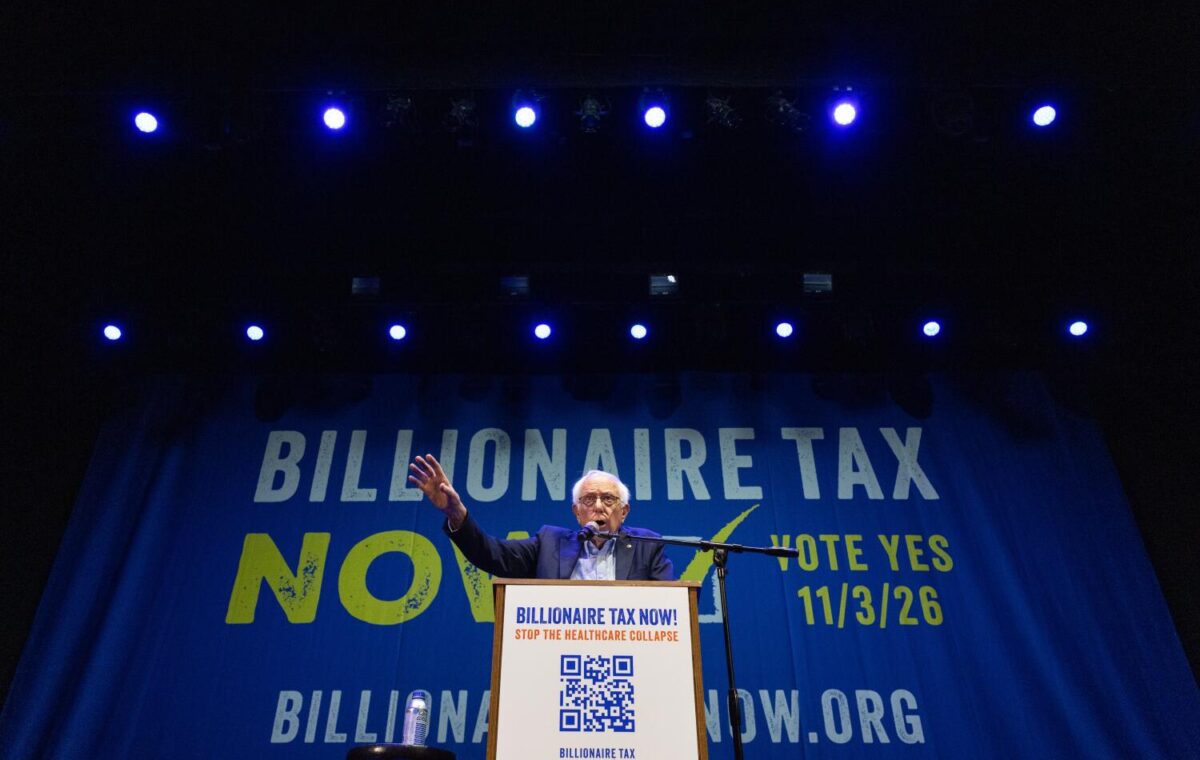
The proposal was crafted by a healthcare workers’ union to compensate for an estimated $100 billion in federal healthcare cuts approved by Trump and congressional Republicans that it argues will cause devastating harm to millions of California’s most vulnerable residents. Proposition 40 would impose a one-time 5% tax on the assets of billionaires who resided in California as of Jan. 1, with some exceptions.
Democrats and their allies are splintered over the proposal. Some, including Gov. Gavin Newsom, argue it will prompt the wealthy to flee California, further harming its volatile budget, which is dependent on the state’s richest residents. The California Democratic Party and leading progressives support the measure, with Sen. Bernie Sanders (I-Vt.) calling it a modest tax necessary to help Californians struggling because of cuts imposed by Republicans to pay for tax breaks for the wealthy.
While Democratic voters mostly support the ballot measure and Republicans largely oppose it, younger Californians are far more likely to say they plan to vote for it compared to seniors. Minorities, women and lower-income voters are also more supportive of the measure than white voters, men and Californians who earn at least $200,000 annually. Union households support the measure, while non-union families are evenly divided about it.
Turnout will be pivotal, DiCamillo said. While younger Californians are historically less likely to vote, especially in midterm elections, if they are energized by the issues championed by socialist Democrats, including New York City Mayor Zohran Mamdani, that could boost the wealth tax proposal’s prospects.
The survey found that voters are far less aware of two competing ballot measures aimed at nullifying the proposed wealth tax.
Proposition 41 would prohibit new taxes from being exempt from voter-approved state spending limits and require audits of new levies. Proposition 42 would ban new taxes on personal property and some retroactive state taxes. If the wealth tax is approved and either of the countermeasures receives more votes, the proposed billionaires’ tax would not go into effect.