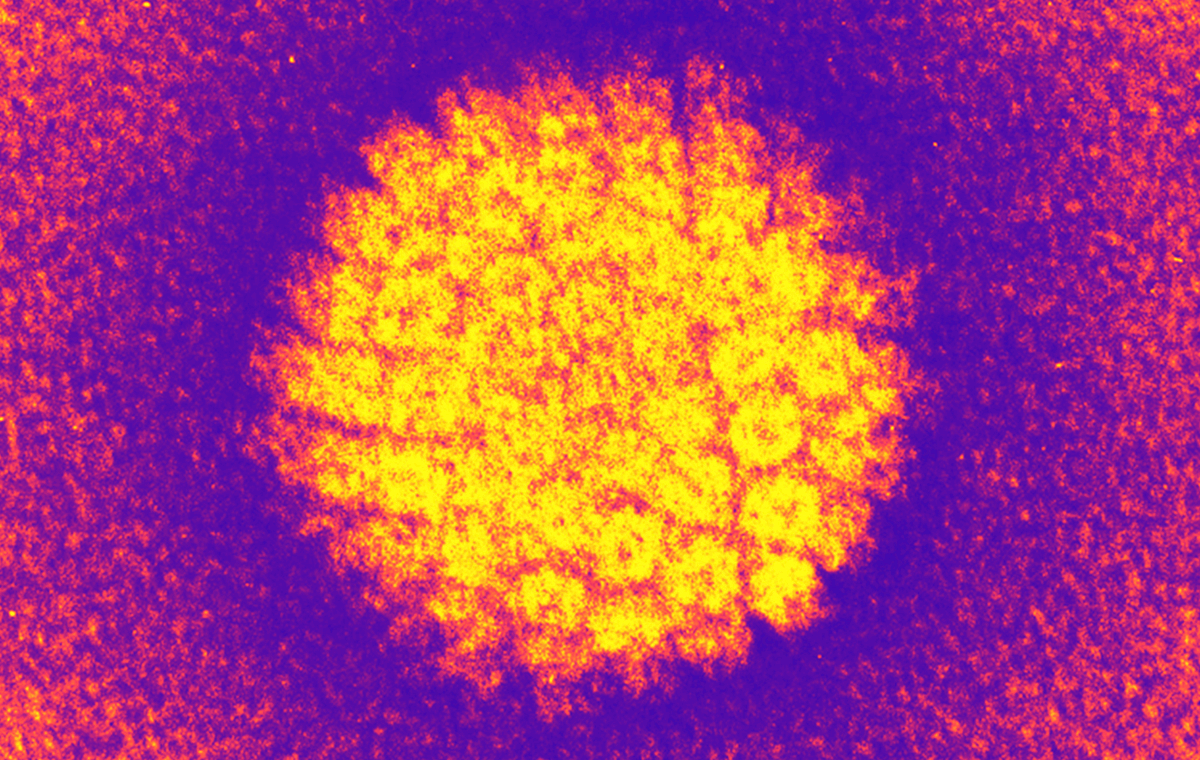
HPV vaccination is helping knock back cervical cancer rates, but meanwhile, mouth and throat cancers caused by the virus are up in men. Here's what to know.
When you purchase through links on our site, we may earn an affiliate commission. Here’s how it works.
Vaccination against human papillomavirus (HPV) has drastically reduced cervical cancer rates among women who got the vaccine. But as doctors celebrate that news, they're warning of an ongoing uptick in other HPV-related cancers that is mostly affecting men.
Throat and mouth cancers, broadly known as oropharyngeal cancers, linked to HPV are on the rise, mostly in middle-aged and older men, data suggests. These cancers affect the back of the throat along the tonsils and the base of the tongue. A 2023 study of the U.S. found that cases of HPV-related oropharyngeal cancer had more than tripled between 1988 and 2004, with the bulk of that trend driven by male patients. This trend continues worldwide today, with one Danish study finding another tripling between 2000 and 2017.
So what's driving this trend, and what can be done?
HPV is an umbrella term that includes many viruses; those that cause cancer are known as "high-risk HPV." These high-risk strains spread during sex, including oral sex, making the leap from one body to another through tiny cuts in the skin or mucous membranes.
About 80% of sexually active adults will contract the virus in their lifetimes, usually within a few months to years of starting to have sex, according to the National Cancer Institute; about half of those cases are high-risk HPV. Most people's immune systems clear the virus within a year or two, but in some people, HPV lurks in the body and causes DNA damage that can turn cells cancerous.
There are 12 types of high-risk HPV, which are known to cause anal cancer, cervical cancer, oropharyngeal cancer, penile cancer, vaginal cancer and vulvar cancer. Two strains, known as types 16 and 18, are the most likely to cause cancer.
Anal cancer, penile cancer, vaginal cancer and vulvar cancer rates are all rising, too, although oropharyngeal cancer is more common than any one of these.
According to data from the U.S. Centers for Disease Control and Prevention, an average of 13,600 cases of oropharyngeal cancers likely caused by HPV are diagnosed in men each year. By contrast, there are 2,400 newly diagnosed cases in women per year. The number of cervical cancer cases likely caused by HPV each year is currently around 11,100.
Thanks to widespread vaccination and screening, Australia is expected to eliminate cervical cancer by 2035, and other countries are progressing toward that target too. Rates of cervical cancer have also dropped in young women in the United States, with declines of over 50% in the states with the highest vaccination rates in 2016-2021, compared with 2000-2005, before the vaccine was introduced.
The adoption of HPV vaccination among both male and female patients should lead to an eventual decline in oropharyngeal cancers, as it has in cervical cancer. But because HPV can lurk in the body and wreak havoc long after a person is initially exposed, risks for older individuals who were not vaccinated as young people still persist.
About 80% of oropharyngeal cancer cases are in men, and 40% are in people over the age of 65, who became adults after the sexual revolution of the 1960s. At that time, having multiple sexual partners became more common, but this was well before the first HPV vaccine, Gardasil, became available in 2006.
HPV-related throat and mouth cancers are challenging to screen for, so often, people don't get diagnosed until after symptoms start to emerge.
As people with chronic HPV infections age, the immune system may do a poor job of keeping the virus in check, said Electra Paskett, a cancer epidemiologist at The Ohio State University College of Medicine. Other factors, such as chronic stress, may also play a role in the immune system losing grip on the germ. That's likely why a virus contracted decades ago can cause cancer in middle-aged or older people.