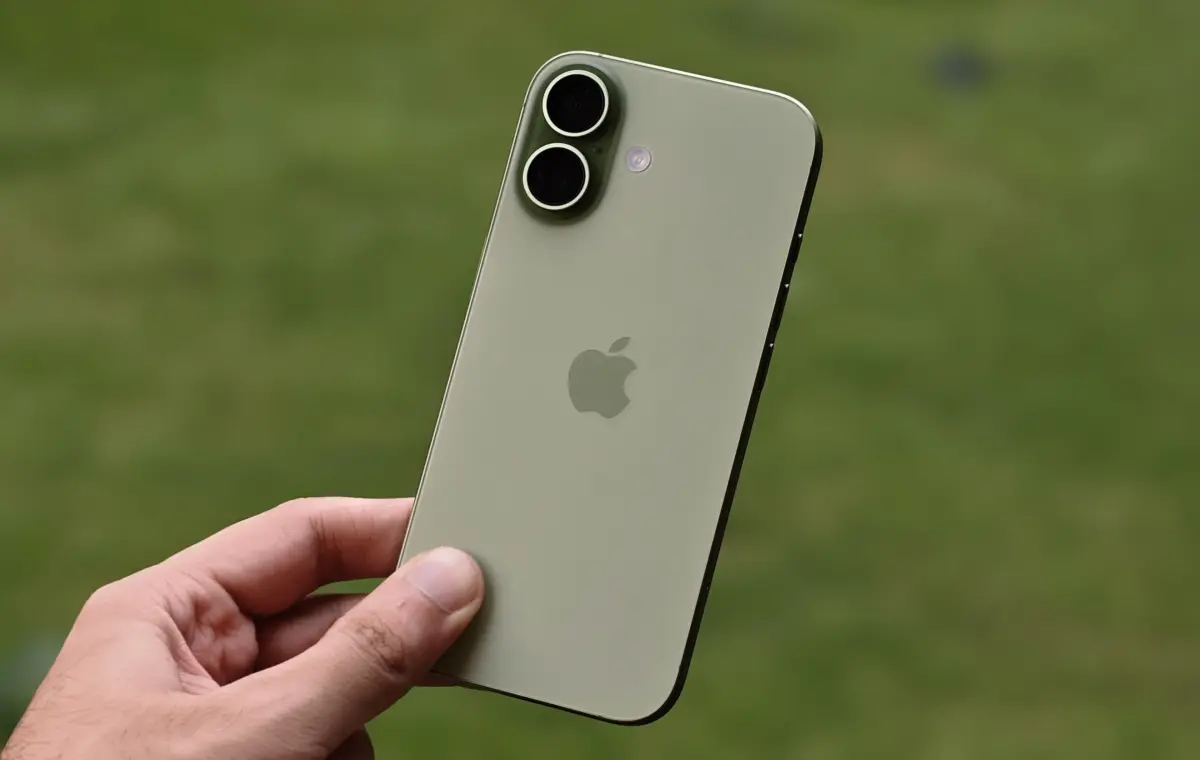
Ahead of Apple's Sept. 9 launch event, I retested the iPhone 17 to see if it can retain the “best iPhone for most people” title for another six months.
The iPhone 17 closed the gap between Apple’s entry-level phone and the pricier Pro models last year with long-overdue display upgrades, alongside nifty camera and durability improvements. Apple also made new features like Center Stage (its new selfie camera) and Dual Capture available across the entire lineup, making the iPhone 17 an even better value.
A year later, it has become the most affordable entry-level flagship across brands, thanks to Samsung and Google raising the prices of their entry-level models due to a surge in RAM prices driven by AI and data centers.
August is usually when we suggest to avoid buying a new iPhone and to wait for the next one. But things are looking different in 2026.
As we inch closer to the next-generation iPhone announcement on Sept. 9, the iPhone 17 is holding strong against its Android rivals. And it will have to compete with newer models till March 2027, since the iPhone 18 won’t launch until then alongside the iPhone 18E, according to the rumors.
So what if you need a new iPhone before March or don’t want to pay $1,100 or more for an iPhone 18 Pro? I charged up my iPhone 17 and revisited Apple’s standard model this week to find out if it’s still worth buying.
The iPhone 17 arrived last year with multiple major upgrades, many of which you’ll appreciate daily.
The screen is finally on par with Apple’s Pro models and every other Android counterpart. It runs at a smooth 120Hz refresh rate, which also adapts to the on-screen content to save battery. I compared it to the iPhone 15 and the smoother visuals were immediately noticeable when scrolling through the home screen. It makes the phone feel faster and more responsive.
The display is also brighter and less reflective than its predecessor. It is immediately noticeable when you’re navigating outdoors or need to do anything on your phone under bright lights. I put it against the new Pixel 11, which is equally bright, but iPhone 17’s smaller bezels make its screen more pleasing to look at.
Apple said its 2025 iPhones were more durable than ever. While I haven’t used the iPhone 17 for a year straight, I have daily driven the iPhone 17 Pro Max without a case for 10 months. (Yes, I’m that guy.) Compared to my 2024 iPhone 16 Pro, the 17 Pro has fared better against scratches and drops thanks to its Ceramic Shield 2 glass, the same found on the iPhone 17.
Some might dismiss it as a minor feature, but the 17’s selfie camera is the best upgrade, in my opinion. The new 18-megapixel square sensor is more of a quality-of-life upgrade than just a mere number bump because it lets you shoot landscape selfies without needing to rotate your phone. The viewfinder automatically repositions its framing based on the number of people in the photo.
I love the camera for two reasons. First, it enables Center Stage, which tracks you (even if you’re moving) on video calls (both on FaceTime and third-party apps like WhatsApp). It’s a handy feature for when I need to move around doing chores, but the camera keeps me in the frame and helps me be less annoying for my girlfriend.
Second, the square sensor improves stability in selfie video recording. I live with a condition that causes constant hand tremors, which makes it difficult to record myself on phones. The iPhone 17 has been helpful as I’m less self-conscious and more confident that I’ll get stable footage instead of a blurry video.
As for the two cameras on the back, they are far more capable than its predecessor. The iPhone 17 has two rear cameras: a 48-megapixel wide-angle camera and a 48-megapixel ultrawide, which is an upgrade over the 12-megapixel ultrawide camera on the iPhone 16. You’ll get sharp photos, better indoor shots and a smooth video experience. It misses out on a telephoto camera that the 17 Pro has, so there’s no optical zoom, but these are all the cameras most people would ever need.
The iPhone 17 runs iOS 26, which offers more translucent controls, customization options and Apple Intelligence features. However, my experience has been buggy since the beginning. On multiple occasions, I’ve missed calls and alarms because my iPhone automatically lowered its system volume to a minimum. I didn’t put it in Do Not Disturb or Focus modes. Other times, the keyboard starts lagging out of nowhere, and whenever I need to access the Control Center while watching a video in landscape mode, my controls are all over the place.