Proposed federal rule changes would eliminate the requirement for public feedback and consultation with key parties like Tribal Nations and ultimately lead to the destruction of much of our cultural heritage. There's still time to weigh in.
When you purchase through links on our site, we may earn an affiliate commission. Here’s how it works.
In July, a government agency tasked with protecting our cultural heritage abdicated its responsibility, voting to further industry's pursuit of profit over protecting sites of cultural significance. The Advisory Council on Historic Preservation (ACHP), the only federal agency whose sole mission is promoting preservation of America’s historic places, voted to advance a proposed new rule that would make sweeping changes to how Section 106 of the National Historic Preservation Act is implemented. By doing so, the Council is opening the door for federal agencies to bulldoze sacred Indigenous sites and important archaeological sites.
Section 106 requires federal agencies to assess the effects of their actions — or the actions they license or permit — on historic, archaeological, and cultural properties listed in or eligible for listing in the National Register of Historic Places. Additionally, agencies must attempt, to the extent possible, to minimize harmful effects on these significant places. The rules governing Section 106 have been in place since 1974. As part of that framework, the government is legally required to consult with Tribal Nations about projects that may destroy or damage their sacred places or culturally significant resources.
The proposed new regulations destroy the idea behind consultation. For instance, they would give federal agencies the discretion to decide whether public participation will be useful. Essentially, the agencies get to decide whether to notify the public or provide opportunity for public comment before they approve projects that might damage or destroy historic properties.
Dr. Joe Watkins, a member of the Choctaw Nation of Oklahoma, is Senior Consultant with Archaeological and Cultural Education Consultants in Tucson, Arizona. He is Past President of the Board of Directors of the Society for American Archaeology (2018-2021) and was a member of the Board of Directors of the Plains Anthropological Society and the Society for America Archaeology. He has published more than 100 book chapters or articles; his books include Indigenous Archaeology: American Indian Values and Scientific Practice and Indigenizing Japan: Ainu Past, Present, and Future. In 2025, he received the Society for American Archaeology’s Lifetime Achievement Award.
It would also give federal agencies the right to approve projects that may damage or destroy Tribal sacred places and other culturally significant resources without consulting with Tribal Nations or seeking their expertise about them. This violates federal law and jurisprudence, which recognizes Tribal Nations as "domestic, dependent nations," and requires consultation with them on a government-to-government basis; Tribal Nations are not merely “interested parties” like community organizations or local groups.
An agency official would prepare a "Section 106 report" that identifies historic properties, assesses impacts, and makes a determination on next steps; this Section 106 report would then be circulated to State Historic Preservation Officers, Tribal Historic Preservation Officers, and all relevant consulting parties — including project proponents — who would have an opportunity to comment on the findings. The agency official must only review those comments; officials have no obligation to respond to or incorporate any of those comments before issuing the final decision, shifting Section 106 from its previous consensus-seeking exercise to one where the agency official simply decides.
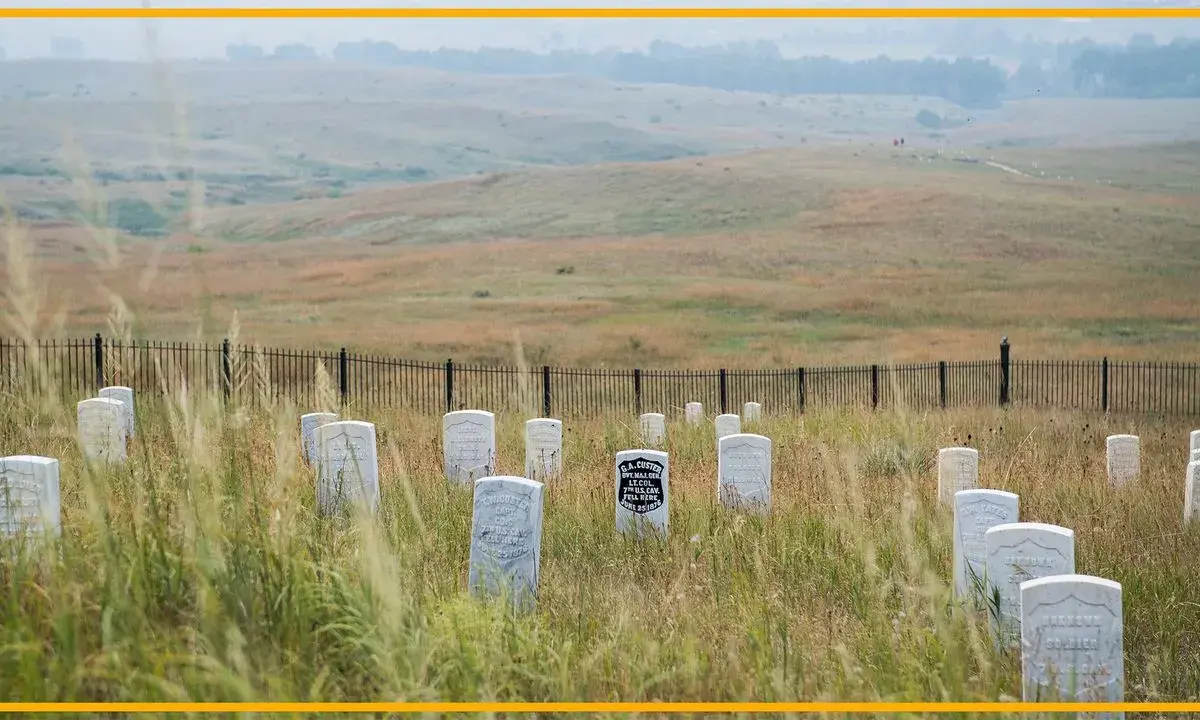
The new regulations also remove vast swaths of our history from protection. To be considered a historic property, the new regulations say it must include, or have included, tangible human improvements – built structures – AND the historic property must be geographically compact. This change in definition will exclude entire categories of historic places from meaningful consideration under Section 106 in the future, including battlefields like Gettysburg or the Little Bighorn, cultural landscapes like Devil’s Tower in Wyoming or the Black Hills in South Dakota, archaeological resources like petroglyphs in Chaco Canyon. It lessens protection on places like the Grand Canyon, simply because they are not “geographically compact” or centered on a building or other structure.
Essentially, the agencies get to decide whether to notify the public or provide opportunity for public comment before they approve projects that might damage or destroy historic properties.
The new regulations specifically preclude "noncompact, unimproved natural features such as mountains, valleys, bodies of water, or landscapes, including ethnographic landscapes" — locations that carry great spiritual and historical meaning to American Indian groups. Many traditional cultural places and sacred sites of deep religious and cultural significance to Tribes, Native Hawaiian organizations, and local communities will automatically be excluded from consideration for protection by the new regulations.
The changed definition of "historic property" in the new regulations will remove protections for 99% of American Indian heritage and could result in the erasure of the heritage of an entire group of people in the United States – those who lived here before European colonization.
Mitigation, or trying to prevent, minimize or offset any damage to a historic site, becomes a “maybe,” as the federal agency undertaking the project decides whether the "value" of the property is worth the cost of mitigation. "Reasonable mitigation" is redefined so that federal agencies only have to consider measures to lessen the impact of a project on a historic property if they are "technically and economically feasible."
Under the proposed rule changes, the petroglyphs at Chaco Canyon would not be protected because they don't include built structures and are not "geographically compact."
The new regulations water down the definition of what is considered to be an "Adverse Effect" on historic properties so that they are close to meaningless. By removing indirect and cumulative effects on historic properties and eliminating the visual, atmospheric or audible elements that diminish the experience at a property, the new regulations could say that building and operating a casino or amusement park on Mount Vernon would not be considered an Adverse Effect.