Account subscription benefits alongside Premium Stories, Editorials,
Opinions and more. Unlock these with Subscription
The View From India
Looking at World Affairs from the Indian perspective.
First Day First Show
News and reviews from the world of cinema and streaming.
Today's Cache
Your download of the top 5 technology stories of the day.
Science For All
The weekly newsletter from science writers takes the jargon out of science and puts the fun in!
Data Point
Decoding the headlines with facts, figures, and numbers
THEdge
At the cutting edge of education and careers
Health Matters
Ramya Kannan writes to you on getting to good health, and staying there
Gender Agenda
Stories from beyond the binary.
The Hindu On Books
Books of the week, reviews, excerpts, new titles and features.
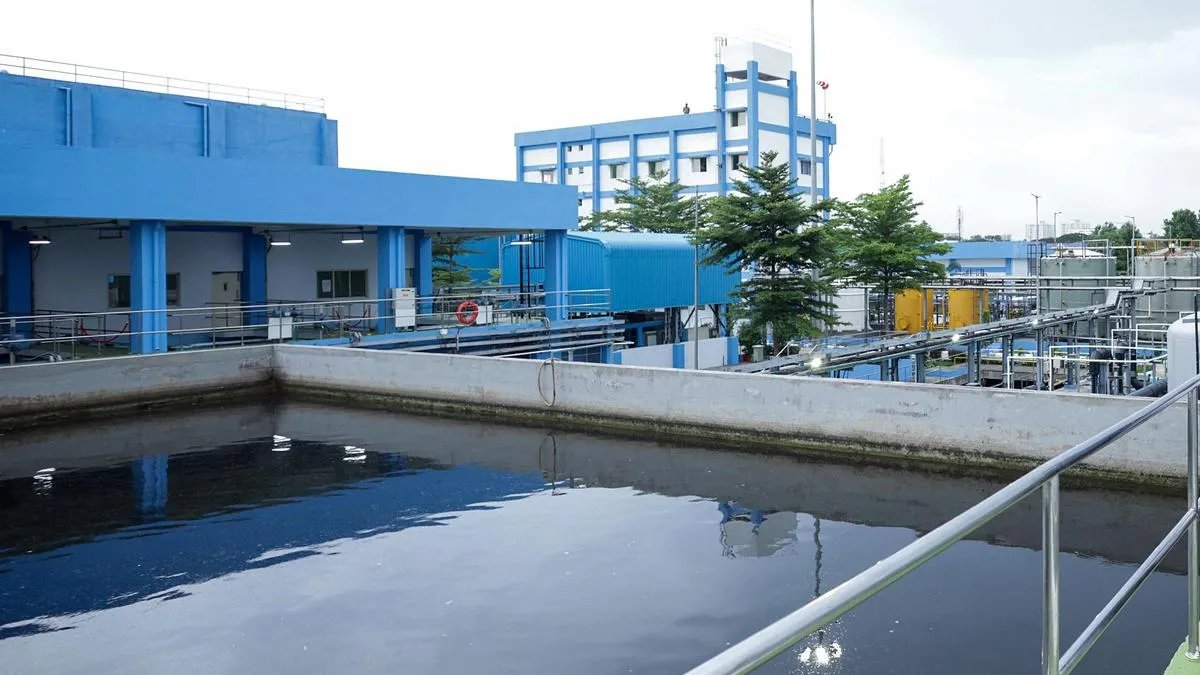
A Tertiary Treatment Reverse Osmosis plant managed by the Chennai Metropolitan Water Supply and Sewerage Board at Koyambedu in Chennai. File
| Photo Credit: X/@CMOTamilnadu via ANI
The recently notified treated wastewater reuse policies for Uttar Pradesh and Uttarakhand offer an instructive example of what contextualised policymaking can look like. Developed through an extensive consultative process, these policies do not apply a one-size-fits-all template. They account for the stark geographical diversity within each State, the distinct needs of hill communities versus densely populated plains, and embed principles such as fit-for-purpose reuse approaches, integration with urban planning and river rejuvenation, community participation, blended finance and public-private partnership pathways, and digital monitoring systems that make reuse accountable.
However, examples such as these remain the exception rather than the rule. Every summer, Indian States make headlines grappling with water scarcity and yet, the story never seems to change. Rampant groundwater extraction, and the relentless tug-of-war between agriculture, industry, and urban demand have become a recurring script. The real question is no longer whether India needs to rewrite this narrative, but how much longer it can afford not to.
Treated wastewater is an untapped resource waiting to be mainstreamed. For agriculture, industry, urban landscaping, and ecological restoration, it offers something increasingly rare: a reliable, drought-proof supply. India’s water future may hinge less on discovering new freshwater reserves and more on the intelligence with which the country recycles what it already has. National missions such as the Atal Mission for Rejuvenation and Urban Transformation have done commendable work in scaling sewage treatment infrastructure, but pipes and plants alone do not close the loop. A treatment facility that discharges into a drain rather than feeding a farm or a factory is infrastructure without purpose.
What India needs is an ecosystem that converts capacity into practice: institutional coordination across departments, pricing signals that make reuse economically rational, quality standards that inspire confidence in end-users, and city-level roadmaps that translate national ambition into local action. The National Framework on Safe Reuse of Treated Water (SRTW), 2022 offers precisely the canvas India needs to navigate this transition. More than a guiding document, it represents a policy signal that reuse is no longer peripheral — it is a national priority. By mandating States to develop their own reuse policies, the Framework acknowledges that water solutions must ultimately be local, even when the vision is national. Several States have already responded, putting in place policies that set reuse targets and chart a path toward measurable milestones.