The ‘angels’ share’ could be more dangerous than we think
I would like to be emailed about offers, events and updates from The Independent. Read our Privacy notice
Irish whiskey is one of Ireland’s great export success stories. Exports were worth over €930 million in 2025, with the country’s much-loved spirit being sold all over the world.
Even amid difficult international trading conditions, with concerns around tariffs for export to the US, exports to the EU have grown by more than 21% in four years.
However, while thousands of barrels quietly mature in warehouses around Ireland, something else is happening outside some of them. On walls, roofs, road signs, trees and other surfaces close to some whiskey maturation facilities, a distinctive black patina appears.
It may look like soot or air pollution, but in some cases the culprit is a fungus: Baudoinia, commonly known as “whiskey fungus” or “whiskey black”, and fuelled by the presence of ethanol alcohol in the air.
Despite the fact it has been known about for years, there has been surprisingly little research on its effects, such as whether the fungus can spread from distilleries to nearby properties, including residential homes.
Ethanol alcohol emissions from the industry are also thought to contribute to ground level ozone, a harmful air pollutant. But we don’t know whether the fungus has any adverse consequences for people’s health. It may not be dangerous at all, but this is something we are investigating through a project at Dublin City University.
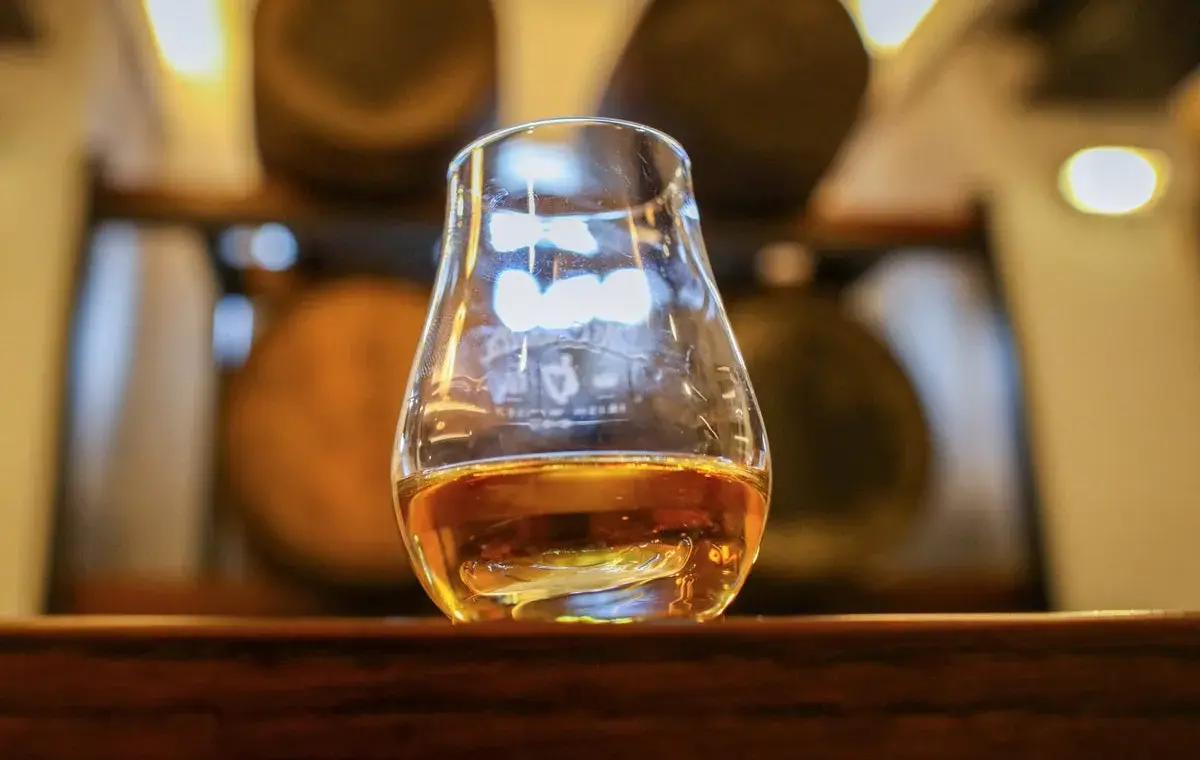
During maturation, ethanol and other volatile compounds evaporate and pass through the porous cask. They then enter the surrounding atmosphere around the distillery. This portion of the whiskey is often known as the “angels’ share”.
A review commissioned by the Scottish government estimated that more than 90% of non-methane volatile organic compound (NMVOC) emissions associated with whiskey production occur during maturation.
NMVOCs are chemicals that participate in atmospheric reactions and contribute to the formation of pollutants like ground-level ozone. Ethanol alcohol overwhelmingly dominates these emissions from whiskey production.
As they condense into the air moisture, these ethanol vapours also create an unusual ecological niche. Baudoinia can occur naturally at very low abundance, but exposure to this airborne alcohol can favour its growth.
Around maturation warehouses, this can result in conspicuous dark fungal growth on exposed surfaces. The association has been recognised for more than a century, initially around cognac maturation facilities in France, and has subsequently been documented around spirit maturation warehouses in Scotland, Canada and the US.
So can whiskey fungus spread from distilleries to nearby properties, causing unsightly dark growth in people’s homes? In 2022, following a complaint about black discolouration on houses close to the Midleton distillery in county Cork, the Irish Environmental Protection Agency (EPA) investigated whether Baudoinia was present.
While the fungus was identified on a whiskey warehouse, it was not detected on any of the three nearby residential properties sampled.