This is read by an automated voice. Please report any issues or inconsistencies here.
See more from the L.A. Times in Google Search. Set us as preferred
If you’re just starting out with balance training, a routine of basic static and dynamic exercises is a great way to go, says Kimberly M. Burbank, a sports medicine physician at UCLA Health. The exercises are deceptively simple and easy to master. They require only a minute each — an entire routine is just five minutes a day. You can do the exercises at home, with little to no equipment, and you can easily progress with hand-held weights, if desired.
In fact, short investments of time, done consistently, is the best approach, Burbank says.
Good balance is beneficial for living a longer, healthier life — at any age. Check out our series featuring the latest research, a balance IQ test and simple at-home exercises.
“Generally, five minutes a day is better than 30 minutes all at once if you can do it daily or at least three times a week,” Burbank says. “Because you can train the neuromuscular system by frequently challenging it. And it’s easier to progress, or become better at it, the more frequently you do it.”
So what are static and dynamic exercises, exactly?
Static exercises mean you’re holding one position and staying still for the allotted amount of time. They’re especially helpful for postural control — you have to maintain good posture to stand on one leg — whereas dynamic exercises mean you’re maintaining control while moving through space. They hone coordination and proprioception skills (the awareness of where your body is in space) as well as joint positioning (like being cognizant of how your knee is bent in a lunge, for example, and adjusting that).
Explosive plyometric exercises build the quick reactivity needed to safeguard your body as you age and help you with your balance. Here are 4 to try at home.
“So standing on one leg and holding it versus a lunge, where you’re moving while balancing,” Burbank says to illustrate the difference. “Static and dynamic exercises work in harmony together — you want control while standing and control while walking or moving through space.”
Consider static and dynamic exercises “the meat and potatoes” of balance training, Burbank says.
“They allow you to build a great balance foundation that you can then build upon with more complex balance training maneuvers or activities that require more balance — you can then go take that surf class or hop on a skateboard. Or, for older populations, safely walk through Disney World with more confidence knowing there’s a less likelihood of falling. It’s about confidence in day-to-day living.”
Here are four of Burbank’s favorite static and dynamic exercises to help you strengthen your balance. They’re demonstrated by Los Angeles Times staffer Christopher Buchanan.
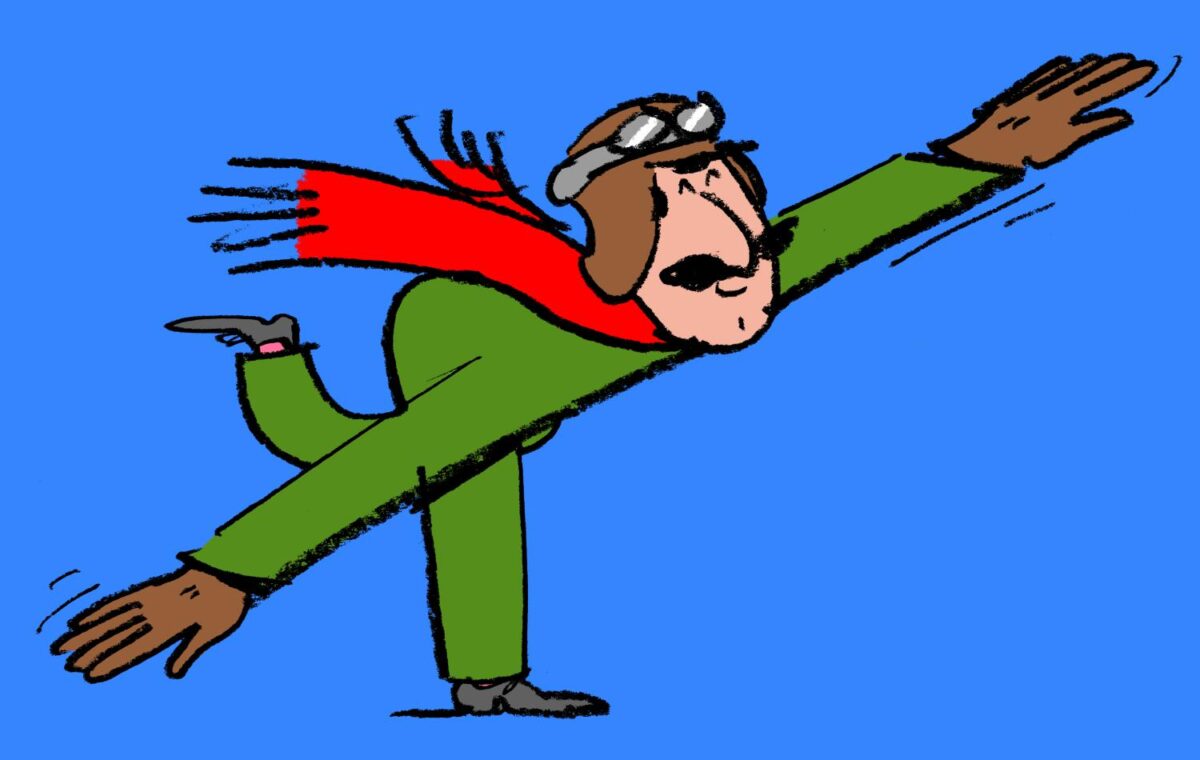
1. Static airplane shallow squat (to build hip stability and balance control). Stand on one leg and slightly bend your standing knee. Lean your chest forward while extending the other leg behind you like an airplane. Hold for 5-10 seconds per side, for 2-3 sets per side, with 30-45 seconds rest between sets. (To progress the exercise, increase the depth of the squat and/or hold light weights.)
2. Static side lean balance hold (to challenge side-to-side stability and core strength). Stand tall on one leg and gently lean your upper body to one side while maintaining your balance. Hold for 15-20 seconds per side, for 2 reps per side, with 15-30 seconds rest between sets. (To progress the exercise, hold a small weight in one hand or add opposite arm reaches.)