Just a Dressed-Up Civic
Ever since the Honda Prelude returned, the internet’s been quick to call it a Civic in a fancy suit. Sure, there’s some truth there, but that’s not the whole story. Under the skin, the Prelude grabs more than just the Civic’s bones – it nabs a bunch of Type R hardware too. We’re talking dual-axis front suspension, adaptive dampers, and a faster steering rack, all straight from the Civic Type R.
Does all that Type R DNA make the Prelude worth its $42,000 sticker? That’s a debate for another day. What matters is Honda set out to make this front-wheel-drive hybrid act like a real-deal sports coupe, not just an eco-friendly commuter.
So, did Honda actually pull it off? Spain’s km77 crew put the Prelude through their brutal slalom and moose test gauntlet – the same tests that have embarrassed everything from cheap hatchbacks to six-figure supercars.
Seriously Impressive Run
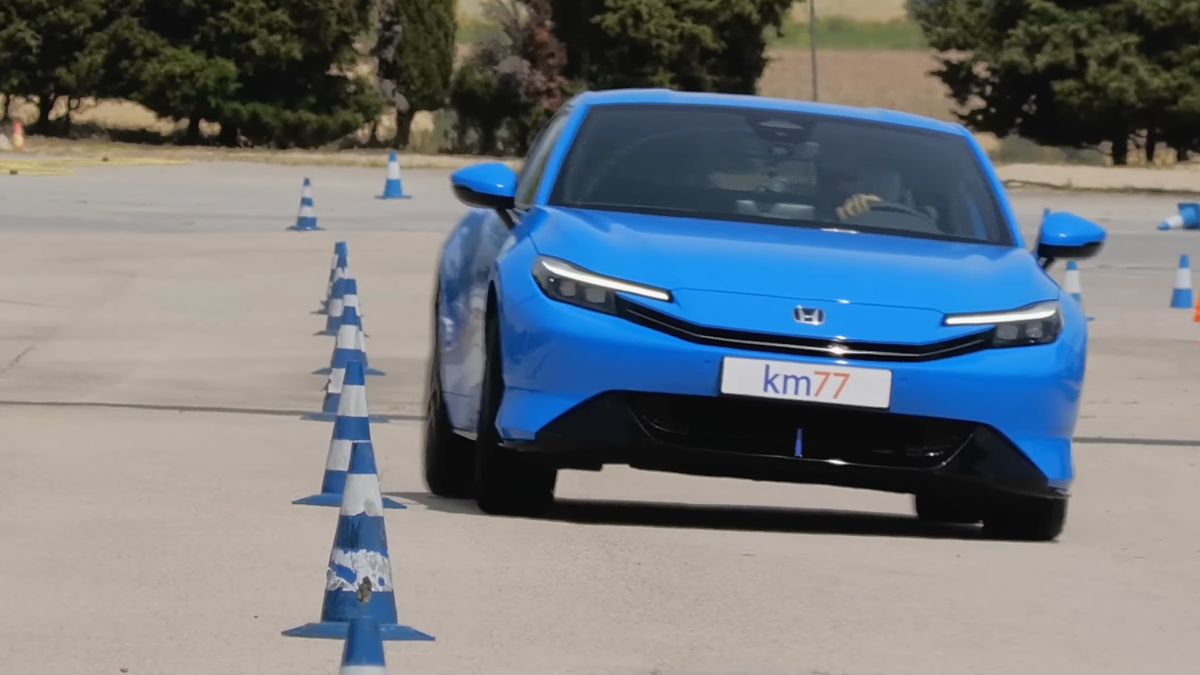
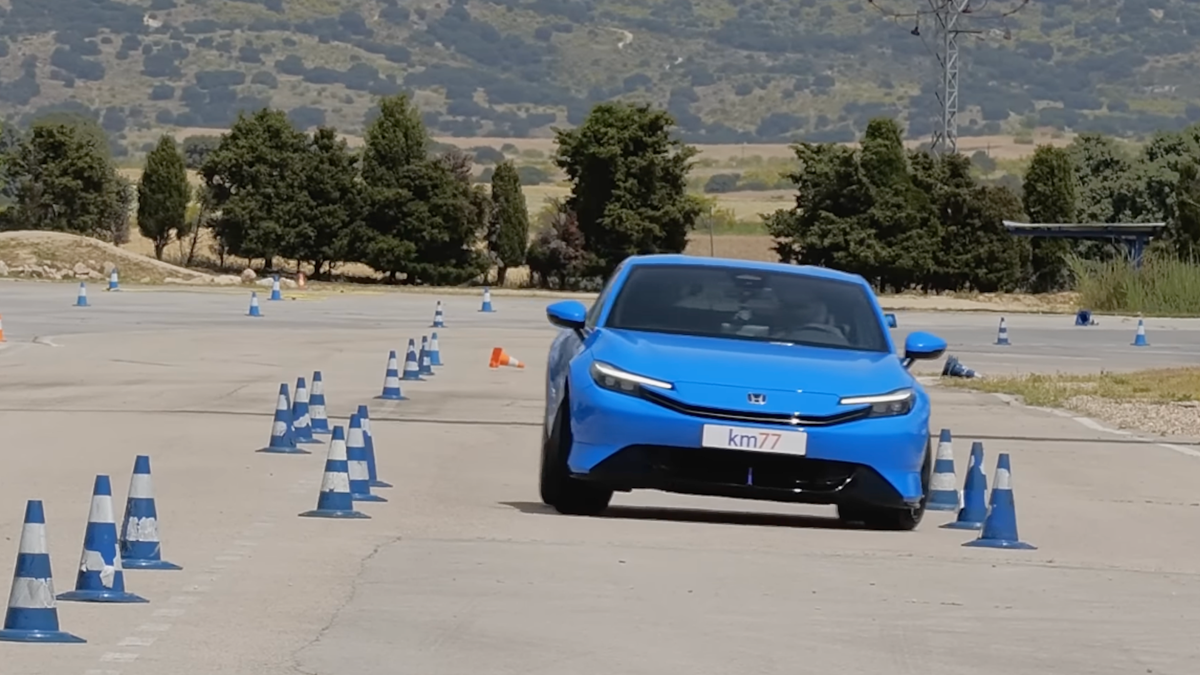
Through km77‘s slalom test, the Prelude immediately shone. According to the tester, power came on smoothly, no wheelspin drama off the line, and the steering was quick, direct, and barely needed a flick between cones. Testers also pointed out that body roll was kept in check.
The real challenge came during the moose test. Flicked into Sport mode, and the adaptive dampers tightened up, cutting down on body wobble during those quick left-right flicks. The result? The Prelude sailed through the course at 50 mph (80 km/h), clearing every single cone without needing wild steering corrections.
Sure, 50 mph might not sound like headline news, but in km77‘s massive database, that puts the Prelude ahead of plenty of pricier, more powerful cars. Testers also tried pushing past that figure, but the Continental PremiumContact 6 tires finally cried uncle.
At higher speeds, the Prelude started clipping cones and the stability control quietly stepped in. Even then, the car stayed predictable and easy to reel back in – no sudden snap oversteer or nasty surprises.
km77/YouTube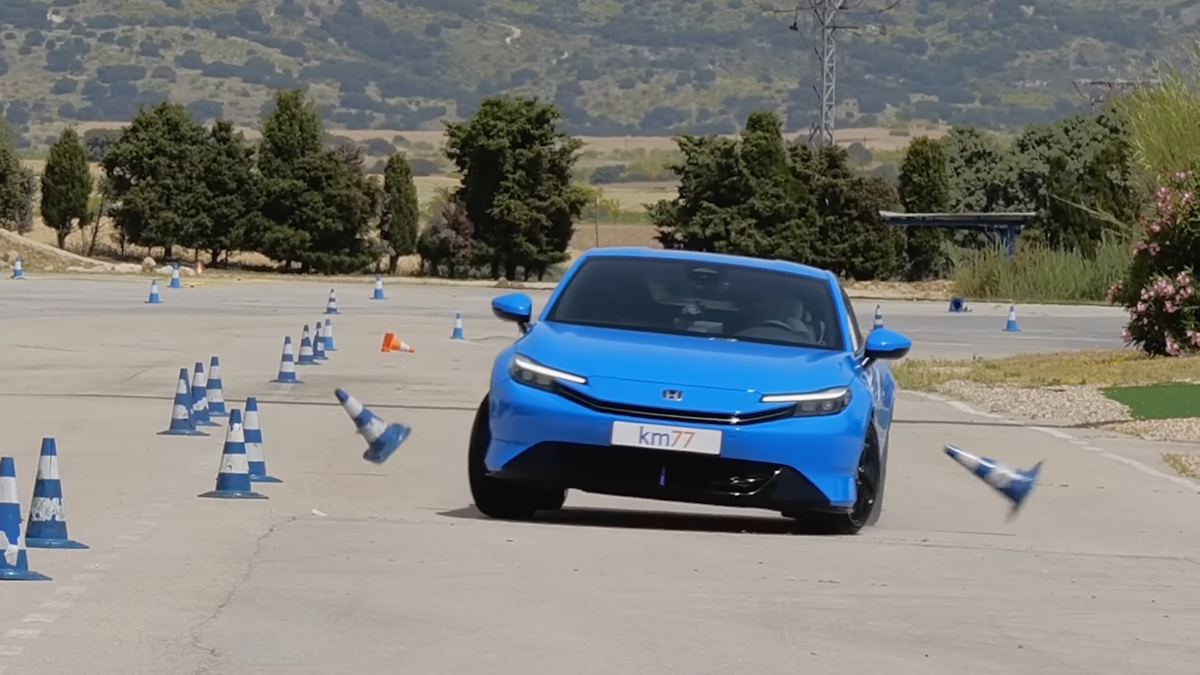
Why The Moose Test Matters
Originally developed in Sweden, the moose test simulates a driver making an emergency lane change to avoid a large animal (e.g., a moose) before immediately returning to the original lane. This scenario, of course, closely mirrors evasive maneuvers around road debris or an unexpected obstacle at highway speeds.
Over the years, the test has become one of the industry’s most respected demonstrations of chassis balance and emergency handling. It has also embarrassed some notable vehicles. Perhaps the most famous casualty was the first-generation Mercedes-Benz A-Class in 1997, which rolled over during testing and forced Mercedes to redesign the suspension and make electronic stability control standard equipment. More recently, several SUVs and pickups have struggled to match the speeds achieved by well-sorted passenger cars.
The Prelude’s numbers won’t end the arguments about its price or front-wheel-drive setup, but one thing’s clear: Honda’s engineers made sure this hybrid coupe acts way more like a sports car than the spec sheet lets on.
km77/YouTube