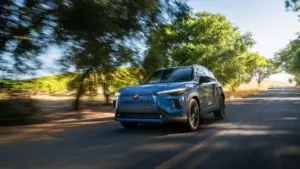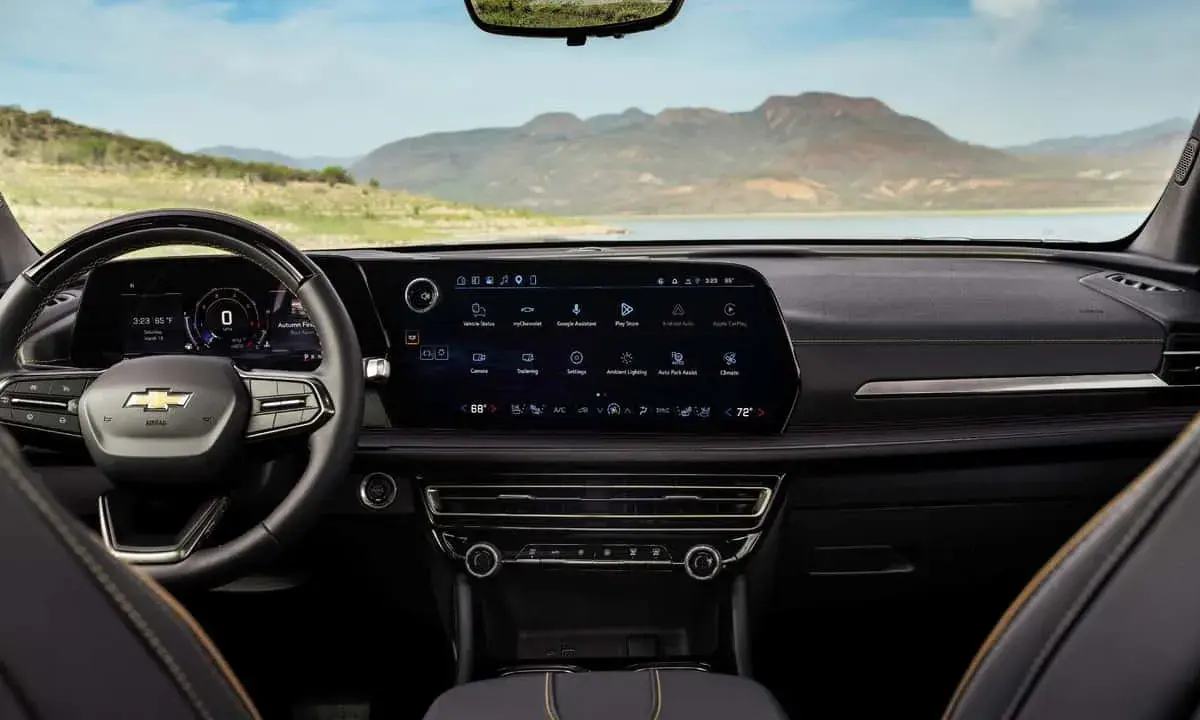
General Motors is now adding camera features with an over-the-air software update instead of a dealer visit. The download introduces Cabin Glance, Security Recording, and Surround Vision Recorder on a growing list of GM vehicles, including the 2027 Chevrolet Traverse High Country and RS.
Cabin Glance uses a camera in the Traverse’s overhead console to show the second and third rows on the center display. It is a live view only and does not save video or audio, so the driver can check on passengers without turning around.
GM group product manager for camera features Angelica Wilson told the Detroit Free Press the feature grew out of customer demand and the aftermarket boom in back-seat monitors. Drivers wanted a built-in way to watch kids or pets while keeping their eyes toward the road.
Surround Vision Recorder can store video from the exterior camera system while the vehicle is running. A red icon on the infotainment screen signals when recording is active, clips loop for up to two hours before they overwrite, and the system does not capture sound.
Security Recording works off the alarm. When the alarm triggers, the system records a short burst using all available cameras, including the interior unit. Saving any of this requires a customer-supplied USB drive in the port, and GM says it does not receive or access the stored footage.
The camera tools are opt-in features that GM is spreading across Buick, Cadillac, Chevrolet, and GMC. More 2027 models, including the Tahoe and Suburban, are scheduled to get the same type of update, similar to recent Cadillac infotainment system updates.
Automakers across the industry are leaning harder on over-the-air software updates for new features. They can now switch on hardware like cameras remotely instead of calling cars back to dealerships.
GM presents these tools as safety and security features, but they arrive against a tense privacy backdrop. In January 2025 the Federal Trade Commission accused GM and OnStar of sharing location and driving behavior data with insurance companies without clear notice or consent, then proposed a five-year ban on that type of sharing and ordered deletion of past data unless drivers affirm new permission.
The new camera system is structured differently as video is stored locally on the owner’s USB drive instead of on GM servers. Even so, privacy lawyer Jennifer Dukarski points out that state rules are inconsistent, and passengers who slide into a back seat may have no idea they are on camera or any practical way to opt out.
Motor1's Take: These tools push footage control onto vehicle owners. That makes privacy protections depend on how drivers manage the recordings and on state law.
Watch regulators and courts to see whether stored cabin video is treated as personal data. Also watch whether automakers change default settings or add active consent prompts.
Source:
Detroit Free Press via GMAuthority
What would you like to see on Motor1.com?
The Sopranos Made SUVs Cool. America Never Looked Back
This Powerful Plug-In-Hybrid Setup Could Make Off-Roading Easier