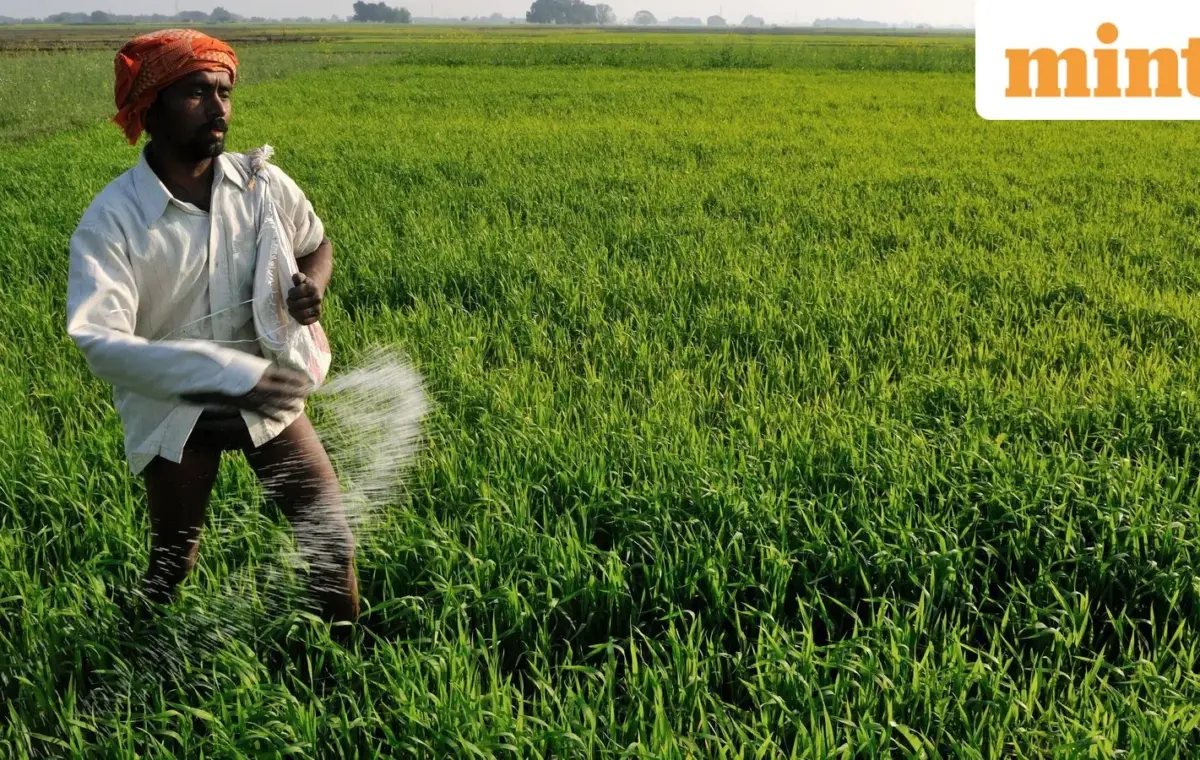
India may face pressure on its massive fertilizer subsidy bill this year, as a price spike in one category of soil nutrients outweighs a decline in another.
While the global prices of urea, the country's most common fertilizer, have declined from last year, di-ammonium phosphate (DAP), muriate of potash (MOP) and complex fertilizers have jumped, a Mint review of fertilizer department data showed. Since India relies heavily on imports to meet local fertilizer demand, and sells them to farmers at subsidized prices, price changes immediately reflect in its overall subsidy bill.
While the price of imported urea has fallen 5.89% from last July's $475 per tonne to $447 now, DAP is up 15.37% to $931 per tonne, MOP is up 9.74% to $383 per tonne, and phosphoric acid—a key ingredient in phosphatic fertilizers—is up 17.95% to $1,360 per tonne. India is the world’s largest importer of urea and DAP, importing 60% of its DAP needs, and 15% of its urea and NPK fertilizers.
“The easing of global urea prices will provide some relief to the government, but this could be offset by higher prices of key non-urea fertilizers and inputs such as sulphur and ammonia. These cost pressures are likely to increase the subsidy burden. Under a moderate price scenario, we estimate that the overall fertilizer subsidy outgo could rise to around ₹2.5 trillion in the current fiscal,” said Dr Sachchida Nand, a visiting professor at the Indian Council for Research on International Economic Relations (Icrier).
Urea is sold to farmers at a government-set maximum retail price, while the Centre compensates manufacturers and importers for the difference between the cost of production or import and the sale price. Consequently, global prices are an important determinant of the subsidy requirement. Fertilizer is estimated to account for around 37.5% of overall central subsidies of ₹4.55 trillion in 2026-27.
The ₹2.5 trillion estimate from Icrier's Dr Nand compares with ₹2.17 trillion that India spent on fertilizer subsidies in FY26, and its budget estimate of ₹1.77 trillion for FY27. A spike in fertilizer prices assumes significance as the government has already spent ₹99,128 crore or nearly 56% of its annual fertilizer subsidy estimate in the first four and a half months (1 April-19 August) of FY27, adding pressure on the exchequer.
"A subsidy of ₹77,872 crore has been incurred towards imports and domestic production of urea, while ₹21,256 crore has been so far provided for subsidies for imports as well as domestic production of other nutrient-based fertilizers such DAP, MOP and NPKs," a government official aware of the expenditure said.
Cheaper urea offers some relief, however. In June, a global urea tender floated by state-run National Fertilisers Ltd (NFL) received import bids of $445-449 per tonne, a sharp decline from $935–959 in May, as geopolitical supply fears eased and China increased exports. It remains to be seen if the trend persists through the procurement season.
However, soaring sulphur and ammonia, key ingredients in fertilizer manufacture, could raise production costs for phosphatic and complex fertilizers. Among raw materials, ammonia prices surged 58% year-on-year to $681 per tonne, while sulphur prices jumped 275% to $1,050 per tonne from $280. Ammonia and sulphur are used by cooperative bodies such as IFFCO and Kribhco and companies such as Gujarat State Fertilizers and Chemicals, Coromandel International to make a range of fertilizers.
Queries emailed to the Department of Fertilisers on 28 August remained unanswered.
A sustained weakness in urea prices could translate into lower import costs and help partly offset the pressure arising from higher DAP, MOP and phosphatic fertilizer prices. For the government, the divergent price movement means that the impact on the overall fertilizer subsidy bill will depend on the composition of consumption, import requirements and global prices in the coming months.
Vijay C. Roy is a journalist with over 21 years of experience covering various news beats across different organisations such as Business Standard and The Tribune. In the past, he has covered beats such as finance, auto, MSME, commodities, FMCG, pharmaceutical, agriculture, IT/ITES, infrastructure and start-ups. He joined Mint in February 2025, and covers agriculture, food processing, fertilizers, environment and climate change, bringing over two decades of experience reporting on farm policy, food inflation, crop trade, and rural livelihoods.<br><br>Vijay’s areas of reporting include food security and climate change policies, focusing on their impact on different stakeholders and their implications. His expertise lies in simplifying complex agri-economic issues such as edible oil import dependence, cotton and wheat trends, fertiliser subsidies, and climate-related risks. He has covered key developments including global supply disruptions and evolving trade policies, offering both macroeconomic perspective and field-level context. Known for his credible and balanced reporting, he follows a rigorous, fact-based approach that prioritises accuracy and context. He is driven by a commitment to public interest, aiming to make critical agricultural and economic issues accessible while contributing to informed policy and industry discussions.
Catch all the Business News , Economy news , Breaking News Events andLatest News Updates on Live Mint. Download TheMint News App to get Daily Market Updates.