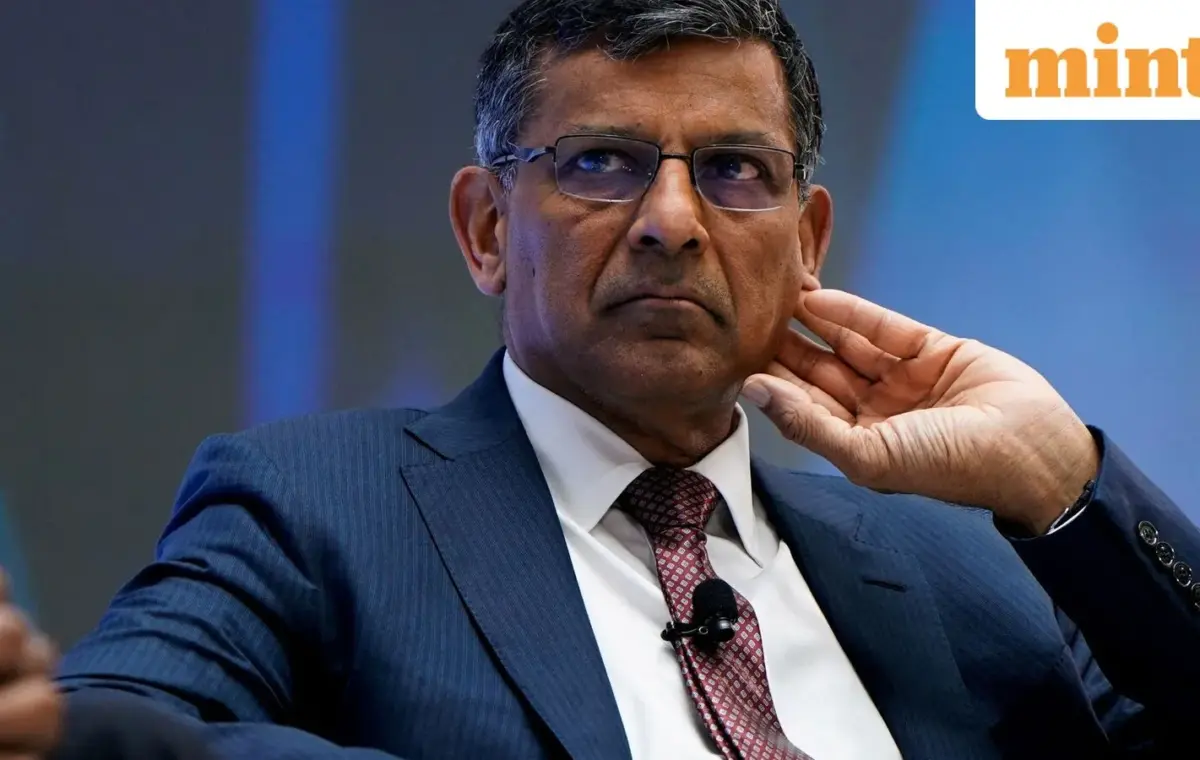
Raghuram Rajan has clarified that he has neither questioned nor endorsed India’s latest GDP growth figures and has nothing further to say on the matter. However, he has often been puzzled by the economy’s growth trajectory, and wonders why strong GDP growth has not translated into higher private investment, greater foreign direct investment (FDI) and more decent jobs.
After India's GDP numbers were released on Monday, Rajan said on a Linkedin post, I have nothing to say about the recent GDP numbers and have neither questioned nor endorsed them.
“It would be reasonable to say that I have puzzled over the path of our GDP numbers for a while — why don't we see more private investment, more FDI, and more decent jobs if they are growing so strongly?”
That is different from questioning every last number. I leave that to those who are more expert than I am in GDP calculations, he adds.
According to data released by the Ministry of Statistics and Programme Implementation (MoSPI), India’s real GDP grew 7.8 per cent year-on-year in Q1 FY27.
However, the GDP numbers have come under scrutiny amid concerns over the recent base-year revision.
Subhash Chandra Garg, formerly the top Finance Ministry bureaucrat,commented that growth was inflated because the government had reduced its measure of gross domestic product for the year-earlier period, the basis for comparison.
Some private economists have also questioned whether the deflator — a number calculated to strip out inflation from nominal GDP to show the "real" growth rate — understates inflation relative to other price indicators.
India's statistics ministry called a news conference on Wednesday evening to rebut Garg's criticism. A senior statistics official defended the changes to how GDP is calculated, saying the shift in methodology implemented in February was the result of broad consultations.
The change, which the government said was meant to more accurately reflect economic conditions, adopted a new data series that reduced the nominal value of GDP for April-June 2025 to ₹80 trillion from the ₹86.05 trillion reported under the old GDP series.
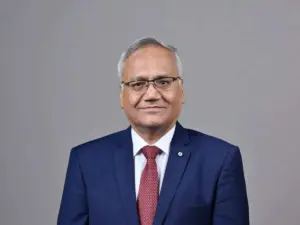
World Bank's Neelkanth Mishra also came in support of the government, saying that claims questioning the 7.8% growth figure are “obviously wrong”. And further argued that the new GDP series has significantly improved the methodology and credibility of India’s economic growth estimates.
Mishra also pointed out that downward revision to the base is not new information, and it was already known in March.
, Executive Director, World Bank for India, said that claims questioning the 7.8% growth figure are “obviously wrong”. And further argued that the new GDP series has significantly improved the methodology and credibility of India’s economic growth estimates.
If Monday's GDP data had used the old base, nominal growth would have been just 2.6%, rather than the 10.3% reported by the government. But the government says simply comparing the two is not apples-to-apples.
Sanchari Ghosh is an Assistant Editor at Mint with over 12 years of experience in journalism, specialising in personal finance, DLT & DeFi, geopolitics and foreign policy, with a particular emphasis on how these areas intersect. <br>
She writes extensively about how money works in everyday life—helping readers navigate personal finance decisions. <br>
As AI reshapes investing behaviour, capital is increasingly flowing into decentralized ecosystems, redefining how assets are managed, traded, and valued. She focuses on explaining how money flows within frameworks like Distributed Ledger Technology (DLT), DeFi protocols, and crypto markets—while also exploring what the future of money could look like in a trustless, programmable financial world. <br>
She also focuses on immigration-related issues, simplifying complex topics around visas, passports, overseas financial planning, and the many practical challenges Indians face while moving or living abroad. <br>
Alongside personal finance, Sanchari has a strong understanding of international politics, contemporary and historical conflicts, and global state decisions. She closely tracks how geopolitical developments influence economies, markets, and individual financial choices, bringing together finance and global affairs in her reporting. <br>
She began her career as a desk editor, which gave her a strong foundation in news writing. Over time, her interest naturally shifted toward personal finance. Before joining Mint in 2020, she worked DNA, The Times of India, Outlook Money, BloombergQuint, and ETMoney. At Mint, she got an opportunity to expand her coverage to include immigration and geopolitical developments while continuing to closely follow personal finance trends and market movements.As a journalist, she is committed to accuracy, intellectual rigour, and fairness. <br>
She is an English Major and her work took her across cities including Delhi, Mumbai, and Pune. Living independently from an early age gave her firsthand experience in managing life and money on her own. This practical exposure sparked her strong interest in personal finance. <br>
Outside the newsroom, Sanchari is a sports enthusiast who regularly plays lawn tennis and squash. In her younger years, she was also a national-level badminton player.