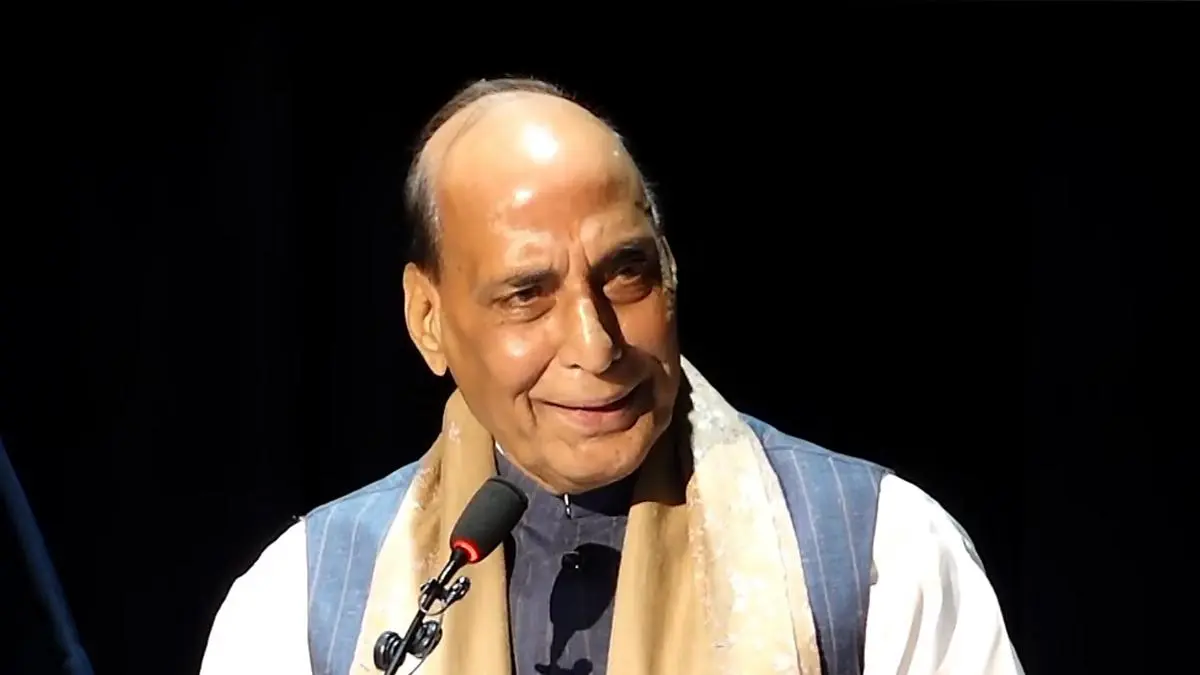
Union Defence Minister Rajnath Singh
| Photo Credit:
PTI
Defence Minister Rajnath Singh on Saturday described preventive healthcare as the "future model" of the healthcare system, citing changing disease patterns, rising treatment costs and India's ageing population as key reasons for shifting the focus towards early detection and prevention.
Addressing the inauguration of a Mahajan Imaging and Labs facility here, Singh said non-communicable diseases such as diabetes, hypertension, heart disease, cancer, kidney failure and mental health disorders were increasingly becoming major health concerns.
"These diseases do not develop in a day. They develop gradually in the body over years. High sugar, high cholesterol, fatty liver and borderline blood pressure are all warning signs. The future of healthcare lies in identifying these warning signs in time," he said.
Singh said preventive healthcare also made economic sense as treating advanced diseases could cost lakhs of rupees, while annual health check-ups, lifestyle counselling, early screening and basic medication could cost hundreds or a few thousand rupees.
"As health expenditure increases, the government, insurance companies and employers will all want diseases to be stopped at an early stage," he said.
He cited demographic changes as another reason for adopting the preventive model. India currently has a predominantly young population, but a large proportion of the population is expected to be elderly by 2050.
"If we do not adopt the preventive model now, the burden on hospitals will naturally increase in the future," Singh said.
He said preventive healthcare was a matter of "national economy and national security" and called for all stakeholders to contribute towards making it the "new normal".
Singh said the focus of healthcare should not remain limited to treating diseases after they appear but should include prevention, early detection, risk assessment and personalised healthcare.
He said diagnostic medicine was undergoing a major transformation with artificial intelligence, advanced medical imaging, molecular diagnostics, digital pathology, automation, genomics and data-driven healthcare.
However, Singh cautioned that "technology alone could not define excellent healthcare" and stressed the "need to protect sensitive patient data, maintain transparency in the use of AI, avoid bias and give priority to patient safety".
"When a person comes for a test, he brings his anxiety, fear and hope. Protecting that trust is the biggest responsibility of everyone in healthcare," he said.
Singh said India had a large pool of doctors, scientists, engineers and researchers, along with a rapidly expanding digital ecosystem and a vibrant startup environment, giving the country an opportunity to lead healthcare innovation.
He said the government had sought to connect a large section of the population with affordable modern healthcare and credited Prime Minister Narendra Modi with launching Ayushman Bharat, which he described as the world's largest health insurance programme.
Source: Read the original article on www.thehindubusinessline.com