The Trump Administration hasn't said too much about Venezuela, but late Friday, President Trump did.
In a Truth Social post, the president said the United States is going to take "majority control" of more than 65 billion barrels of Venezuelan oil, about 21% of the country's total reserves.
The post comes as the war in the Middle East staggers on without resolution.
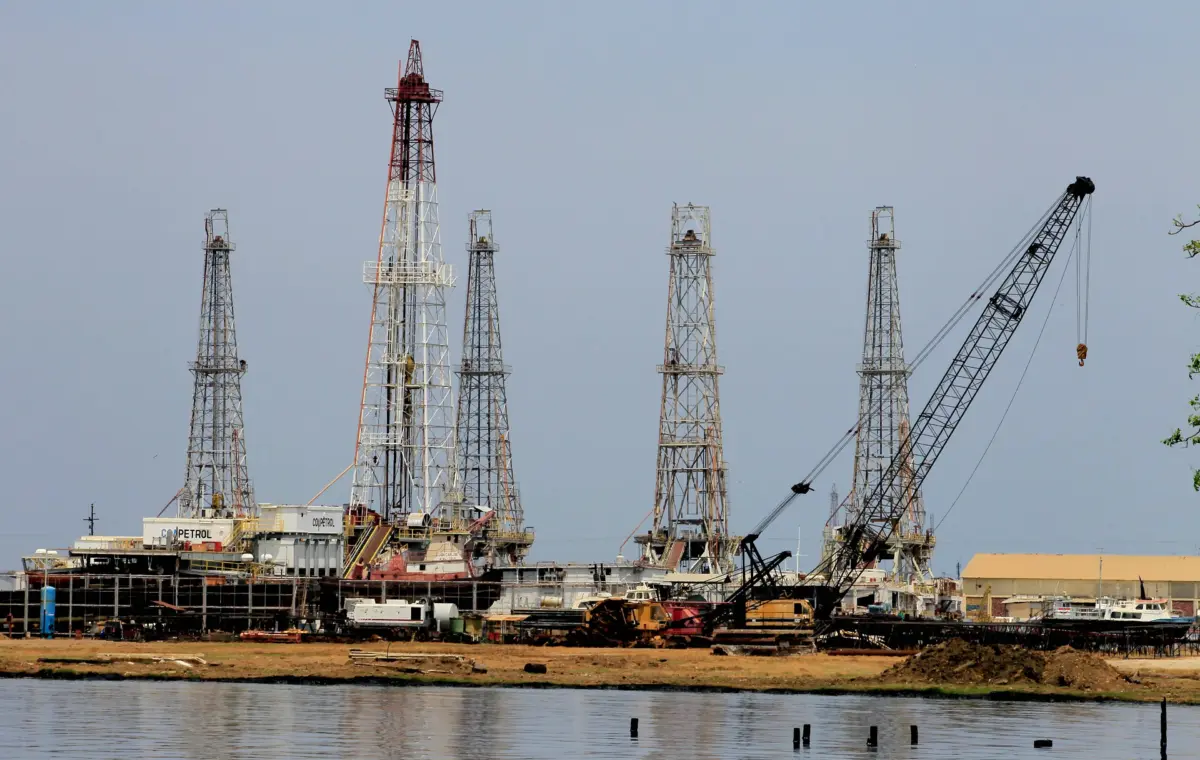
The presidential announcement says the deal would involve the administration working with "private companies" to rebuild Venezuela's decaying energy industry.
The United States would hold a 55% share of the venture, The Wall Street Journal suggested.
Related: Oil prices tumble as Oman and Iran make an unexpected move
In theory, the deal would double the reserves under U.S. control. These totaled 46 billion barrels at the end of 2024, according to U.S. Energy Information Administration data.
Venezuela has claimed its total reserves total about 303 billion barrels, although many oil experts are skeptical they're quite that big. But the oil and gas resources are quite substantial, said David Goldwyn, president of Goldwyn Global Strategies, a Washington, D.C. energy consulting firm that has worked on Venezuelan issues.
It is true, however, that Venezuela was the world's largest producer of crude oil from the 1920s through 1965 when Saudi Arabia's giant oil fields began to produce crude oil.
The Trump announcement claimed the arrangement with Venezuela would be "THE BIGGEST OIL DEAL IN WORLD HISTORY!" The deal "greatly increases our Oil Supply, and will substantially lower Gas Prices for all Americans, long into the future," the president said.
U.S. gasoline prices are up more than 44% in 2026 because of the U.S.-Israel war with Iran.
But there were very few details with the announcement. These unknowns include:
How much and how fast can the private companies invest in the Venezuelan resources and make the production available?
Has the Venezuelan government confirmed the deal? The Truth Social statement says only that "the Highly Respected Interim President of Venezuela, Delcy Rodriguez" worked closely with Secretary of State Marco Rubio and Defense Secretary Pete Hegseth on it.
Does Venezuelan law require the country's congress to approved it? Does Rodriguez, the acting president, have the legal authority under Venezuelan law to negotiate the deal?