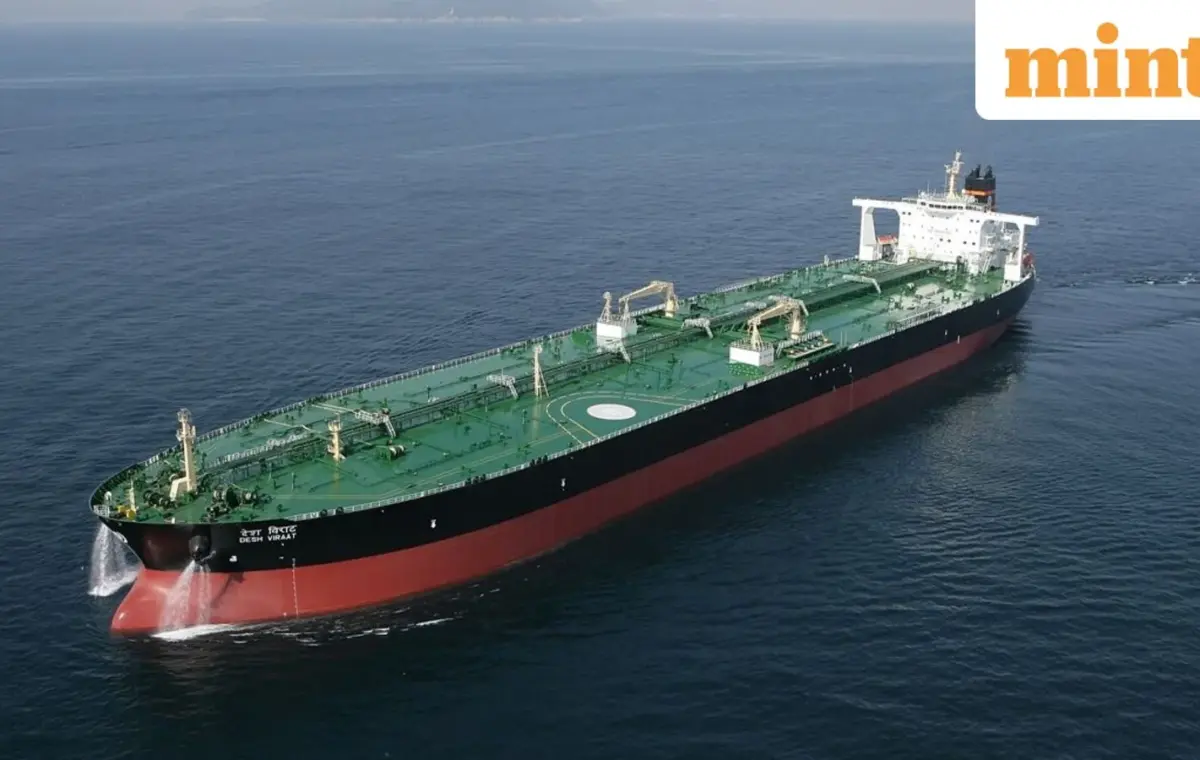
New Delhi: India plans to add 100 vessels to its merchant fleet over the next five years as the government seeks to reduce dependence on foreign shipping lines and retain a larger share of the freight it pays to transport critical cargo overseas.
The plan, discussed at the National Shipping Board’s (NSB) first ‘Sagar Samvad’ event on Tuesday, is part of a broader five-pillar roadmap aimed at making Indian-flagged shipping more competitive and helping the country emerge as one of the world’s top five ship-owning nations by 2047.
India currently pays close to $75 billion annually to foreign shipping lines to transport cargo including crude oil, natural gas, coal and urea, minister of state for ports, shipping and waterways Shantanu Thakur said at the event.
“That is not a performance problem for Indian shipowners—it is a competitiveness and demand-partnership problem,” Thakur said. “We must command our own waterline.”
The proposed fleet expansion comes as Indian-flagged vessels face a 16-20% cost disadvantage compared with foreign-flagged ships, according to industry representatives at the event. The gap stems from taxes on ship imports and maintenance services, tax deducted from seafarers’ wages, taxation of freight income and higher domestic financing costs, they said.
The cost disadvantage is particularly challenging under India’s Right of First Refusal (RoFR) framework, under which Indian shipping companies are expected to match foreign freight rates to secure cargo. This, industry executives argued, makes it difficult for domestic shipowners to expand their fleets despite the strategic importance of having greater control over cargo movement.
The NSB panel has proposed five measures to bridge the competitiveness gap: fiscal reforms, assured cargo support, access to competitive financing, regulatory streamlining and improved ease of doing business. The measures could pave the way for adding 100 ships to the Indian fleet within five years, the panel said.
Union minister for ports, shipping and waterways Sarbananda Sonowal said India needs to ensure that domestic shipowners participate in the growth of the country’s maritime economy rather than allowing the expansion to benefit foreign operators.
“Taken together, these are not five separate asks; they are the architecture of a nation choosing, at last, to own its own trade,” Sonowal said.
The government’s push comes as India seeks to expand its maritime capacity under Maritime India Vision 2030 and Maritime Amrit Kaal Vision 2047. Sonowal said the government is targeting a quadrupling of port capacity to 10,000 million tonnes annually by 2047.
However, expanding the fleet will require more than ordering new vessels. Access to long-term, low-cost capital is likely to be critical given the high upfront cost of ships and the financing advantage enjoyed by international operators. The NSB’s proposed reforms are aimed at enabling Indian shipowners to compete on more comparable terms.
The government is also seeking to build a broader domestic maritime ecosystem. Sonowal highlighted the ₹10,000 crore Container Manufacturing Assistance Scheme, under which global shipping major Maersk has begun placing orders for containers manufactured in India.
The fleet expansion is also expected to complement efforts to strengthen India’s shipbuilding capabilities and create maritime employment. Labour minister Mansukh Mandaviya said India’s large pool of seafarers could become a major source of skilled employment as global demand for maritime professionals rises.
India current fleet size is of 1,544 vessels, including 492 overseas vessels and 1,052 coastal vessels. The country’s shipping fleet capacity by gross tonnage (GT) crossed 14.2 million for the first time in March this year as 92 vessels were added to the Indian registry in fiscal year 2026 (FY26), contributing a combined GT of 1.584 million.
Sonowal had earlier indicated that the country may add about 62 vessels in FY27, creating an additional 2.85 million GT capacity.