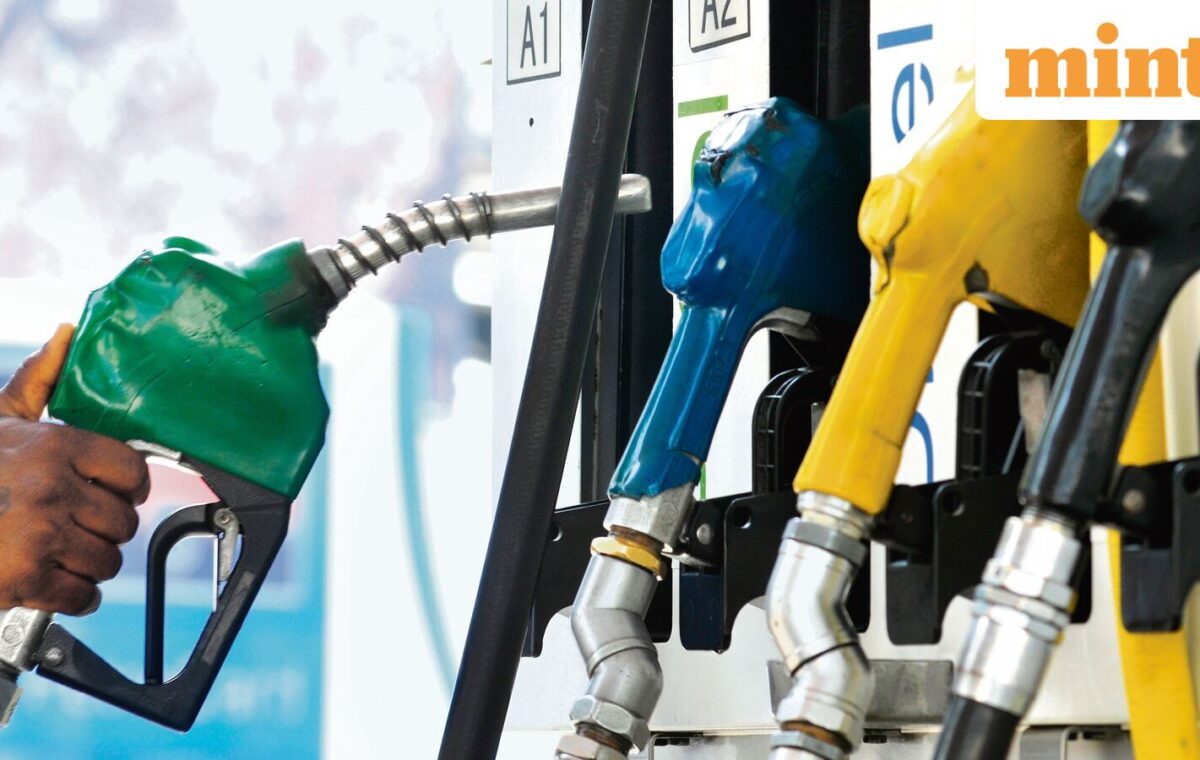
New Delhi: Worried that ethanol-blended E20 petrol could hurt vehicle mileage and engine life, consumers are increasingly trading up to premium, high-octane petrol, driving its share of sales to 12-15% from about 4% in March, according to petrol pump dealers and industry executives.
The shift is notable because premium petrol is also blended with 20% ethanol. Consumers are nevertheless paying ₹110-115 a litre for higher-octane variants such as Indian Oil Corp.’s XP95, Bharat Petroleum Corp.’s SPEED and Hindustan Petroleum Corp.’s poWer95, commonly known as “branded petrol”, compared with about ₹102 for regular petrol, in the belief that their higher octane rating and additive packages can mitigate some of the problems they associate with E20.
“Both fuels contain 20% ethanol, but due to its higher octane rating, the impact on mileage is negligible,” said Prabhat Kumar Singh, president of the Bihar Petroleum Dealers Association (BPDA), which counts 4,500 fuel retail outlets as members. “Also, the availability of the fuel at almost every retail outlet has helped increase its sales threefold.”
The surge has gathered pace in recent weeks as concerns over E20’s impact on vehicles persist, even as the government maintains that the fuel is safe and has no significant adverse impact on vehicle performance. Dealers expect demand for premium petrol to rise further unless consumers are given more choice, including access to E10 or ethanol-free petrol.
“The demand for Octane 95 petrol was around 4-5% earlier, now it is around 15% on an average,” a New Delhi-based fuel retail pump dealer said on condition of anonymity. “Even a daily commuter using an entry-level bike now asks for this expensive variant.”
Monty Sehgal, national spokesperson of the Federation of All India Petroleum Traders, which represents over 80,000 pumps, said Octane 95 now is over 12% of their sales, and a proportionate drop has been seen in regular petrol sales.
“As the demand for ethanol-free petrol grows, the Centre can look at making this variant either ethanol free or E10 (blended with 10% ethanol),” Sehgal said. “This would not require any infrastructure change or logistical issue as the blending is done at the depots and they would just have to lower the blending for one variant.”
Meanwhile, enquiries for Octane 100, an ethanol-free fuel with a higher additive content, have also increased, although actual sales remain limited because of scarce availability and its steep price of ₹160-170 a litre. Retailers estimate that the fuel accounts for only about 1% of overall petrol sales.
“We have seen instances where people have come up with innovative ideas and fill half the tank with Octane 95 or the regular fuel, and the other half with Octane 100,” said the Delhi-based retailer mentioned above.
The Union government’s chief economic adviser V. Anantha Nageswaran had also pitched for reintroducing E10. “Restoring a lower blend at the pumps, say, E10, alongside the option to buy E20, would calm most public concern,” he wrote in a recent column in The Indian Express.
Even oil marketing companies (OMCs) are sensing the shift. “There has been an increase in the premium petrol demand in the last few months, but that has not led to a massive jump in overall petrol sales,” said an executive with an OMC, who did not want to be named, adding that along with the shift to high-octane petrol, there is also a surge in diesel sales, implying a parallel consumer shift from petrol to diesel, where there is no blending of ethanol or any other biofuel as of now.
Data from the government’s Vahan portal showed that diesel car sales jumped to 71,385 units in July 2026 from 64,853 in June.
Queries emailed to the state-run OMCs, and the ministries of petroleum & natural gas, and road transport & highways, remained unanswered till press time.
Calls for providing additional options to consumers—in the form of E10 or even ethanol-fuel variants—have grown in the past few months. Consumer organisations and opposition political parties have been questioning the government over the ethanol blending policy and the alleged impact on the vehicles and their fuel efficiency.
Ashim Sanyal, managing trustee of Consumer VOICE, pointed out that a vehicle is a significant asset for most consumers, and they naturally prefer fuel that they believe can support better engine performance and longevity. “It would be useful for policymakers to keep these consumer concerns in mind as the country moves towards higher ethanol blending,” Sanyal said.