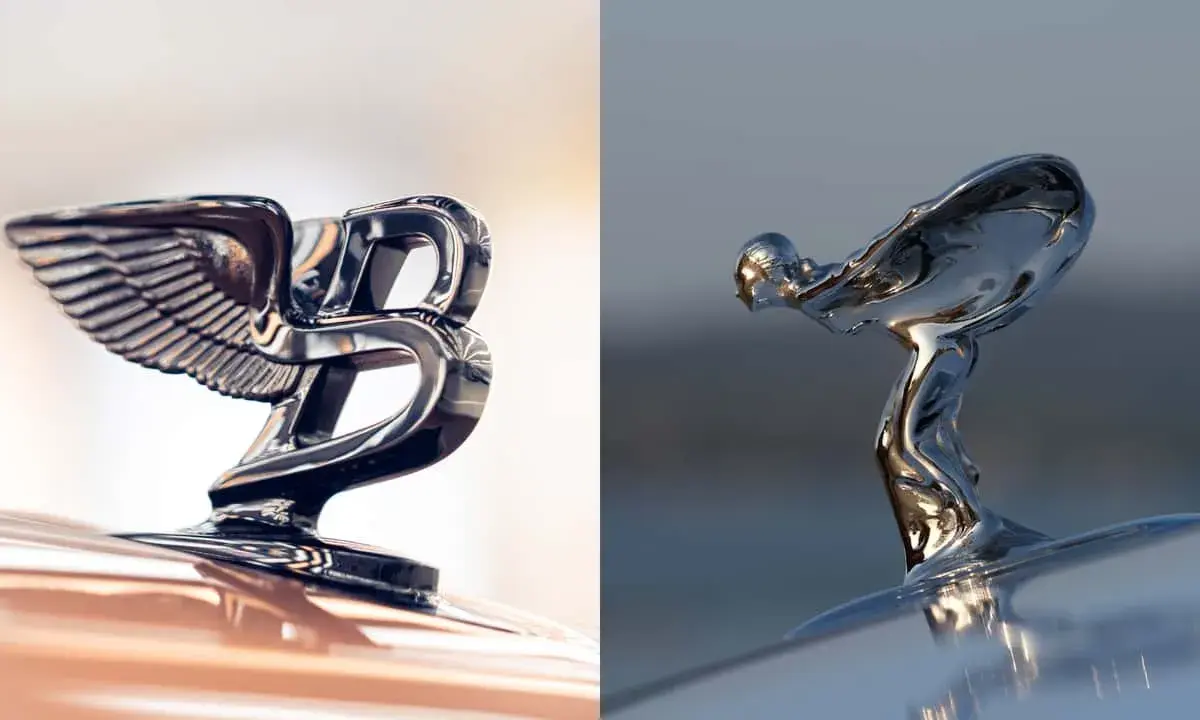
If Ferrari is the benchmark for supercars, then Rolls-Royce is the ultimate symbol of luxury automobiles—and that didn’t happen by accident. It’s the result of years of careful brand-building and, perhaps more importantly, remarkable consistency. Even as technology has changed and competition from China has grown, Rolls-Royce has managed to maintain its position at the very top of the market.
BMW’s acquisition of Rolls-Royce in 2003 only strengthened that position, giving the British marque access to the resources of one of the world’s largest automakers. Bentley took a different path. Five years earlier, in 1998, Volkswagen Group acquired Rolls-Royce’s former partner, giving Bentley the resources to become a truly global luxury automaker in its own right.
More than two decades later, the two brands still share plenty of history. But they’ve ended up in very different places. (This story originally appeared on Motor1 Italy)
One of the biggest factors shaping the future of the two brands is that Rolls-Royce and Bentley are no longer true rivals. While both are luxury automakers and some of their models compete in the same broad segments, Rolls-Royce has increasingly positioned itself a step above Bentley in terms of exclusivity and price. The Cullinan and Phantom are perhaps the clearest examples.
That positioning also helps explain the difference in sales volumes.
In 2003, Bentley sold 1,017 cars worldwide, about 3.4 times as many as Rolls-Royce. At the time, the ultra-luxury market was still a relatively small niche, particularly in Europe, and was dominated by large sedans.
Both brands, however, began growing rapidly as they turned more of their attention toward the US market.
By 2007, both companies had set new sales records. Rolls-Royce surpassed 1,000 deliveries for the first time, while Bentley broke the 10,000-unit mark.
The growth continued through the end of the decade. In 2010, Rolls-Royce sold nearly nine times as many cars worldwide as it had in 2003. Bentley, meanwhile, had grown its sales by roughly five times over the same period.
The difference in scale remained significant, though. In 2011, Bentley sold 7,003 cars worldwide, roughly twice the 3,538 Rolls-Royces delivered that year.
That was hardly a surprise. Bentley's lineup was broader and generally more accessible, while Rolls-Royce remained focused on the very top end of the luxury market.
Bentley Vs Rolls-Royce Global Sales Ratio
The next major shift came as both brands expanded beyond traditional luxury sedans.
Bentley had an early advantage with the Continental family, while Rolls-Royce brought the Ghost into its lineup as a somewhat more accessible alternative to the Phantom. Those models helped both brands attract new customers without abandoning their luxury positioning.
Rolls-Royce Cullinan Series II Black Badge