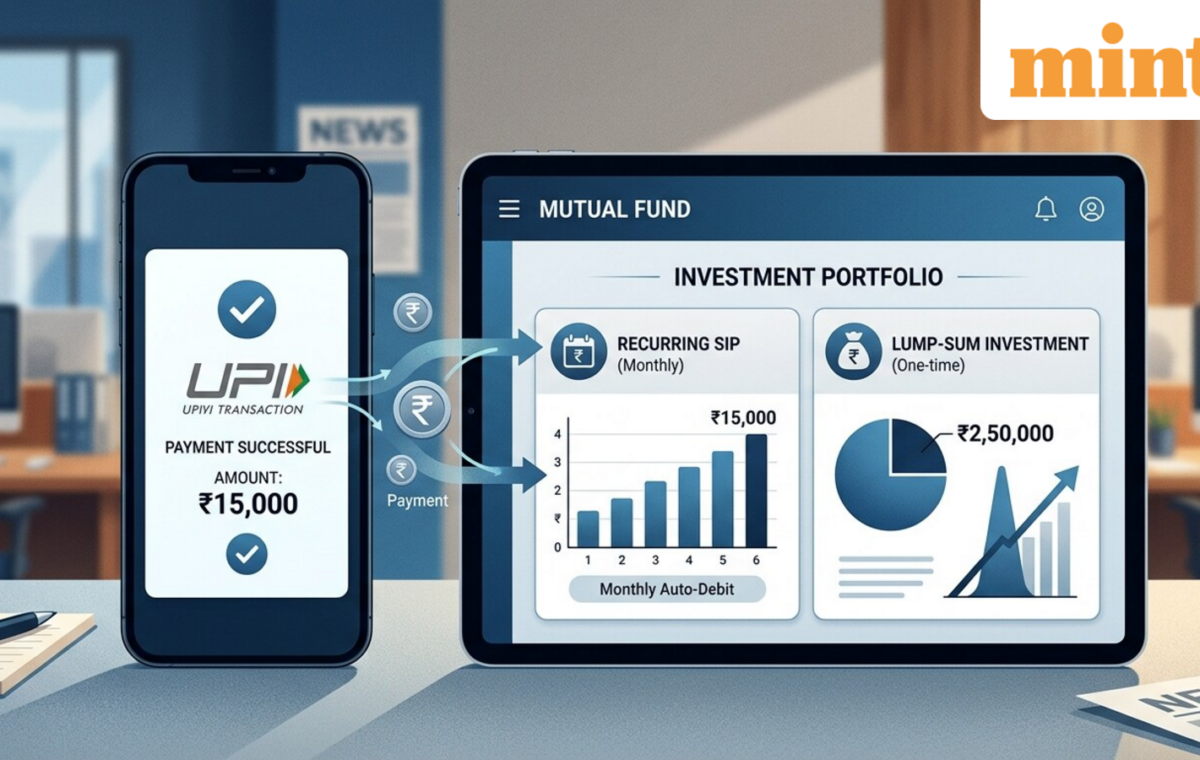
Merchant Discount Rate (MDR) is a fee charged for processing certain digital payment transactions. It is paid by the merchant rather than directly by the consumer.
Recently, the government has created an enabling framework under which MDR on UPI could be introduced. While the final rules and applicable transaction categories are yet to be clarified, the move could have implications for mutual fund investors.
According to Siddharth Maurya, Managing Director, Vibhavangal Anukulkara Pvt Ltd, “the impact would depend more on who collects the UPI payment, who covers the MDR initially, and how the MDR is recovered.”
Shams Tabrej, Co-founder & CEO, Ezeepay (MJ Digital Services), observed, “MDR would not automatically increase a mutual fund's expense ratio. It is a payment-processing cost rather than a fund-management cost.”
Tabrej added that if an AMC absorbs the charge, a direct-plan investor may not see any additional cost. If the charge is passed on as a convenience or payment fee, however, the investor could face an additional cost.
For regular-plan investors, distributors already operate with commission and other operating costs, so the additional payment expense could affect their servicing economics.
Protima Dhawan, Director & Unit Head, Anand Rathi Wealth, said, “The AMC or its payment partner may bear the cost for direct investments, while an intermediary or its payment partner may bear it for investments through brokers, distributors or wealth platforms, depending on the payment arrangement.”
Tabrej explained that “the key difference for SIPs is the frequency of UPI payments. A monthly SIP involves a recurring payment, so even a small MDR could add up over the year if the cost is passed on to the investor”.
Tabrej said that “if the framework applies MDR to eligible merchant transactions above ₹2,000, then a ₹2,001 payment could potentially fall into the chargeable category, depending on the final rules, merchant category and exemptions.”
Dhawan added that “under the current notified proposal, both SIP and lump-sum investments made through UPI could potentially be affected if the transaction falls within the eligible category and exceeds the proposed ₹2,000 threshold”.
However, Maurya cautioned that the actual impact will depend on how MDR is structured—whether it is charged as a percentage of the transaction, as a fixed amount, or based on a threshold.
He explained that a fixed ₹5 MDR would have a greater relative impact on a ₹1,000 investment than on a ₹50,000 investment. If MDR is percentage-based, the rupee cost would rise with the investment amount, although its percentage impact would remain the same.
Says Dr VK Vijayakumar, Chief Investment Strategist, Geojit Investments, “Around 45% of new SIPs will be impacted. As far as lump sum investments are concerned, the UPI share is low at around 10%. If the new proposal is implemented, investment through UPI will move away to banks.”
Dhawan noted that “UPI is not the only payment option available to mutual fund investors". Depending on the platform, investors can also use NEFT, RTGS and net banking.
Yes. Dhawan said, “The impact could differ across AMCs, brokers, distributors and wealth platforms because the entity processing or receiving the payment may initially bear the MDR. Investors may not immediately see a separate charge, but absorbing the cost across a large number of transactions could put pressure on platform margins.”