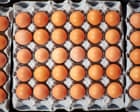
UKHSA says imported eggs eaten in restaurants are source of outbreak that has infected more than 200 people
Contaminated eggs have infected 207 people with salmonella across the UK, killing one and hospitalising 34.
Eggs imported into Britain and eaten in cafes and restaurants were the source, the UK Health Security Agency has said. The outbreak has prompted public concern. But what is salmonella, and are eggs safe to eat?
“Salmonella isn’t a single ‘bug’ but the name we give to a whole group of bacteria that can cause infection in humans. There are over 2,500 different types of salmonella bacteria,” said Dr Malick Gibani, a clinical associate professor at Imperial College London.
Most disease in the UK is caused by just a few of those 2,500 types. They are usually found in contaminated animal products such as meat, dairy and eggs. But chocolate, peanut butter and cucumbers have also been at the centre of previous UK outbreaks.
Salmonella can be spread by contaminated drinking water, contact with animals, person-to-person spread or poor food hygiene and preparation, “particularly when cooked food comes into contact with contaminated and undercooked or raw foods”, said Gibani. Storing food poorly, which allows the bacteria to replicate, and not cooking contaminated foods thoroughly are also risks.
Salmonella causes an infection of the gut – gastroenteritis – and that leads to food poisoning. Symptoms include abdominal pain, diarrhoea, vomiting and a fever, though some people also feel very tired and suffer sore muscles and joints. Symptoms can appear within a few hours to a few days.
Gibani said: “Salmonella can be unpleasant for a few days. In most cases, people will get better without any treatment, but in some instances antibiotics might be needed, particularly in vulnerable groups. Antibiotics are usually only needed when there’s a severe bloodstream infection, but thankfully this is pretty rare in healthy adults in the UK.”
Children and older adults, people whose immune systems are suppressed, perhaps because they are taking chemotherapy drugs for cancer, and those with underlying health conditions can be more severely affected.
Scientists aren’t sure why. But, Gibani said, the fact that such groups are hit more severely shows that “there’s definitely an immune component which influences severity”.
“In some people, instead of just causing an infection inside the gut, salmonella bacteria can spread into the blood, which can be very dangerous. When this happens it can cause a severe sepsis-like illness,” he said.
“We often consider salmonella as a disease with an ‘image problem’. It can be dismissed as ‘just food poisoning’ and a bit of diarrhoea. But severe and invasive cases kill thousands of people a year around the world.”
Severe infection is a big problem in parts of sub-Saharan Africa, which has high rates of salmonella bloodstream infections, including in children who have recently had malaria, are malnourished or have advanced or untreated HIV.
No. But you should choose the eggs you buy carefully, experts say.
Kimberly Coffin, the technical director of supply chain assurance at LRQA, a global risk management firm based in Birmingham, said: “The safest choice for consumers is to buy eggs produced in the UK which carry the red lion mark. These eggs come from hens that have been vaccinated against salmonella.”