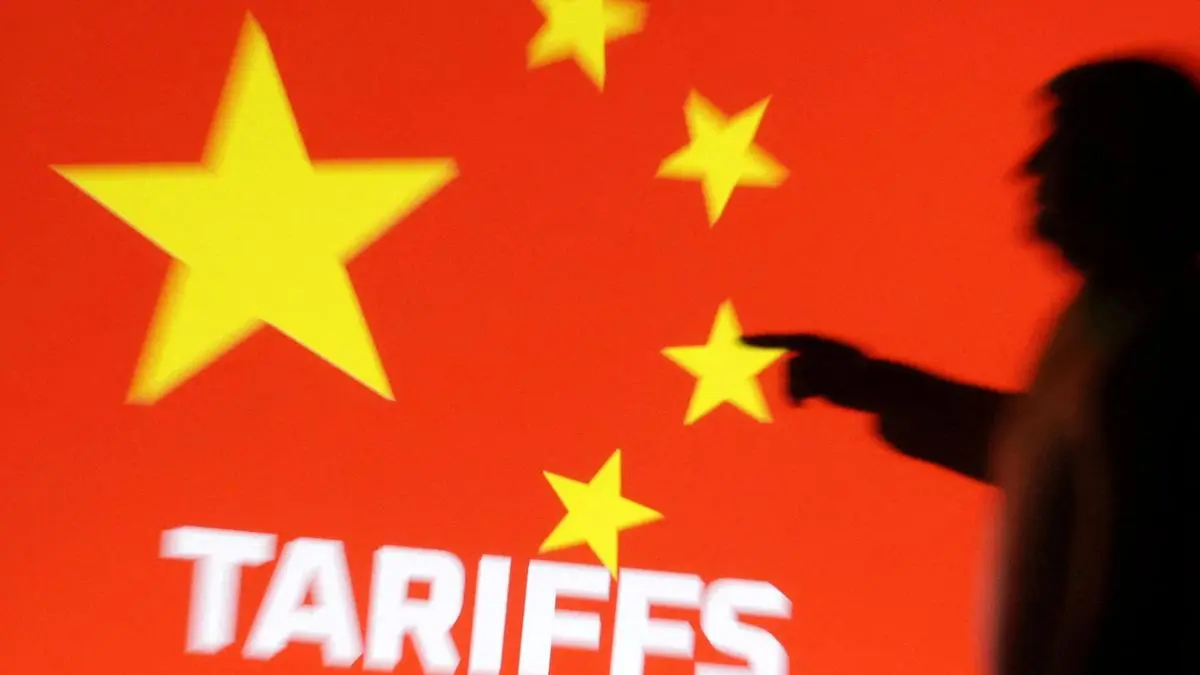
US President Donald Trump is considering a new 7.5 per cent tariff on Chinese goods over concerns about excess industrial capacity and underpriced exports, according to people familiar with the deliberations.
| Photo Credit:
Dado Ruvic
President Donald Trump is moving toward levying a new tariff on China that would penalise the world's second-largest economy for flooding the global market with underpriced goods, according to three people familiar with the matter.
Two of the people, who spoke on condition of anonymity to discuss internal deliberations still being finalised, said Trump is considering setting the new tariff at 7.5 per cent. It's a level administration officials believe would not endanger the one-year trade truce between Washington and Beijing or a planned White House meeting between Trump and Chinese President Xi Jinping expected to take place in late September.
The move, if finalised, appears to be a calibrated effort by the White House to work around a Supreme Court decision earlier this year that struck down Trump's plan to implement a sweeping, high-tariff scheme not seen since the 1930s.
After that decision, the Trump administration announced in March it was launching formal investigations targeting excess industrial capacity and forced-labour regulations in China and other nations.
It isn't clear if the US administration is also nearing its decision in its probes of the other economies that it announced it was investigating for unfair trade practices, including the European Union, Singapore, Switzerland, Norway, Indonesia, Malaysia, Cambodia, Thailand, South Korea, Vietnam, Taiwan, Bangladesh, Mexico, Japan and India.
The White House and the US Trade Representative's office did not respond to requests for comment on the tariff deliberations, which Bloomberg News reported earlier Monday. The Chinese embassy in Washington also did not immediately respond to a request for comment.
The excess industrial capacity probe of China was initiated under Section 301 of the Trade Act of 1974, which allows the president to levy tariffs against nations that discriminate against US companies or commerce.
The people familiar with the deliberations stressed that Trump could still change his mind on the new tariff on China.
It would come on top of tariffs of 10 per cent to 12.5 per cent announced last month for 60 economies around the globe that the Trump administration accused of failing to effectively enforce a ban on goods produced with forced labour.
Many countries, including China, protested that move, which took effect just as the clock ran out on temporary tariffs Trump had turned to after the Supreme Court in February struck down sweeping “reciprocal” tariffs he levied on nearly every US trade partner.
China last month pushed back against claims of overcapacity, anticipating that the US would soon release results of its probe and impose new tariffs.
Massive capacity in a slew of Chinese industries, from autos to solar panels, cement and steel manufacturing, has drawn increased attention from Beijing's trading partners in recent years.
Although China's own leaders have prioritised rebalancing the economy, slowing domestic demand has prompted companies to expand into overseas markets. Surging exports pushed China's trade surplus to a record of nearly USD 1.2 trillion last year.
China has never sought a large trade surplus, the Ministry of Commerce said in a recently published report titled “China's Position on the So-called Excess Capacity Issue.” The deliberations come as the Treasury Department on Monday warned countries doing trade with Iran that new secondary sanctions are in the pipeline aimed at ostracising nations that continue to do business with Tehran. China is Iran's biggest trade partner.
Source: Read the original article on www.thehindubusinessline.com