Updated August 28, 2026 — 12:18pm,first published August 28, 2026 — 8:43am
You have reached your maximum number of saved items.
Virgin has posted a sharp rise in profits, helped by effective fuel hedging, an internal transformation program, and new planes coming into the fleet.
The airline’s twin embrace of fuel hedging and new planes helped lower expenses during a year disrupted by geopolitical conflict. The airline has continued to simplify its fleet, while relying on extensive improvements in operations.
“Our strategy is working,” Virgin chief executive Dave Emerson said. “We have built a simpler, more focused business with a primarily domestic network, targeted short-haul international services and global connectivity through our airline partners.”
Underlying pre-tax earnings rose to $753 million in the financial from $664.4 million the previous year, the company said. Statutory profit rose 4.7 per cent to $501 million. Virgin will pay a dividend of 7.6¢ a share. Shares surged 6 per cent on the results.
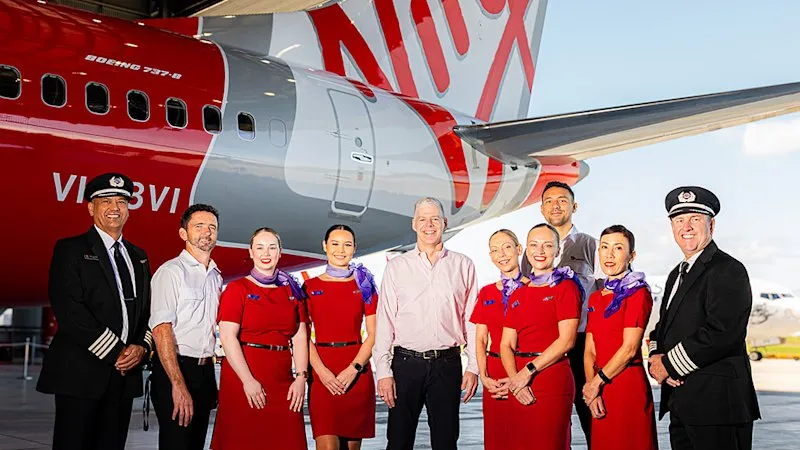
The airline took delivery of 17 planes in the fiscal year, including 13 Boeing 737-8 Max aircraft with engines that burn less fuel. The airline, flying 108 narrow-body planes, is seeing the benefit of a refreshed fleet.
“We delivered strong earnings growth and further margin expansion despite significant inflationary pressure,” Emerson said.
“As we continue to renew our fleet with next-generation aircraft, you’ll see average age of our fleet has dropped nearly two years.
“That’s reflected in much more efficient fuel burn,” he said.
The average age of a Virgin plane is 11.5 years, compared to 16.3 years for Qantas, according to Planespotters.net. Qantas is also undergoing a fleet refresh.
The 737 Max-8s have a roughly 20 per cent fuel burn advantage versus the older 737-800s that they’re replacing.
While the aviation industry has faced a fuel price shock triggered by the war, Virgin hedged both crude oil and the more volatile jet fuel refining margins, which limited its exposure to the cost compared to Qantas.
Qantas, which flies a larger fleet, on Thursday said fuel price rises related to the war in the Middle East added $610 million in costs for that airline.
Reflecting the use of aggressive hedging in 2026, Virgin’s fuel bill was flat year-on-year at $1.090 billion – helped by the hedging of refining margins, and the more efficient burn rates of new 737-8 MAXs. In March 2026, Virgin had hedged 80 per cent of jet fuel refining margins and 90 per cent of Brent.