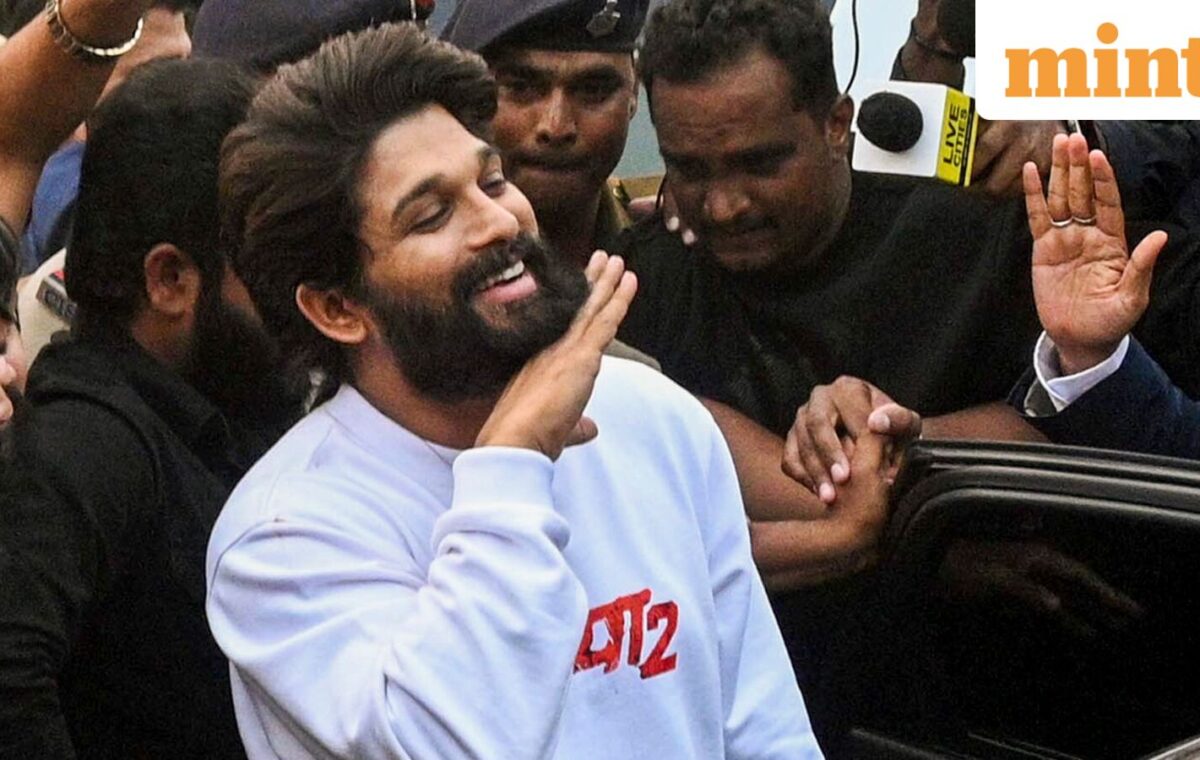
The popularity of South Indian movie stars such as Allu Arjun, Ram Charan, Jr NTR and Prabhas has spread beyond their home markets, but this has yet to translate into a commensurate rise in their brand value.
According to the latest Celebrity Brand Valuation Report by Kroll, a financial and risk advisory solutions provider, only two south Indian actors – Rashmika Mandanna and Samantha Ruth Prabhu – feature in India's 25 most powerful celebrity brands in 2025, along with Tamannaah Bhatia, who works actively across Tamil, Telugu and Hindi cinema.
Entertainment industry experts say that while many southern stars command deep but geographically concentrated influence, Hindi cinema has historically benefited from the language's reach across a much larger, contiguous consumer market. A Hindi-speaking star can potentially front one campaign that travels across several states.
On the other hand, some of the rare southern stars whose influence transcends those boundaries have historically chosen not to monetise it extensively through endorsements.
“Theatrical popularity does not automatically translate into national endorsement value. Entry into the Top 25 requires sustained pan-India brand associations, premium endorsement fees, cross-language recognition and visibility beyond an individual film-release cycle,” said Umakanta Panigrahi, managing director, valuation advisory services, Kroll.
Rashmika Mandanna exemplifies this transition, according to Panigrahi – she ranks number 12 with a brand value of approximately $75.2 million, supported by around 42.7 normalized, or long-term, brand associations. Further, among south Indian stars, women currently demonstrate greater representation and endorsement breadth in the Top 25. Allu Arjun, despite an estimated fee of ₹9.5 crore per advertisement, moved from number 24 to number 29 as his normalized endorsement portfolio declined from around seven brands to five. This illustrates that premium pricing must be accompanied by sufficient portfolio breadth, Panigrahi added.
Bollywood superstar Shah Rukh Khan jumped to the top spot in 2025, with a brand value of $177.9 million, reaffirming his outsized influence among Indian celebrities. Ranveer Singh retained the second spot with a brand value of $162.9 million.
Jag Chima, co-founder at IPLIX Media, an influencer marketing and talent management agency, agreed that star power and measurable celebrity brand value are not the same thing. Celebrity brand value is also influenced by endorsements, social media presence and their commercial relevance across different markets.
Industry experts emphasize that there is a cultural difference in the way social media and the larger celebrity ecosystem function down south. According to producer and director Sarah Thomas, for many established southern actors, social media has traditionally been an extension of their work. Their pages are predominantly about films, upcoming releases, productions and professional milestones. There is comparatively less emphasis on documenting everyday life or consciously turning the individual behind the actor into continuous content.
“There are actors like Vikram or Suriya who can command enormous recognition and affection within their primary markets, but their ability to influence consumer behaviour outside those markets may be more limited. Someone knowing an actor because they have seen a successful dubbed film is very different from having enough familiarity and trust in that person for their endorsement to influence what you buy,” Thomas said. Further, if celebrity valuation is substantially connected to endorsement activity, stars such as Rajinikanth or Vijay, who choose not to monetise their influence in that manner, will naturally not be represented by such rankings in proportion to their actual cultural power.
Moreover, the last two years saw a harsh reality check for the ‘pan-India’ label. Juhi Seernani, senior PR associate, Opraah, a creator-first agency, said several big-ticket, high-budget southern films with pan-India ambitions underperformed outside their home markets, and industry voices have pointed to over-reliance on scale and spectacle over storytelling that actually travels. When a formula that worked for Baahubali or Pushpa is replicated without the same attention to the script, national audiences notice—and that can show up in brand valuations in the next cycle, when there is no fresh success to point to.
According to Ramkishen Y, professor – marketing and international business, K J Somaiya Institute of Management, a blockbuster can take actors from regional to national popularity, but they still need to maintain that visibility after the film. The real test will be whether those actors can convert one pan-India hit into a sustained national personal brand.
That said, many emphasize that a superstar in the south can have extraordinary cultural influence, theatre pull and fan loyalty without necessarily maximising endorsements, social-media activity or national media visibility. According to Shivashish Tarkas, founder and chief executive, The InterMentalist, a south Indian influencer marketing agency, south Indian actors are definitely investing more in their digital presence, and the gap with Bollywood is narrowing. Among female actors, the adoption has generally been faster because fashion, lifestyle and beauty naturally lend themselves to social platforms. Among male actors, it is more gradual, particularly because established stars still have enormous offline fan ecosystems.
“Bollywood has traditionally had the advantage of a much larger national media and endorsement ecosystem around its actors. There may also be a perception among brands that a southern actor is regional unless they have delivered a major theatrical hit in Hindi,” said Chaaya Baradhwaaj, founder managing director of digital marketing agency BC Web Wise, calling that perception outdated. “Southern actors have certainly improved their social media game, but Bollywood still treats social media more systematically as part of building the celebrity brand. There is usually a steady mix of films, fashion, personal life, brand associations and media appearances. Some southern male stars continue to communicate mainly around film releases and important occasions,” she added.
Lata writes about the media and entertainment industry for Mint, focusing on everything from traditional film and TV to newer areas like video and audio streaming, including the business and regulatory aspects of both. A journalist for over a decade, she has extensively covered relatively underexplored aspects of what is seen as a glamorous business—from the death of single-screen cinemas in small towns to unreasonable star fees and demands eating into film production budgets and eventually inflating ticket rates. She was early to spot what are now established and ongoing trends such as the slowdown in the OTT business and the surge in the popularity of southern movies, which she continues to spotlight. A regular writer of in-depth, long-form features, her best-read work ranges from critical profiles of companies like Netflix, JioHotstar and Prime Video to takes on sexual harassment and mental health in the entertainment industry. She spends a lot of time watching content, particularly the old-school way in movie theatres, to make sure her writing is embedded in on-ground experience, since she believes the best stories often come from the travesties of directly engaging with and paying for the content that she writes on, and not from celebrity tweets, company releases or listings. A graduate of the Columbia School of Journalism, she has also authored a book on the business of entertainment.