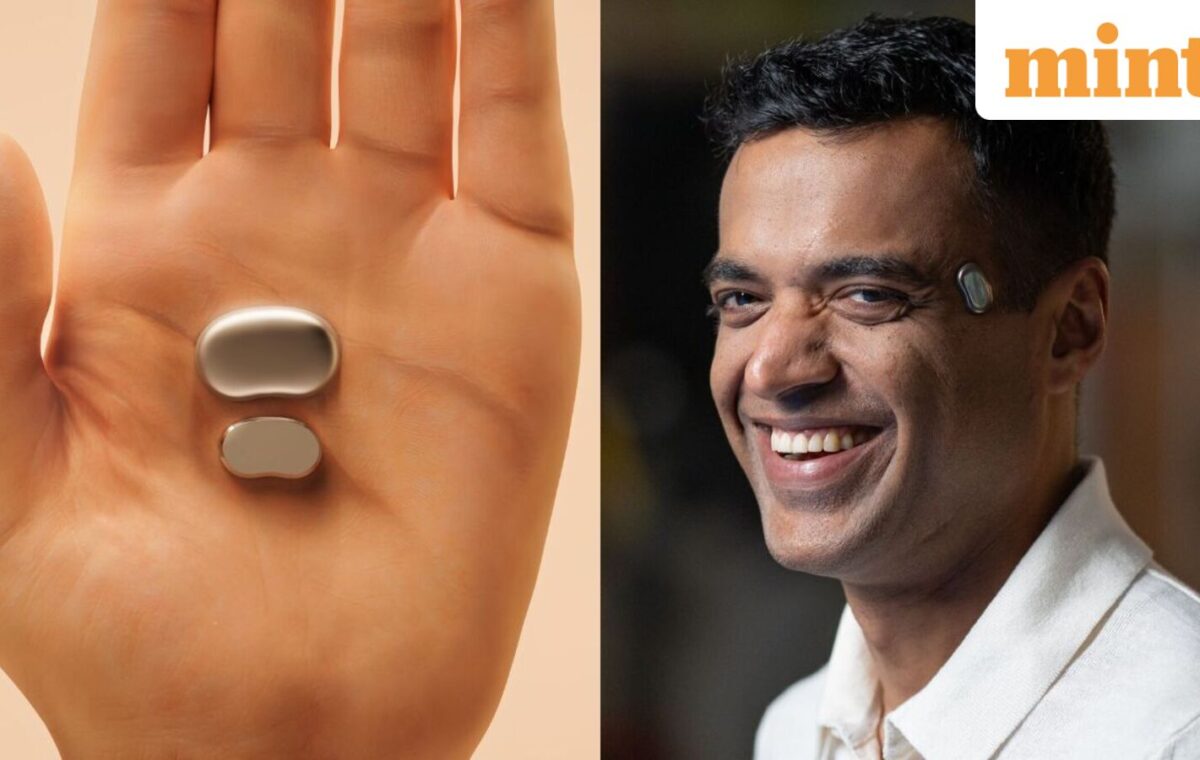
Zomato and Eternal founder Deepinder Goyal has announced an update on Temple, his experimental wearable device, saying the latest version is now less than half the size of the version shown earlier.
In a post on X, Goyal said the smaller design makes Temple the "smallest wearable on the market" by volume while describing it as the "most^10 powerful".
"Temple is now less than half the size of what you've seen so far," Goyal wrote, adding that the company would soon begin taking pre-orders for a limited launch edition of the device.
Goyal said the wearable is expected to ship before the end of 2026. He asked people interested in the product to join Temple's mailing list for updates on pre-orders and the launch.
However, Goyal did not provide specific measurements or technical details explaining how the device's size had been reduced.
Temple is an experimental wearable being developed by Goyal's team that is designed to track physiological signals from the temple region of the head.
The device has also been associated with a biomarker called "Entropy", which Goyal previously described as a measure of the body's metabolic activity in real time.
According to an earlier Mint report, Temple displays Entropy as a live score that refreshes every second and ranges from 1 to 250. The company says lower scores indicate deeper states of rest, while higher readings correspond to greater physical exertion and energy use.
Temple claims the score responds to factors including sleep, stress, exercise, meals, caffeine consumption, cold exposure, meditation and strength training.
Goyal has also said the team compared Entropy readings and heart-rate data with measurements from a metabolic cart, a laboratory instrument used to assess energy expenditure. Temple claims the biomarker could provide a more accurate indication of metabolic activity than heart rate.
The company has introduced two related measurements, Entropy Maxima and Entropy Minima. According to Goyal, the former represents the highest level of output an individual can reach during physical activity, while the latter refers to the lowest metabolic state achieved while resting.
Temple has not yet disclosed detailed technical information on how the device generates its readings or how the Entropy score is calculated.
The wearable is still in early-access testing, and Goyal has previously acknowledged that the company had not released official benchmarking data.
In a January post on X, responding to questions from doctors and influencers about the device, Goyal said Temple had not made commercial announcements at the time and that the science would be shared when the product was actually available for sale.
The device was recently spotted being worn by badminton player PV Sindhu during the BWF World Championships 2026 in New Delhi.