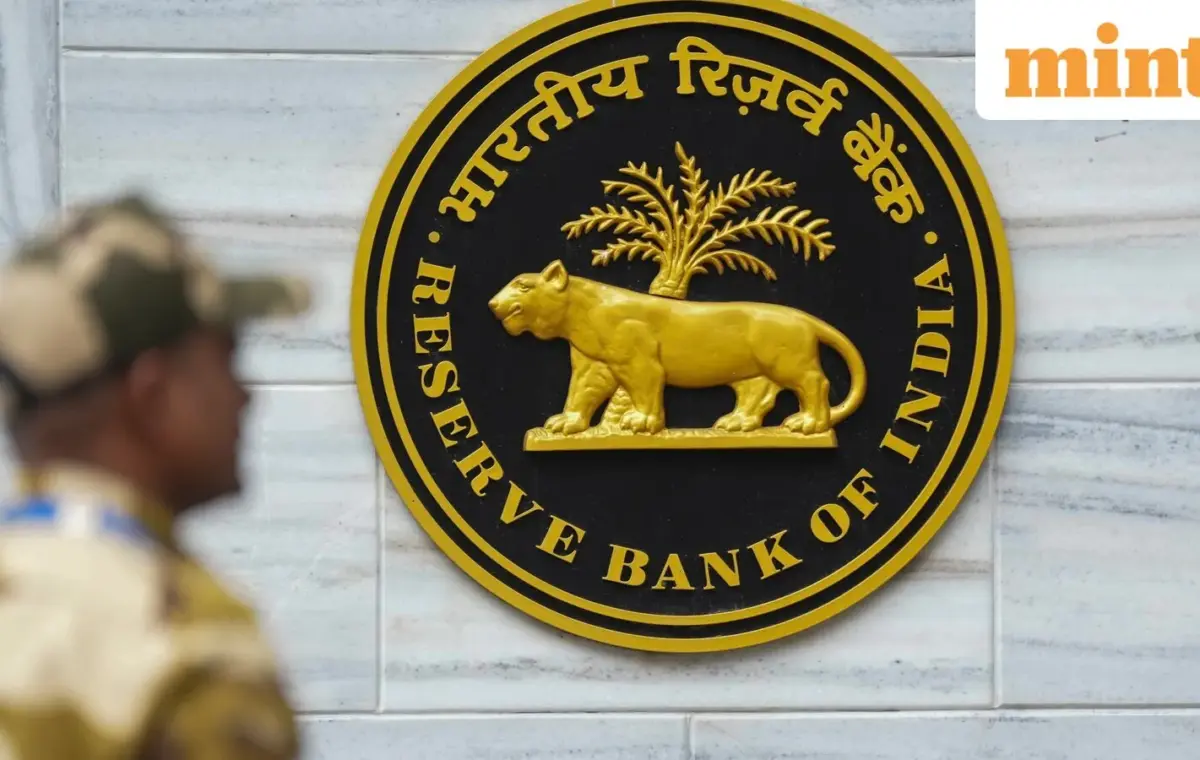
Mumbai: Non-banking financial companies (NBFCs) and housing finance companies (HFCs) need to diversify their funding sources and reduce their vulnerability to shifts in market sentiment and funding concentration, Reserve Bank of India deputy governor Shirish Chandra Murmu said on Thursday.
A deeper, more liquid corporate bond market would help strengthen funding structures, while securitization should evolve beyond its role as a liquidity tool, Murmu said in his keynote address at the CII NBFCs & HFCs National Summit 2026 in Mumbai on Thursday.
“Securitization should also go beyond liquidity tools to become a genuine way to transfer risk and free up capital, with proper skin in the game and transparency rules,” Murmu said.
He also said the non-banking sector would face new challenges alongside new opportunities as it expands to meet rising credit demand.
While NBFCs and HFCs have evolved from niche lenders into specialized, technology-driven institutions that complement banks, their growth needs to be backed by stronger governance, risk management and customer protection.
Murmu identified five areas critical for sustainable growth: governance and culture; liquidity management; asset quality and credit risk; customer protection and fair conduct; and digital transformation and cyber resilience.
On governance, he said boards and senior management must build a culture of compliance and ethics across their organisations. “As the sector scales, its strength must scale with it,” he said.
Liquidity management, he said, remains crucial given the sector’s exposure to changes in market sentiment and concentrated funding. “Strong liquidity risk management is not optional,” Murmu said, pointing to lessons from past liquidity events.
On asset quality, he cautioned that faster credit growth could increase risks and called for rigorous stress testing, early warning systems and dynamic provisioning. “Growth must never come at the cost of undermining standards,” he said. He also said artificial intelligence and machine learning should be used more to identify early signs of borrower stress.
Stressing the importance of grievance redressal and responsible lending, he said, “The pace of innovation must never outpace customer protection, especially for vulnerable customers.”
He said the RBI will continue to follow a proportionate regulatory approach for NBFCs. The central bank had chosen not to create a separate regulatory framework for digital finance, instead applying the principle of “substance over form” and adapting existing rules to digital contexts, he added.
The RBI has introduced several measures over the past five to six years to strengthen the sector, including a liquidity risk management framework, liquidity coverage ratio requirements and the scale-based regulatory framework for NBFCs.
NBFC credit currently stands at around 16.7% of nominal GDP, up from 15.9% a year earlier, while their credit is equivalent to about 27% of credit extended by scheduled commercial banks, up from 26% a year earlier, Murmu said.
“The opportunities ahead of NBFCs and HFCs are real and large,” Murmu said, highlighting India’s economic growth, demographic dividend, rapid urbanisation and digitalisation as drivers of future credit demand.
Subhana Shaikh is a business journalist at Mint, where she covers the Reserve Bank of India, monetary policy, and India’s bond markets. She has seven years of experience in reporting on financial markets, with a focus on banking and the broader financial system.<br><br>She began her career after completing her postgraduate diploma at the Indian Institute of Journalism and New Media, Bengaluru. She then spent five years at Informist Media, a news wire agency, where she closely tracked bond markets and the BFSI sector, developing a strong foundation in market reporting. She later moved to NDTV Profit, where she expanded her coverage across a wide range of business and economic stories.<br><br>At Mint, Subhana focuses on explaining central bank decisions, bond market movements, and banking trends for her readers. Her reporting combines on-ground inputs with careful analysis to help audiences understand complex financial developments.<br><br>Based in Mumbai, she is interested in exploring stories across the business landscape. Outside of work, she enjoys reading and spending time with her three cats.