Updated August 27, 2026 — 5:04pm,first published August 27, 2026 — 8:53am
You have reached your maximum number of saved items.
Qantas chief Vanessa Hudson says flight delays due to chronic shortages of air traffic controllers at Sydney Airport are unacceptable for travellers, Australia’s flagship carrier and the nation’s aviation industry, and has called on Airservices Australia to fix it.
Speaking on the day Qantas delivered its full-year results, Hudson said 60,000 of the airline’s passengers had been held up in July by Airservices’ ground delay programs, which are aimed at ensuring safe airport traffic during times of constrained capacity.
“We’ve been very clear with the air traffic controllers that we need to see that improve because the level of disruptions that we’ve had in July is not acceptable,” Hudson said. “They know that, and they are working really hard to improve that.”
Airservices “needs to address [the issues] because delaying that amount of customers – 60,000 across the group and tens of thousands more across the industry – is not OK.”
Airservices, which manages the day-to-day traffic at the nation’s airports, has come under fire in recent weeks, both because of a string of taxiway incidents in Sydney, and a pattern of delays which have rippled through the aviation system. Hudson also drew a line to gate bottlenecks at Sydney Airport, saying that the “pressure on gate availability does actually increase when airlines don’t operate to schedule”.
“This kind of gate pressure can be exacerbated by what we’re seeing in some of the ground delay programs that are introduced by air traffic controllers.”
Airservices declined to comment on Hudson’s remarks.
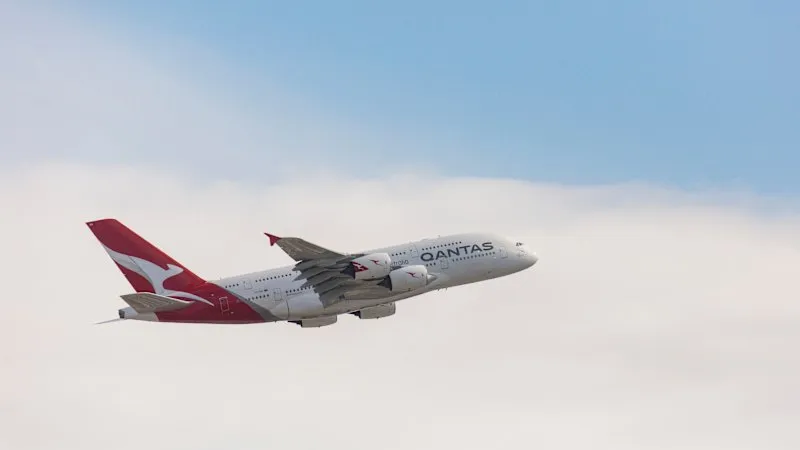
Hudson made her comments after revealing that Qantas’ profits took a hit as rising fuel costs sapped the benefit of sustained demand for international travel, and confirming that the airline will retire its popular A380 fleet, beginning in mid-2028.
Underlying pre-tax profit fell 13.7 per cent to $2.06 billion in the year ended June 30, down from $2.39 billion in fiscal year 2025.
The company said its fuel bill jumped by more than $600 million during the year, as it was hit hard by the ramifications of the Middle East conflict. The airline forecast revenue growth of between 8 per cent and 10 per cent in the current year, helped by higher fares and a reduction in seats.
Qantas shares jumped 5.2 per cent in Thursday’s session.
The airline plans to begin retiring the much-loved, but high-maintenance A380 fleet from 2028, saying the planes will be “successively retired in the years beyond that”, according to Hudson.
She said the double-decker Airbus has had “an important role […] for the group in terms of responding to the impact and the growth in demand that we see as a result of the Middle Eastern conflict.”