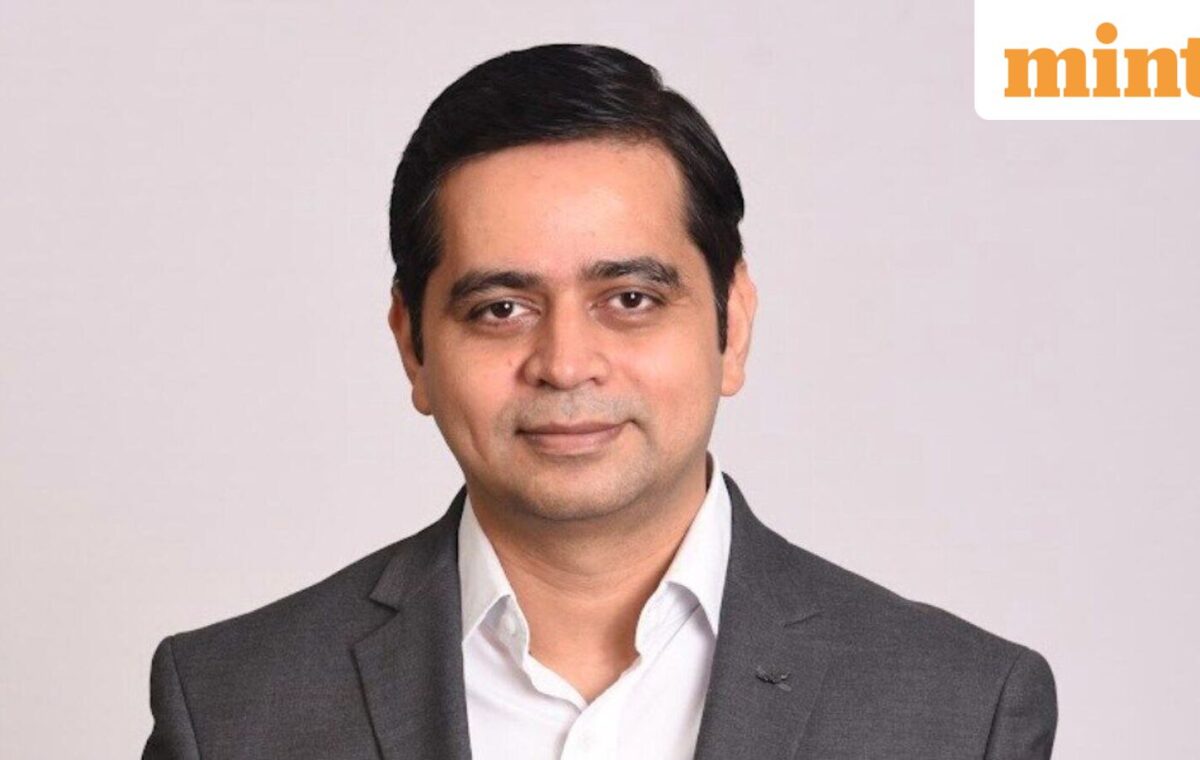
Navi Ltd's rapid growth as a Unified Payments Interface (UPI) platform is helping power its arm Navi Finserv’s ambition to expand its loan portfolio into segments beyond personal loans.
The parent’s payments platform acts as a funnel for Navi Finserv’s lending business, said its managing director and chief executive, Abhishek Dwivedi, adding that the aim is to offer products that Navi’s customers need or currently seek from other lenders.
“That's (personal loans) the first product we picked up and started focusing on building it. Now the focus will be essentially on how we can get into more things,” he said, adding that the plan is to now build “our muscle” in LAP before thinking about more product lines.
It plans to explore segments such as merchant financing and loans against mutual funds, Dwivedi told Mint on Wednesday. But it can enter merchant financing only once the parent secures a payment aggregator licence.
“Merchant finance, we can do only when you have a PA licence. Our UPI has scaled up in the last two years, mostly, and lending has been around for the last five years. So, of course, that's our next step, and we'll get into that,” he said.
Personal loans account for 90% of its ₹13,000 crore loan book (outstanding loans as of 31 March 2026), with the rest comprising its newly launched LAP business. The average ticket size is about ₹1.4 lakh for personal loans and ₹30 lakh for LAP.
The company disbursed loans worth around ₹23,287 crore in 2025-26, with a gross non-performing assets (NPA) ratio at 1.3% and a net NPA ratio at 0.3% at the end of March 2026. Around 75% of its borrowers are repeat customers, whereas less than 1% are new-to-credit borrowers.
“While we are growing loans very fast, we are not approving a lot of people. I'm not very proud of that. We need to do a better job on that,” he said, adding that the platform sees around 100,000 new customers every day, against which the loan approval rate ranges between 5% and 50% for various products and customer segments.
Navi, meanwhile, announced late on Wednesday that it had raised $100 million from the Dutch investment group Prosus ahead of its planned initial public offering (IPO). It has plans to file draft papers for a public listing and has appointed bankers for the same.
Navi entered the UPI payments business in August 2023 and, in July 2024, joined the list of top ten third-party payment aggregator platforms (TPAPs) by UPI transaction volume. The platform grew rapidly, taking the fourth spot in October 2024, which it has since held, recording 84.25 billion transactions in June 2026, according to the latest data from the National Payments Corporation of India (NPCI).
The top three spots are occupied by PhonePe, Google Pay and Paytm, respectively.
Dwivedi has a four-pronged approach to building the business: customer, credit, compliance and collections. The customer piece is largely reliant on the Navi ecosystem, whereas on credit, the objective is to offer personalized and customized loan solutions, he said, adding that what really differentiates the company from peers is the focus on collections.
“We have got the best of people in collections. You will see people from the best of IIMs, ISBs, we go on day zero and hire for that because if you have to build something which is the best, you have to hire the best,” he said, adding that the company has physical collection touch points in over 90 cities.
About 50% of collections are handled in-house, while the remaining 50% are handled by third-party agents. The aim is to increase the share of in-house collections to 75% to gain more control over customers' repayments and avoid third-party recovery agents’ preference for certain lenders. “If you have your own force, you can do much better. That's the thought.”
The NBFC currently has around ₹4,000 crore of equity capital after raising ₹500 crore in two tranches through the issue of preferential shares. Future capital raising will, however, be mostly through infusions by the parent, Dwivedi said, adding that the aim is to utilize this capital to grow the book, albeit “cautiously and responsibly”.