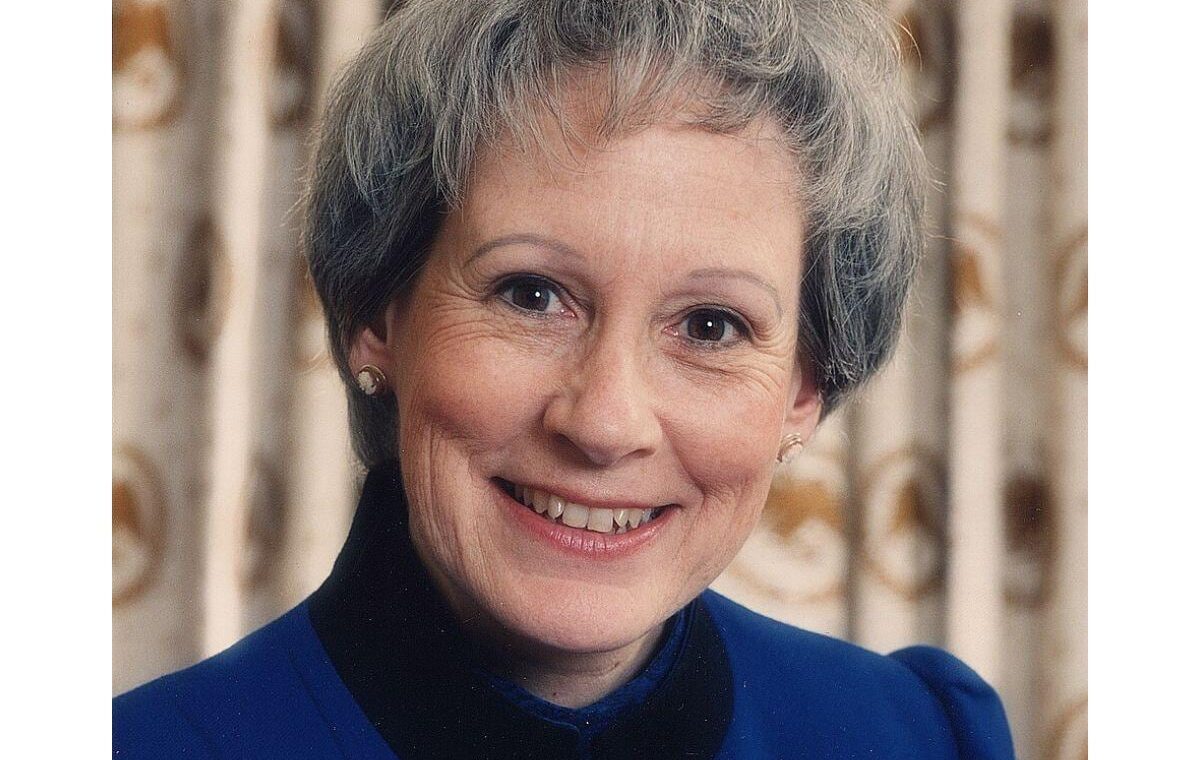
Former member of the United States Senate Nancy Kassebaum Baker (Photo: Wikimedia Commons)
Nancy Kassebaum Baker, a Kansas governor's daughter who became the first woman elected to the US Senate without following a spouse into office, has died. She was 94.
Kassebaum Baker died Friday of natural causes, according to her son, Bill Kassebaum.
"She loved Kansas. She loved people from Kansas and representing Kansas for 18 years in the US Senate," he told The Associated Press. "She was an independent-minded Republican who was willing to stand up for what she thought was right, even if that meant going against the party."
She was elected to the US Senate in 1978 and served three terms. Her modest demeanour endeared her to voters of all political stripes, though she shared the moderate, progressive Republican politics of her father, Gov. Alf Landon, the unsuccessful 1936 GOP nominee for president. Even after leaving the Senate early in 1997, she continued taking on public service roles.
She married former Sen. Howard Baker, a Tennessee Republican, in 1996. He died in 2014.
Kassebaum Baker remained an icon for Kansans generally. She could work with Senate colleagues of all political philosophies, and a 1996 health insurance law bore her name, along with that of liberal Massachusetts Sen. Ted Kennedy.
Her election to the Senate brought her immediate national attention. When she announced her retirement, she was among eight women senators and the only one to chair a Senate committee, the Labour and Human Resources panel.
She was also in a dwindling bloc of moderate-to-liberal Republicans, having supported for example a ban on assault weapons championed by President Bill Clinton, a Democrat.
Yet she never polarized Kansas conservatives as other GOP moderates did. She connected with voters because she never seemed caught up in the trappings of power, and when she retired, she acknowledged, "I'd rather cuddle up and do needlepoint all day."
She was born on July 29, 1932, as her father, an oilman from Independence, was running for the first of his two terms as governor. She earned a political science degree from the University of Kansas and a master's degree in diplomatic history from the University of Michigan in the mid-1950s.
She was a radio-station executive, spent a year in the 1970s on the staff of Kansas Sen. James Pearson and served on the school board in the Wichita suburb of Maize. She had four children with her first husband, Phil Kassebaum, including Bill, who served a term in the Kansas House. The marriage ended in divorce in 1979.
When Kassebaum Baker decided to run for the US Senate, she figured that "a woman with a background different from a man might be appealing" to people growing weary of politics. Pundits at the time estimated a Senate race would require the then-huge-for-Kansas sum of USD 1 million. In the first quarter of 1978, she spent less than USD 12,000 on her campaign, and saw herself "at the bottom of the totem pole."
However, nine candidates crowded the primary field, including three state senators and a prominent Wichita businessman. Kassebaum Baker won the GOP nomination with less than 31 percent of the vote.
Running as Nancy Landon Kassebaum, she won almost 54 percent of the vote that November against former two-term Democratic congressman Bill Roy.
Her moderate politics quickly came to the fore, when only months later, she refused to endorse an amendment to the U.S. Constitution to require a balanced budget.
"We should be wary of the seemingly simple solution," she said.
Her father, who would die at age 100 in 1987, still cast a long political shadow during her first years in office. Though he'd overwhelmingly lost the 1936 presidential race to Democratic incumbent Franklin Roosevelt, he later became an elder statesman for the party. A lecture series named for him at Kansas State University attracted presidents and foreign leaders.
Source: Read the original article on www.business-standard.com