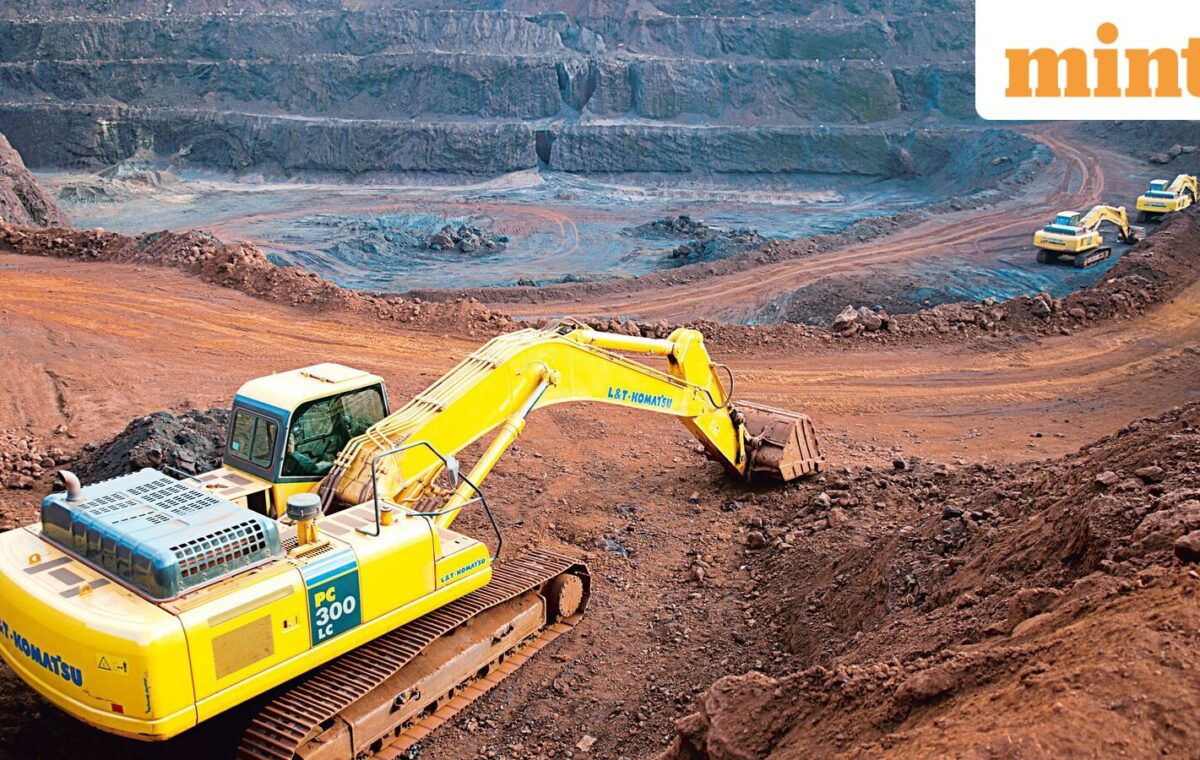
On Monday, the central government introduced a Bill in the Parliament that seeks to bar states from taxing minerals. If passed, the law will provide a welcome relief to the mining sector. Mint explains how minerals have been historically taxed and the significance of the proposed law.
The Centre is amending the Mines and Minerals (Development and Regulation) Act, 1957, by introducing a new section, 9D, which specifically prohibits states from imposing any levies on mined minerals. It states “no tax, cess or such other levy (by whatever name called) shall be imposed by the state government on mineral rights; or mineral bearing lands, either based on mineral quantity, mineral value, royalty or otherwise, except in accordance with such conditions or restrictions as may be prescribed by the Central Government”.
The amendment comes two years after the Supreme Court upheld states' right to tax minerals.
Before 1990, many states levied a cess on mineral production under their own laws, usually linked to the royalty, which is fixed by the Centre but collected by states. In 1989, the Supreme Court held that royalty is a tax and that states do not have the power to tax minerals, as such power is governed by the MMDR Act. In 1992, the Centre increased the royalty to compensate states for revenue losses resulting from the court order. In 2004, the Supreme Court, in another case, held that royalty was not a tax and that states could tax minerals.
Empowered by the new Supreme Court order, a few states, such as Andhra Pradesh, Madhya Pradesh, and Chhattisgarh, began levying taxes on minerals. In 2011, to address the divergent opinions on whether royalty was a tax and whether states could tax minerals, the matter was referred to the constitutional bench of the apex court. In July 2024, it held that royalty was not a tax and states could tax minerals.
For the cash-strapped states, the final top court order opened a new revenue stream. They quickly enacted laws to tax minerals. Jharkhand introduced the Mineral Bearing Land Cess Act in 2024, levying a cess on iron ore ( ₹400/tonne), coal ( ₹250/tonne) and limestone ( ₹40/tonne). Tamil Nadu introduced its law in 2025 and imposed a levy of ₹160/tonne on limestone and ₹250/tonne on lignite, among others. Karnataka, too, introduced a Bill in 2024. It is awaiting the governor’s assent. Andhra Pradesh, Madhya Pradesh, and Chhattisgarh continue to charge according to their earlier laws.
Some states, such as Tamil Nadu, have begun to see mineral taxes as a cash cow. For instance, its ₹160/tonne tax on limestone, a key raw material in cement production, has hurt manufacturers' competitiveness in the state, as royalties and taxes account for almost 50% of the mineral's value. Today, excessive fiscal burden runs the risk of slowing mineral extraction, hurting the production of metals and other essential commodities, and eventually slowing economic growth. The new law seeks to ease the fiscal burden on the mining sector, improve its viability and make it commercially attractive for investments.
N Madhavan has been writing on business and economy for more than 30 years now. A Chevening Scholar, he loves longform writing and has had the privilege of honing his skills at The Economist as an intern in the past. He writes across various sectors, with a primary focus on macro-economy, business groups in southern India, and corporate stories. He has worked in newspapers as well as magazines, with bylines in The Financial Express, Business Today, Forbes India and The Hindu BusinessLine. This is his fourth year at Mint where he presently curates the explanatory Primer section and also writes Long Stories. <br><br>Based in Chennai, he is the winner of the Shriram-Sanlam Award for Business Journalism. He loves ground reporting, including travelling in a truck twice between Chennai and Mumbai, to bring life to the stories he works on. He was once almost lynched while reporting on onion prices at Lasalgaon in Maharashtra, a fact he captured in the story he eventually wrote for Business Today. <br><br>Apart from writing, he loves reading, listening to music (Ilayaraja is his favourite composer) and travelling.
Catch all the Industry News, Banking News and Updates on Live Mint. Download The Mint News App to get Daily Market Updates.