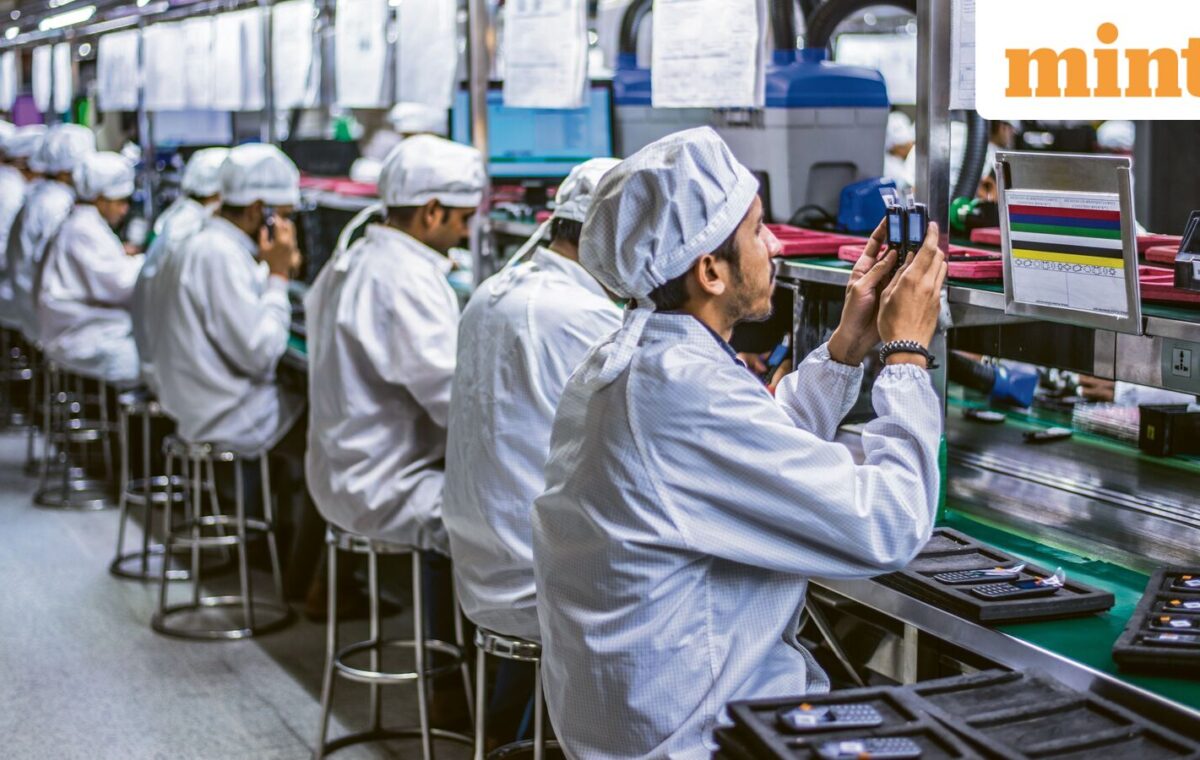
India’s IT ministry, which formally notified its ₹62,500-crore Mobile Phone Manufacturing Scheme (MPMS) on 21 August, has proposed a two-part approach to the plan, with the second part offering incentives to build a homegrown smartphone brand. With a limited Indian-brand presence in the country’s mammoth smartphone market, is a major homegrown phone feasible in the country today? Mint explains.
The idea behind creating a homegrown phone brand was driven by the fact that when it comes to generating revenue that adds to the gross domestic product of India itself, a homegrown brand would make a big impact, which does not happen today. Though India is one of the world’s top destinations for smartphone assembly after China, and alongside Vietnam, Thailand and Malaysia, the country’s own brands could never make it over the past decade. More than nationalism, an ‘Indian’ phone brand’s key purpose would be that it would own its phone design. This, in turn, could offer higher domestic revenue and strategic independence.
MPMS states that an Indian brand should be a company registered in India, have at least 51% ownership with Indian citizens, hold all patents and trademarks within India's borders, have functioning research and development (R&D) and design teams in India, and have an Indian holding key management control. Any company, including those that assemble phones for others today, can apply to set up an Indian brand—as long as it generated at least ₹1,000 crore in revenue last fiscal. The sops include 5% of net annual sales as cash incentive, and an additional 3% for conducting design and patent-linked R&D.
Yes. Noida-headquartered Lava continues to sell a slim line of smartphones of its own, though key concerns remain about domestic patents for design—achieved through R&D. Micromax, Karbonn and Xolo, which combined with Lava had a market share of over 40% in mid-2013, have all faded from smartphones. Reports have indicated that many of them are in the process of evaluating the details of MPMS, showing signs of reviving lost brands.
Yes. Experts state between 2013 and 2021, when India’s smartphone market grew 21% annually, brands had ample room to enter and experiment. First-time smartphone buyers were galore, making it easier for brands. This doesn’t hold today. Plus, over 13 years, brands like Vivo, Oppo, OnePlus and others have not only captured two-thirds of annual phone sales in India—they also have deep-rooted marketing, distribution and sales networks. Analysts say the perception of Indian brands is not great, as the country has never been a hub for tech brands. Thus, the virtual entry barrier could be quite steep for a new Indian smartphone brand.
India mentions ‘non-fiscal support’ as a factor—one that union IT minister didn’t elucidate on 21 August: stating instead that such factors will evolve as applicants develop their plans. An ‘empowered committee’, chaired by secretary of the IT ministry, will approve such measures. Typically, these mean that the Centre may create policies that could favour Indian brands to scale up, such as by mandating only Indian brands in government-led or even public-sector smartphone sourcing contracts. While this may not directly influence consumer purchase decisions, it can give an Indian brand more financial muscle to invest in distribution, marketing and technical patents.
Shouvik has been tracking the rise and shifts of India’s technology ecosystem for over a decade, across print, broadcast and web-first platforms. He's been a tinkerer of machines and PCs since childhood, a habit he was thrilled to convert into his profession. This has led him to fascinating experiences of technologies around the world, which is what keeps him hooked to his job.<br><br>Shouvik likes to believe that he is one of the few technology journalists in India who can also code. He has also been writing about the rise of AI well before it became a household name, and has met some of the most fascinating people over the years through his work.<br><br>Shouvik writes about AI, Big Tech, data centres, electronics, semiconductors, cybersecurity, gaming, cryptocurrencies, and consumer technologies. He is most fond of the stories he has written during his time here at Mint, for which he also writes 'Transformer', a weekly technology newsletter, and hosts 'Techcetra', a weekly technology podcast.<br><br>Outside of work, Shouvik spends most of his time with Pixel, whom he believes is the world's best dog. He is also an avid reader, a toy collector, a gamer and a frequent traveller.
Catch all the Industry News, Banking News and Updates on Live Mint. Download The Mint News App to get Daily Market Updates.