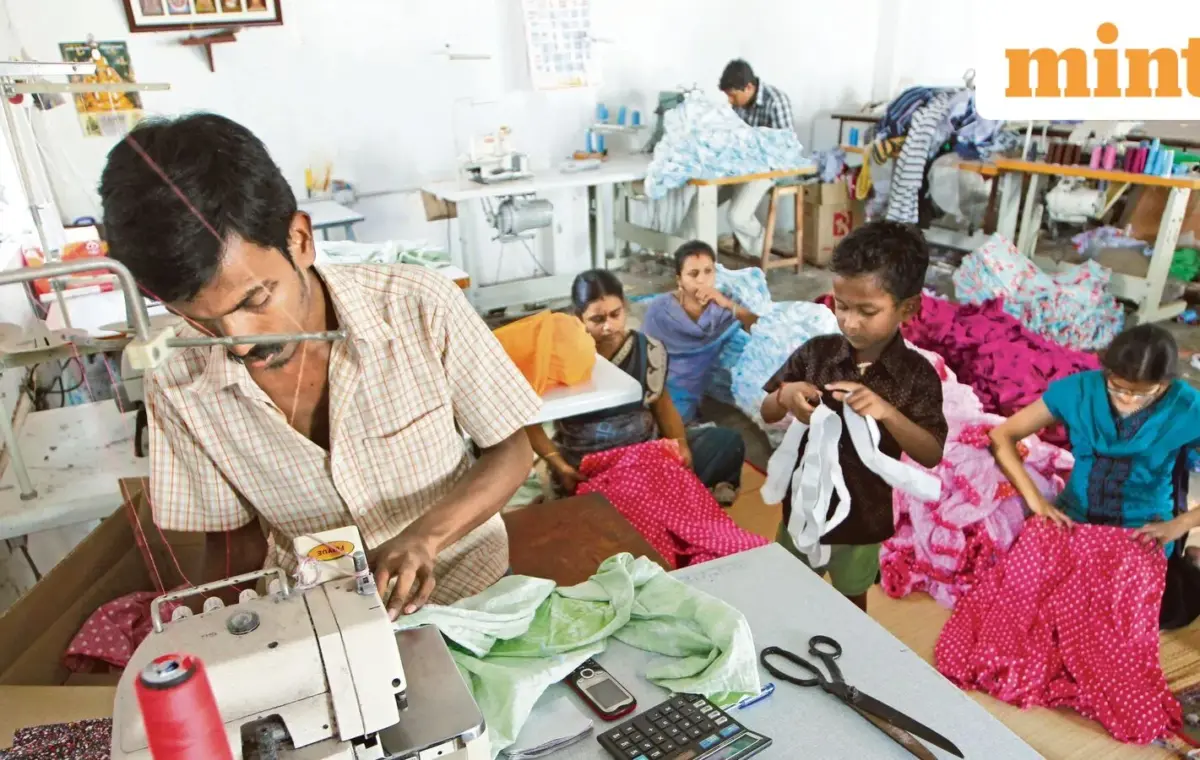
India wants its over 90 million registered MSMEs to export more through e-commerce, and to that end, has opened the inventory-based e-commerce export model to foreign investment. The move comes as India seeks to widen its exporter base and make it easier for smaller manufacturers to access global markets. Can opening this route to foreign investment take more of India's small manufacturers global?
India has historically allowed 100% foreign investment in marketplace e-commerce, where platforms connect buyers and sellers, but restricted foreign-funded inventory-based e-commerce. Earlier this year, the government created an export-only exception, allowing foreign-funded e-commerce entities to own inventory of goods manufactured or produced in India for sale overseas. The detailed framework was announced in August, allowing such companies to operate as registered exporters-on-record. The change comes alongside a broader push to make exports easier for smaller businesses.
The government has removed the ₹10 lakh cap on commercial exports via courier mode, is setting up E-Commerce Export Hubs for logistics and customs support, and has rolled out the ₹25,060-crore Export Promotion Mission to provide finance, compliance, and market-access support. The FDI change is one piece of a larger effort to make exporting easier for India's small businesses.
India's MSMEs are already major exporters. Products from the sector accounted for 48.58% of India's merchandise exports in FY25, while the number of exporting MSMEs rose from 52,849 in FY21 to 1,73,350 in FY25. So why the push for e-commerce exports? The answer lies in the fact that digital commerce can potentially make exporting accessible to businesses that cannot justify building a conventional export operation. NITI Aayog, in its February 2026 Trade Watch, said, "E-Commerce has become an important trade channel by lowering transaction and distribution costs and enabling firms, especially smaller sellers, to access domestic and cross-border markets at scale." It estimated, in the report, India's e-commerce exports at just $4-5 billion in FY23, while projecting the potential of $200-300 billion by 2030. The goal is to use the ease of digital commerce to bring a wider set of small producers into global markets who find the conventional export channel too challenging.
The challenge is not just finding an overseas buyer. A small manufacturer has to navigate customs, GST and foreign-exchange procedures, product standards, certification, packaging, payments, logistics and returns. These fixed costs can be difficult to absorb when individual shipments are small. India's e-commerce export system also has specific gaps. There are no dedicated customs codes for such shipments, unlike China, while returned goods can be treated as fresh imports and attract duties. NITI Aayog also points to limited support for warehousing, marketing and technology and low awareness among MSMEs about cross-border e-commerce. The number of exporting MSMEs has more than tripled since FY21, but the infrastructure and capabilities needed to serve overseas customers remain harder for smaller firms to build.
The new model could remove some of those fixed costs. Under the framework, a registered exporter-on-record can procure goods from Indian sellers against confirmed overseas orders and take responsibility for export documentation, customs, destination-country compliance, testing and certification, packaging, fulfilment, logistics and reverse logistics. That means a small manufacturer can potentially reach a foreign customer without building all of this infrastructure itself. But the policy has limits. It can lower the cost of entering an export market, but it cannot make a product cheaper, improve manufacturing quality, provide production scale or create demand. It also does not solve working-capital or branding challenges, issues that MSMEs grapple with. The new model lowers the distribution barriers for potential small exporters, but larger hurdles remain.
China shows both the scale of the opportunity and how much more India needs to build. Chinese MSMEs were already exporting more than $200 billion through e-commerce in 2022, according to the NITI Aayog report, compared with India's $4-5 billion e-commerce exports estimated for FY23. NITI's $200-300 billion potential for India by 2030 is therefore ambitious. China did not achieve its scale through foreign investment or platforms alone. It built dedicated customs codes and digital clearance systems, logistics networks, overseas warehouses and streamlined returns alongside a dense manufacturing base. India is beginning to build some of these pieces, but the gap remains large. The FDI change can remove one barrier. But the real change will happen once the supporting infrastructure is in place for India's small manufacturers.
Radhika P Nair is National Editor at Mint, bringing two decades of journalistic rigour to the newsroom. Since joining Mint in September 2025, she has specialised in crafting high-impact analytical narratives for Mint Long Story, focusing on startups, consumer brands, technology, the internet economy and travel.<br><br>A veteran of India’s digital evolution, Radhika has tracked the country’s startup ecosystem for over 15 years. She has reported on the rise of pioneers such as Flipkart, Zomato, Freshworks and Paytm from their nascent stages. Her career is defined by marquee reportage, including breaking the news of Flipkart’s historic $1-billion fundraise in 2014, then the largest by an Indian startup.<br><br>Before Mint, Radhika was Editorial Head at YourStory Media and contributed to leading publications including The Economic Times, NDTV Profit and Outlook Traveller. Her work is characterised by a human-focused, data-driven approach that seeks to understand shifting consumer behaviour with accuracy and depth. She is a two-time recipient of the Best Story of the Year award at The Economic Times. Notably, her Mint Long Story on Kochi’s water metro was cited in the 2026 Economic Survey of the Government of India.<br><br>Radhika holds a Master’s degree in Journalism, where she secured the first rank, and is a university gold medallist in Economics. Based in Chennai, she is an avid traveller who finds joy in a well-cooked meal and is rediscovering her passion for fiction.
Catch all the Industry News, Banking News and Updates on Live Mint. Download The Mint News App to get Daily Market Updates.