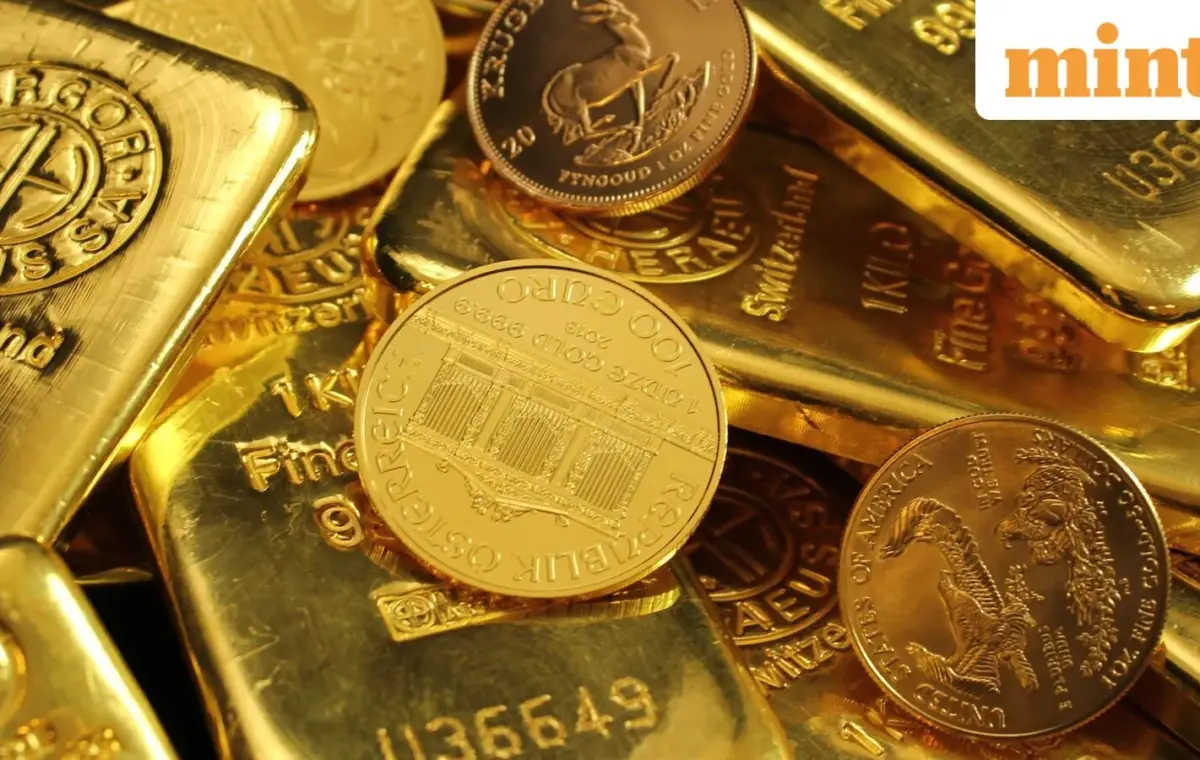
Gold’s record-setting rally may have lost momentum, but its bull run is far from over, noted Tony Kim, global head of metals trading at Goldman Sachs.
Kim describes the recent weakness as an “elongated pause” rather than the end of the broader bull market. It has come under pressure as Treasury yields and the US dollar have climbed, and, at the same time, stronger-than-expected US jobs data on September 4 increased expectations for a Federal Reserve interest rate hike on 16 September.
Currently, two developments have simultaneously complicated the outlook. First is uncertainty over Federal Reserve policy under new chair Kevin Warsh. Investors are trying to understand his approach to inflation and interest rates. The second is the US-Iran conflict and its effect on global energy markets.
Kim believes gold could set records once the current market uncertainty clears
“We're still bullish gold,” Kim says, adding “4,000 is a pretty solid floor”. He further suggests that investors looking to enter the market should consider building positions gradually rather than trying to identify the exact bottom.
“I think if you get a chance to scale in between now and the FOMC with some of the volatility around the data, closer to 4K, you want to scale into a long position there,” he said.
The biggest reason for optimism is the dramatic increase in central-bank gold purchases since the Russia-Ukraine war.
The numbers illustrate the change. Global mines produce roughly 3,500 tonnes of gold a year, according to Kim. Before the Russia-Ukraine war, central banks bought around 400 to 500 tonnes annually. They are now buying closer to 1,000 to 1,100 tonnes.
World Gold Council data confirms the scale of the shift. Central banks bought 863 tonnes in 2025, well above their 2010-21 average of 473 tonnes. In the first half of 2026, estimated net central-bank demand reached 345 tonnes.
Owing to the large share of annual gold production being absorbed by central banks, a smaller quantity is left available for jewellery, ETFs, bars and physical investment. As Kim puts it, “the amount of gold remaining for all other purposes” has become a much smaller funnel. That means the market may not need a huge amount of fresh investment money to push prices materially higher.
“And so you don't need as much investment capital to drive prices materially higher,” he said.
However, Asia’s gold demand has temporarily weakened as higher energy costs and currency pressures force countries such as India to prioritise energy security.
For now, markets will closely watch US inflation data and the Federal Reserve’s September meeting. A stronger CPI reading could pressure gold, while softer inflation may revive expectations of easier monetary policy.
Sanchari Ghosh is an Assistant Editor at Mint with over 12 years of experience in journalism, specialising in personal finance, DLT & DeFi, geopolitics and foreign policy, with a particular emphasis on how these areas intersect. <br>
She writes extensively about how money works in everyday life—helping readers navigate personal finance decisions. <br>
As AI reshapes investing behaviour, capital is increasingly flowing into decentralized ecosystems, redefining how assets are managed, traded, and valued. She focuses on explaining how money flows within frameworks like Distributed Ledger Technology (DLT), DeFi protocols, and crypto markets—while also exploring what the future of money could look like in a trustless, programmable financial world. <br>
She also focuses on immigration-related issues, simplifying complex topics around visas, passports, overseas financial planning, and the many practical challenges Indians face while moving or living abroad. <br>
Alongside personal finance, Sanchari has a strong understanding of international politics, contemporary and historical conflicts, and global state decisions. She closely tracks how geopolitical developments influence economies, markets, and individual financial choices, bringing together finance and global affairs in her reporting. <br>
She began her career as a desk editor, which gave her a strong foundation in news writing. Over time, her interest naturally shifted toward personal finance. Before joining Mint in 2020, she worked DNA, The Times of India, Outlook Money, BloombergQuint, and ETMoney. At Mint, she got an opportunity to expand her coverage to include immigration and geopolitical developments while continuing to closely follow personal finance trends and market movements.As a journalist, she is committed to accuracy, intellectual rigour, and fairness. <br>
She is an English Major and her work took her across cities including Delhi, Mumbai, and Pune. Living independently from an early age gave her firsthand experience in managing life and money on her own. This practical exposure sparked her strong interest in personal finance. <br>
Outside the newsroom, Sanchari is a sports enthusiast who regularly plays lawn tennis and squash. In her younger years, she was also a national-level badminton player.
Catch all the Instant Personal Loan, Business Loan, Business News, Money news, Breaking News Events and Latest News Updates on Live Mint. Download The Mint News App to get Daily Market Updates.
Source: Read the original article on www.livemint.com
Written by https://futureknowledge.in/