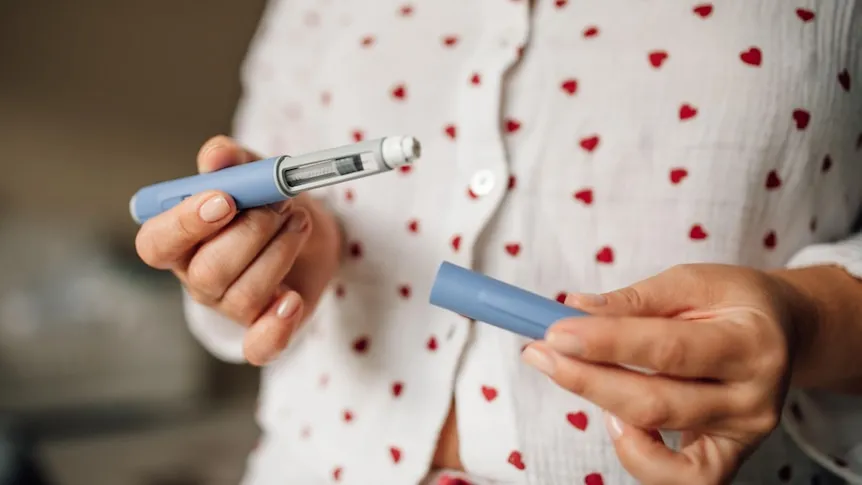
Experts say telehealth prescribing might not be the best model for prescribing weight-loss medications. (Getty Images: Tatsiana Volkava)
An Australian woman with a history of anorexia nervosa has been prescribed an Ozempic-like drug through a telehealth provider.
Experts say they are concerned but not surprised by the incident, which highlights the need for more oversight of the industry.
There are currently no endorsed national standards that telehealth-only clinics must adhere to in Australia, although there are some in development that are expected to be introduced late next year.
Experts are calling for greater oversight of telehealth clinics after an online clinic prescribed injectable weight-loss medications to a patient with a history of anorexia nervosa.
Kate (not her real name) was last hospitalised in 2022, and since then had been managing her condition with a GP and wider healthcare team.
But late last year the 25-year-old heard about a class of drugs called GLP-1 receptor agonists from a colleague at work.
These drugs, sold under brand names Ozempic, Wegovy and Mounjaro, can help with weight regulation and have a positive impact on chronic health conditions, reduce risk of obesity-related cancer and improve quality of life.
But health experts are concerned they can be used by people to fuel and maintain eating disorders, leading to serious nutritional deficits and complications including death.
Shortly after researching the drugs, Kate said she was targeted on Instagram by an ad from a telehealth clinic, which the ABC has chosen not to name, and made an online appointment.
While direct advertising of prescription drugs to consumers is not allowed in Australia, weight-loss companies can run "disease awareness" campaigns suggesting potential patients contact a doctor.
These advertising campaigns have previously been criticised by health experts as "unethical" with the potential to lead to worse outcomes for people with eating disorders.
The pharmaceutical giants behind GLP-1 drugs launched advertisements directing people towards their doctor for weight loss. Some experts warn this may affect public health messaging.
Kate said she was not screened for an eating disorder by her telehealth practitioner.
"I booked my initial consultation and after that appointment it was criminally easy to access the medications," she said.