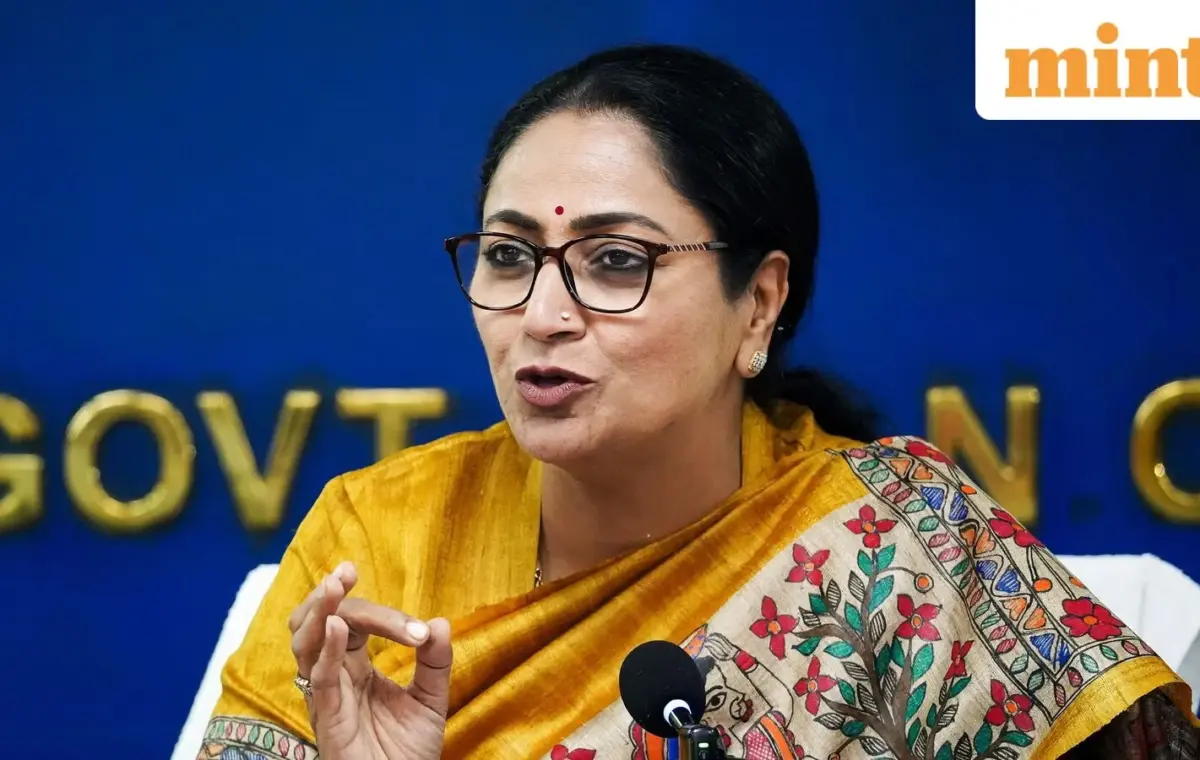
The Delhi government has set a target of providing free 3-kilowatt (kW) rooftop solar systems to around 2.30 lakh households with monthly electricity consumption of up to 400 units by March 2027, Chief Minister Rekha Gupta said on Tuesday.
The target was announced after the Delhi Cabinet approved the revised Delhi Solar Policy. Under the revised policy, eligible domestic electricity consumers will receive rooftop solar systems of up to 3 kW without making any upfront payment, subject to technical feasibility.
“Our target is not only to reduce people's electricity bills but also to support the installation cost of solar panels. The government will provide free rooftop solar panels to all households with a monthly electricity consumption of up to 400 units. The facility will benefit people who could not install rooftop solar panels earlier due to the high upfront cost,” Gupta said at a press conference.
Describing the initiative as a major move towards changing Delhi's energy landscape, Gupta said the government plans to install solar systems on 2.30 lakh residential rooftops and add 500 MW of rooftop solar capacity by March 2027.
The Delhi government will provide a capital subsidy of ₹78,000, matching the ₹78,000 subsidy offered by the Central government. It will also provide an additional top-up to bridge the gap between the subsidy amount and the tendered cost of the solar installation, the chief minister said.
The enhanced financial assistance will be provided as a one-time, generation-based incentive rather than in instalments, as was the case previously.
Gupta also clarified that the Delhi government's existing electricity subsidy will remain in place.
Eligible households will be able to avail themselves of the electricity subsidy while also benefiting from savings generated by their rooftop solar systems. A 3 kW solar installation can generate approximately 300 units of electricity.
For instance, a household consuming 200 units could use the electricity generated by its solar system and export the surplus power to the grid. This would allow consumers to benefit from free electricity while also participating in power generation and earning from surplus electricity, Gupta said.
Electricity exported to the grid will be compensated at the average power purchase cost of the concerned distribution company, according to a statement issued by the Chief Minister's Office.
Consumers using up to 200 units a month will continue to receive the existing 100 per cent electricity subsidy even after installing rooftop solar systems.
Under the revised arrangement, eligible consumers will not be required to make any payment towards installation. Households consuming up to 200 units will retain their existing subsidy and be eligible for incentives linked to the electricity saved by their solar systems.
Previously, consumers were required to bear the initial installation cost and receive incentives over subsequent years. The revised policy changes this structure by making financial assistance available at the beginning, reducing the initial economic burden on households, the government said.
Solar systems installed under the scheme will also be operated and maintained free of charge by the selected vendors for five years.
After the initial five-year period, consumers can choose maintenance and insurance services offered through electricity distribution companies according to their requirements.