You have reached your maximum number of saved items.
Remove items from your saved list to add more.
Australia’s Border Force has been asked to seize fake NeeDoh toys, as its manufacturer takes extraordinary steps to stop a barrage of dupes copying the global children’s squishy toy craze from flooding the local market.
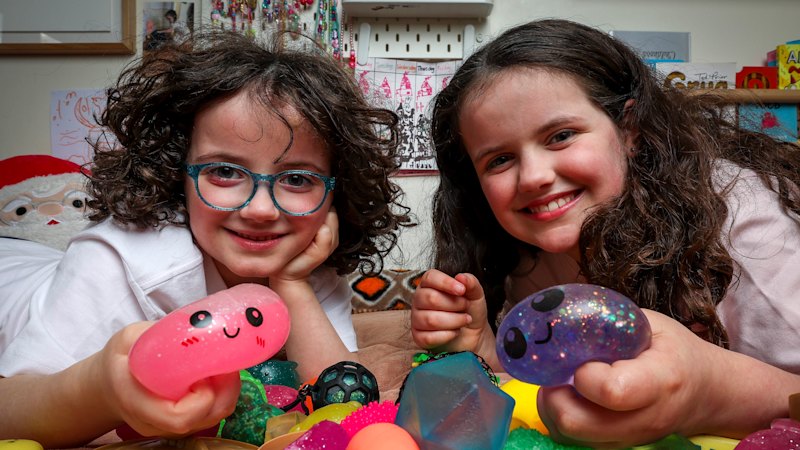
The gel-like cubes, dumplings and assorted fruit – all “squishies”, which kicked off from the original and most popular brand, NeeDoh – have children obsessed. Parents are baffled. But with viral popularity comes increasing scrutiny. What’s in the toys? Are they safe?
Several children globally, including a 10-year-old Australian girl, have reported serious injuries from squishies exploding and burning them, and now NeeDoh’s manufacturer is facing a US class action alleging it failed to warn consumers about the risks of the toys when exposed to heat.
This masthead can reveal that Schylling, the US company that manufactures NeeDoh, and its licensed Australian distributor, William Valentine, have approached Australian Border Force, raided factories in China and issued cease-and-desist letters to retailers selling fakes as they try to stop an influx of fake squishies coming in “thick and fast”.
Schylling’s ultimate owner, listed US-based private equity company Gladstone Investment Corporation, also invests in an American defence company that says: “The United States and its allies must be ready to fight and win – anywhere, anytime.”
Squishies have probably been around since humans learnt to work with the sap of the rubber tree. In a simpler age, kids filled balloons with rice to make malleable balls. Now, thanks to the modern chemical industry, squishies come in all shapes and varieties: blue, green, soap, chicken. Schylling, the 51-year-old Massachusetts-based toy maker, launched NeeDoh in 2017, and the toy sold reasonably well.
Then, in January, “it just went absolutely mental,” recalls Adele Dyson, owner of Adventure Awaits in the northern Victorian town of Numurkah. “We sold a thousand units in like two days.”
In early 2026, Schylling released an advent-calendar-style multipack – and the toys suddenly became viral hits.
“Everyone is just obsessed with them,” says Katie Hennessey, a Brisbane-based 18-year-old who has amassed more than 200,000 followers on TikTok with posts showing her unboxing squishies. “I don’t know why – they come in so many fun textures, shapes and colours. You want to collect all the different textures … which just makes it really fun.”
Dyson says “every single primary-aged kid or teenager, they want one, and they are harassing their parents, the stores, the staff to get one. It is next level. Some of the messages we have received have been out of control – begging for NeeDohs.” She’s had people come to her shop from as far as Darwin trying to get NeeDohs.
Schylling has been struggling to get new stock out to retailers. A pop-up on its website says it has closed its own online store. “Demand for NeeDoh and our other products is exceptionally high right now, so we’re taking a short pause on new orders.”
Jumping on the trend, other brands produce squishies too, including Smooshos Mystery Dumplings and Mushykinz Jelleez, which are also popular.
Google search volume for NeeDoh is up 2800 per cent on 2025, and “squishie” is up 5000 per cent. Some schools have had to ban the toys because kids were spending too long trading them, says Hennessey.