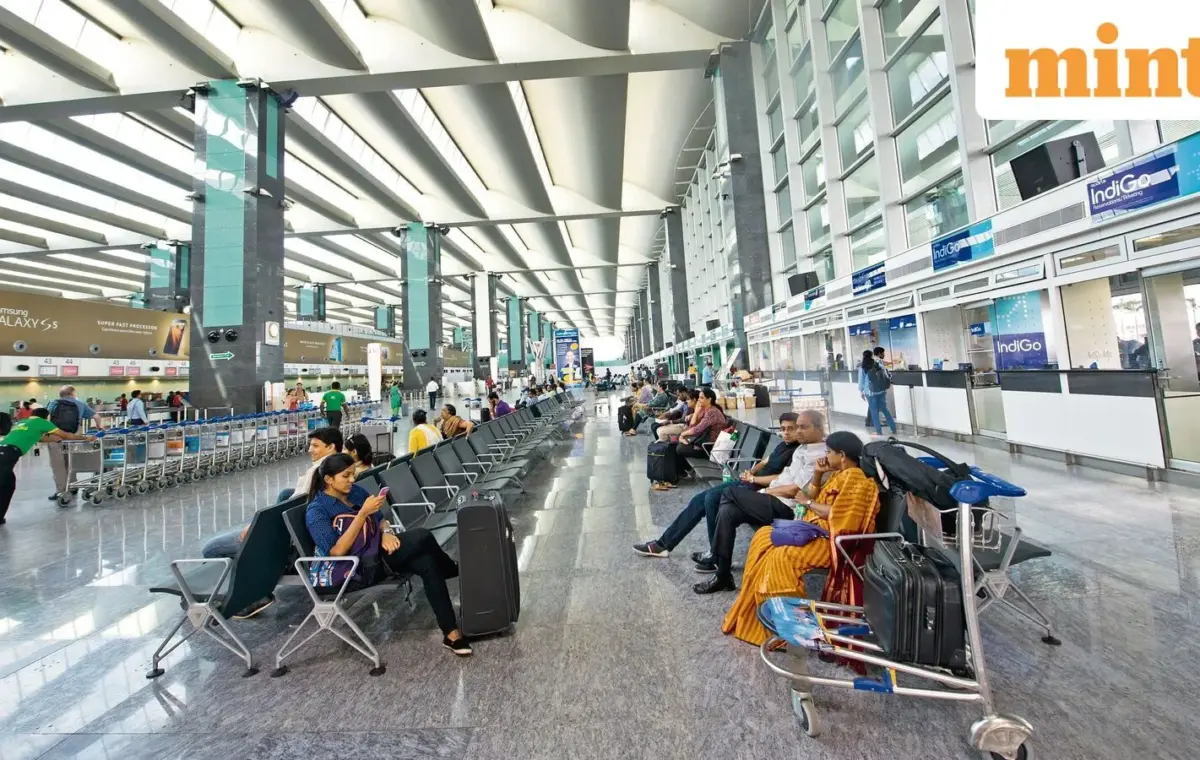
NEW DELHI: India’s airport operators are navigating FY27 with a problem that has less to do with demand for air travel than with airlines’ ability to put planes in the air.
After a bruising year for airlines, capacity constraints, fleet shortages and geopolitical disruptions are limiting passenger growth at airports even as India’s underlying demand for air travel remains strong.
The pressure is forcing airport operators to look beyond passenger traffic for growth, with cargo, maintenance, repair and overhaul (MRO), and other non-aeronautical businesses becoming increasingly important as new airport capacity takes longer to ramp up.
At the same time, operators are continuing to invest on the expectation that airline capacity will eventually catch up with passenger demand.
“The aviation Industry in India is facing geopolitical shocks,” said aviation expert Amit Mittal, director, Aerointellect Aviation, a Delhi-based consultancy firm.
“Airport operators have an opportunity to look at other streams of revenue and monetisation such as ATO (approved training organisation), MRO, FTO (flight training organisation), warehouses, cargo, FBO (food business operator) and airport EPC, apart from passenger-centric revenue growth,” Mittal added.
GMR’s annual report pegged Indian airlines' net losses at ₹32,000-34,000 crore in FY26, against about ₹5,500 crore in FY25, and expects losses to widen to ₹36,000-38,000 crore in FY27. It cites rupee depreciation, elevated jet fuel prices, higher lease rentals and softer passenger traffic as key pressures.
“The airline industry is in financial distress and industry net losses are forecast to escalate to ` 360-380 Bn in FY 2027,” GMR said.
IndiGo and Air India group, including the low-cost carrier Air India Express, which together account for more than 90% of India’s domestic airline market, reported losses of over ₹22,000 crore and nearly ₹2,400 crore in FY26. Privately held Akasa Air and SpiceJet—the two other major airlines—are yet to declare their annual numbers.
“Ongoing restructuring and fleet reduction by budget carriers has resulted in lower domestic capacity utilization at the airports,” the GMR report noted. “Supply-side constraints also persisted: about 99 aircraft remained grounded across selected airlines at March-end."
The Noida International Airport said that as a newly operational airport, its focus is on maintaining stable and reliable operations while expanding connectivity in a phased manner. “We continue to work closely with our airline partners to grow the route network in line with airline plans and passenger demand. The long-term fundamentals of the Delhi-NCR and Western Uttar Pradesh region remain strong, and our long-term outlook is unchanged,” a spokesperson told Mint.
GMR Airports and BIAL did not respond to queries.
The impact is visible in GMR’s traffic numbers. Its airports handled 121.6 million passengers in FY26, barely 1% higher than 120.6 million a year earlier. Cargo, however, remained resilient, with volumes across GMR-operated airports rising to 1.33 million tonnes.
GMR’s Indian airport portfolio has also grown. Besides its established operations at Delhi, Hyderabad and Mopa, the group has added Nagpur and Bhogapuram to its portfolio. It is also evaluating the proposed privatization of 11 regional AAI airports and potential airport development opportunities in Chennai, Kolkata and Pune.
Noida is another example of how airline constraints are playing out at airports.