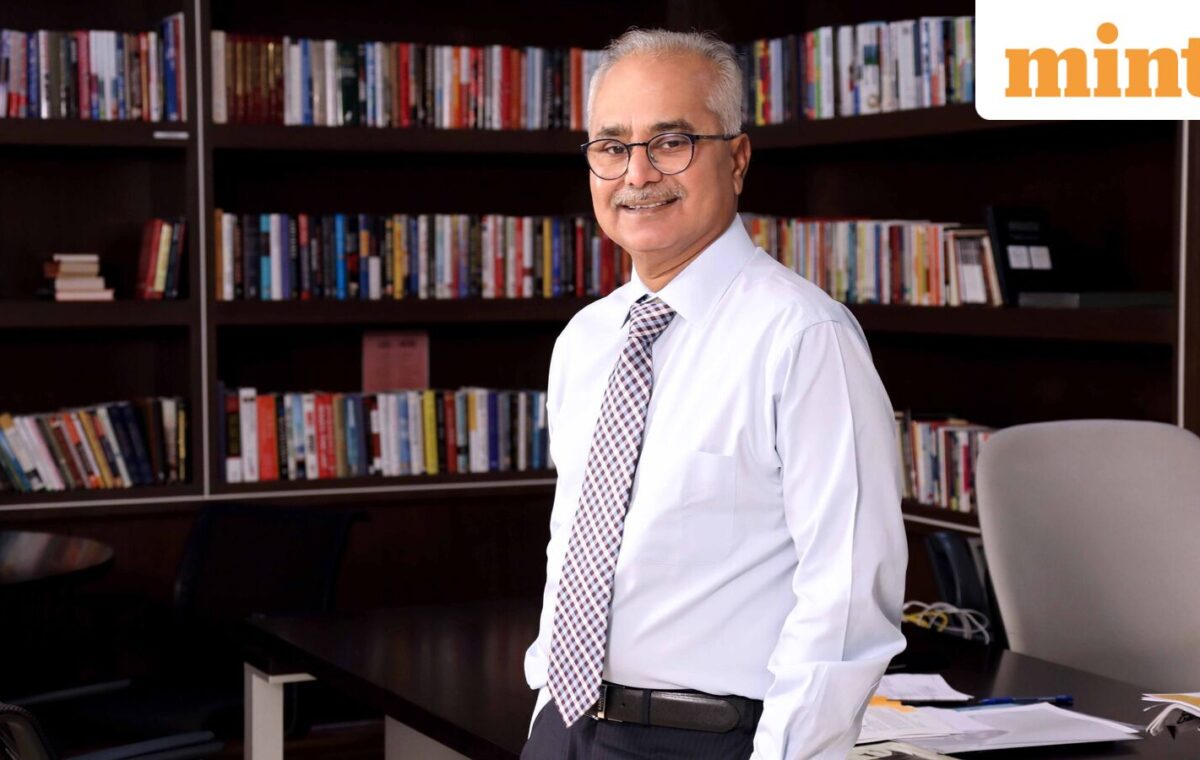
Mumbai: There is a particular silence that follows a great run of luck. Dr Reddy’s Laboratories Ltd (DRL) heard it in July, when it reported that first-quarter profit had fallen by nearly 70%, with North American sales—long the company’s engine—down by more than a third. To read the headlines, you would think a champion had stumbled. To listen to G.V. Prasad, the Hyderabad drugmaker’s co-chairman and managing director, is to understand that the music simply stopped.
The bad news came with a name attached: semaglutide. DRL had been racing to launch a generic of the molecule behind diabetes and weightloss drugs Ozempic and Wegovy, the most coveted franchise in medicine—in Canada. During scale-up, a batch of the active ingredient failed validation. That botched batch resulted in a ₹2.4 billion charge; a launch meant to deliver about 12 million pens in its first year was cut to 6–7 million. On top of that bit came war-inflated freight and solvent costs.
Vishal Manchanda, who tracks the company for Systematix Institutional Equities, described the June quarter performance as “materially weaker-than-expected”. His verdict was a downgrade in all but name: a ‘Hold’, a target of just ₹1,213, and a warning that the company’s next two years hinge on executing the very launches that have just tripped.
For four years, Dr Reddy’s had sold lenalidomide—the cancer drug the world knows as Revlimid—under a settlement that let only a handful of copycats into the American market at a time. By Manchanda’s estimate, Indian generic makers extracted $4–5 billion from the drug between 2022 and 2026, with Dr Reddy’s the biggest beneficiary.
The catch was in the calendar: the same settlement allowed those companies to sell without any volume limit from 31 January 2026. What looked like the lifting of a ceiling was actually the end of the shelter—the caps came off, the crowd rushed in, prices fell, and the windfall thinned. Ask Prasad about it and he is philosophical.
“Those are [winning] lottery tickets,” he says. “You don’t get them predictably. You use the cash to build your muscle. You can’t think, I’ll have a lenalidomide every year.” He goes further, dismantling the very drug that made him rich. “It’s nothing great. It’s a generic product. It was an isomer of thalidomide,” he says—thalidomide is the compound once infamous for causing birth defects. “But just imagine how much money it made for generic companies. How many companies made money, and for how long?” And then the line that frames everything: “It’s never going to happen again.”
That is the dilemma at the centre of Dr Reddy’s, sharper than its serene balance sheet lets on. The company is at the edge of its own success with a presence in 66 countries, a net cash surplus and FY26 revenue of nearly ₹33,600 crore. Its most lucrative arrangement has ended, the market that made it big is turning against it, and the one road everyone agrees leads to lasting value—real drug innovation—is the one Prasad is least willing to promise.
None of this means the generics engine is dying. But the easy, outsized wins are growing rarer: fewer blockbuster molecules are coming off patent, and every one that does now draws a crowd.
Rajeev Nannapaneni, chief executive of Natco Pharma, frames the shift precisely: the opportunities in small-molecule generics have not shrunk, but the innovators’ money has moved on—toward niche treatments for late-stage cancers or specific genetic mutations, not the mass-market medicines that once minted fortunes. “Nobody is really trying to do a better statin, or a better hypertension drug… which are mass molecules,” he says.
Apart from the GLP-1 weight-loss drugs, cutting-edge research has migrated to hyper-specific therapies. Revlimid, in that sense, was a crest—and its passing is why the industry’s biggest names are scattering toward different exits: Sun Pharmaceutical Industries Ltd, India’s largest drugmaker, has gone into new geographies, while Glenmark Pharmaceuticals Ltd and Wockhardt Ltd have made the long gamble of original research.
From the outside, Dr Reddy’s has always been harder to read than its peers. Sun Pharma has the swagger of the serial acquirer; Glenmark and Wockhardt made concentrated bets on novel molecules; Cipla Ltd has largely declined to chase the brutal US generics market. Each tells a clean story.
Dr Reddy’s tells several at once—a generics and API house, an early and unproven oncology innovator, and, since it bought a clutch of European nicotine-replacement brands from the UK-headquartered Haleon Plc, a consumer-health company, too. (APIs, or active pharmaceutical ingredients are the core components in a drug that make the medicine work.)
Prasad organises the sprawl into three legs, and is frank about how uneven they are. “We have scale in generics and APIs. We don’t yet have scale in consumer health, but we have a nice, profitable, stable business. In our innovation-driven business, we are still in the early stages.”
The Revlimid cash, at least, has not sat idle. Prasad has funnelled it into bets far from the US price war: the European nicotine-replacement business behind the new consumer-health arm, a biosimilars programme, drugs in-licensed from Chinese biotech, a nutrition venture with Nestlé, and a $100 million contract-manufacturing arm.
Prasad does not hide the erosion of the founding identity. “We are still a deep science and technology company—I’d like to believe that,” he says, then qualifies it: “We are not as distinctive as we used to be. I hope we can come back and claim that position of being the most scientifically driven pharmaceutical company from India.” The self-assessment is blunt: “I’m not very happy with where we are today. But that is how we compete.”