Demands driven by global markets, while impacts are felt by local riverside communities, researchers say
I would like to be emailed about offers, events and updates from The Independent. Read our Privacy notice
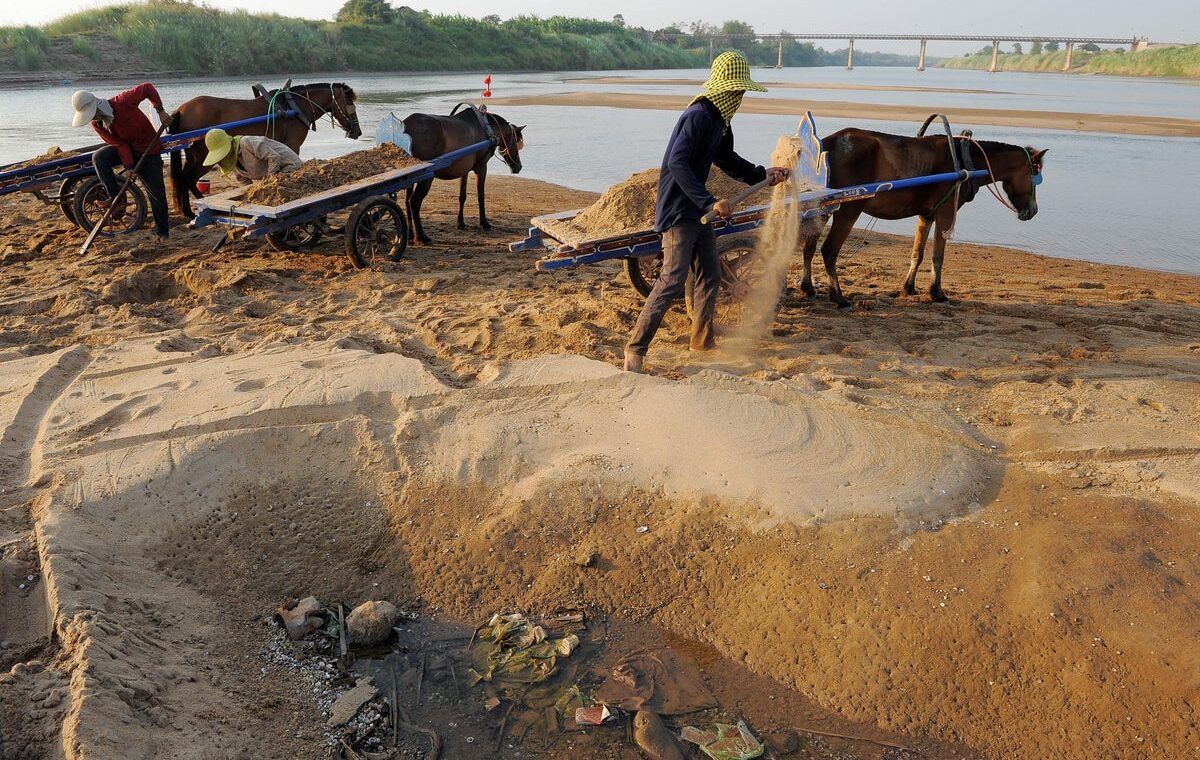
Sand from rivers across the globe, especially in Southeast Asia, is being stripped off at rates much faster than they are replenished, posing threats to riverside communities, warns a landmark new review of studies.
The sand extracted this way is a key ingredient in making concrete, building roads, as well as for land reclamation and building cities and their infrastructure globally.
But a map of all the places where sand mining is taking place and how much sand and gravel are removed from each of these places remains unclear.
An international team of researchers has now warned that river sand and gravel mining is a growing global sustainability challenge linked to urbanisation, and the consequences threaten the security of communities living along rivers and deltas.
It deepens riverbeds, weakens riverbanks, lowers groundwater levels, worsens water quality, and pushes saltwater further inland in coastal and delta regions, according to the review of over 400 studies.
River sand mining can also damage bridges, roads and buildings, harm river habitats, and affect farms, fisheries and livelihoods, scientists say.
“Sand is essential to the growth of cities, including in Singapore and Southeast Asia, but its extraction can place pressure on rivers and the communities that depend on them,” said Edward Park from Singapore’s National Institute of Education (NIE).
“Our review shows that governments can better manage this by treating sand mining as a river-basin issue, using satellite monitoring, field surveys and sediment-budget analysis to decide where extraction can take place, how much can be removed, and which areas should be protected,” Dr Park said.
As cities expand and countries build more housing, the demand for river sand is growing steeply.
Yet, countries still lack the basic data needed to manage river sand mining, researchers say.
Only 27 per cent of the studies reviewed quantified the extent of extraction.
“You cannot solve a problem you cannot see. When sand mining is poorly tracked, governments are often left responding after rivers have already changed and communities have already been affected,” Dr Park said.
For instance, more than 50 million metric tonnes of sand were extracted from the Mekong River in 2024, compared with a permitted amount of about 20 million metric tonnes.