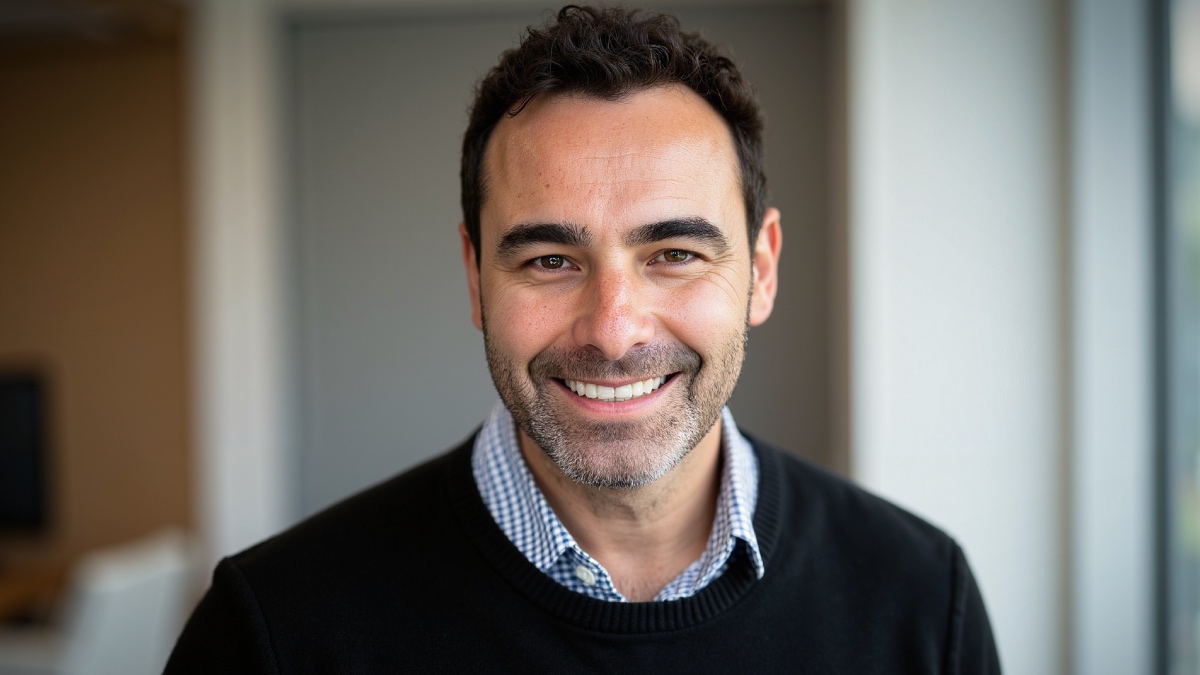
Richard Valente, Vice President Customer Experience Strategy
TP’s Richard Valente argues Australian businesses should consider outsourcing revenue growth entirely. It’s a genuinely contestable idea, here’s his case.
As FY27 budgets are being locked in, businesses are reassessing where they invest to build commercial capability. One idea gaining attention, at least according to those who sell it, is what’s being branded “Revenue-as-a-Service,” or RaaS: outsourcing not just back-office functions, but the sales function itself.
Richard Valente, Vice President Customer Experience Strategy at TP in Australia, argues the model is gaining real traction. According to Valente, businesses are looking for scalable ways to lift sales performance, improve conversion rates and generate more predictable revenue pipelines, without significantly growing fixed headcount.
Australian businesses have long been comfortable outsourcing operational and back-office functions. Revenue generation, by contrast, has traditionally stayed in-house. Valente’s argument is that this is starting to shift, as businesses look for ways to grow without adding fixed costs, including through AI-enabled tools. Rather than relying solely on internal sales teams, the RaaS model he describes gives businesses access to an outsourced revenue function spanning lead generation, sales development, customer acquisition, account management, retention and growth.
“For many organisations, the challenge isn’t finding opportunities to cut costs anymore, it’s finding ways to generate sustainable revenue growth while maintaining efficiency,” Valente said. “Revenue-as-a-Service allows businesses to access specialised sales expertise, advanced technology and proven revenue-generation tools without having to build the infrastructure themselves.”
Valente frames the model as covering the full customer lifecycle, not just the top of the sales funnel. “The most successful organisations no longer think about sales as a stand-alone function,” he said. In his view, businesses are increasingly looking at the entire revenue ecosystem, aiming for a connected, data-driven and scalable approach to growth, spanning prospecting and acquisition through to onboarding, retention and expansion.
Valente points to AI and automation as central to how this model works in practice, helping identify higher-value prospects and improve sales productivity. “We’re seeing AI become a force multiplier for sales organisations,” he said. “It helps teams identify opportunities faster, automate repetitive tasks, improve forecasting and spend more time focusing on customer relationships and revenue outcomes.”
On TP’s own numbers, the model is a meaningful part of its business. TP Group’s chief executive has said the company’s Revenue-as-a-Service offering now accounts for around 7 percent of the company’s overall revenue.
Valente’s framing is that the conversation is shifting from how many people to hire toward how quickly a business can access sophisticated revenue capability. “The businesses that succeed over the next decade will be the ones that can adapt quickly, leverage technology effectively and access specialised expertise when they need it,” he said.
It’s worth reading that argument for what it is: a case made by an executive at a company that sells outsourced revenue services, rather than an independently verified account of how widely Australian businesses are actually adopting the model. Outsourcing a company’s sales function is a significant decision with real trade-offs, including control over customer relationships, brand consistency and the loss of in-house commercial knowledge. Business owners weighing it up for FY27 would be well served treating this as one perspective in that decision, not a verdict on where the market is headed.
Keep up to date with our stories on LinkedIn, Twitter, Facebook and Instagram.
Yajush writes for Dynamic Business and previously covered business news at Reuters.
How telematics and fleet technology help businesses cut costs, reduce downtime, improve productivity, and make smarter operational decisions.
Essential guide for Australian SMEs on navigating the AI search revolution and maintaining online visibility in 2026.