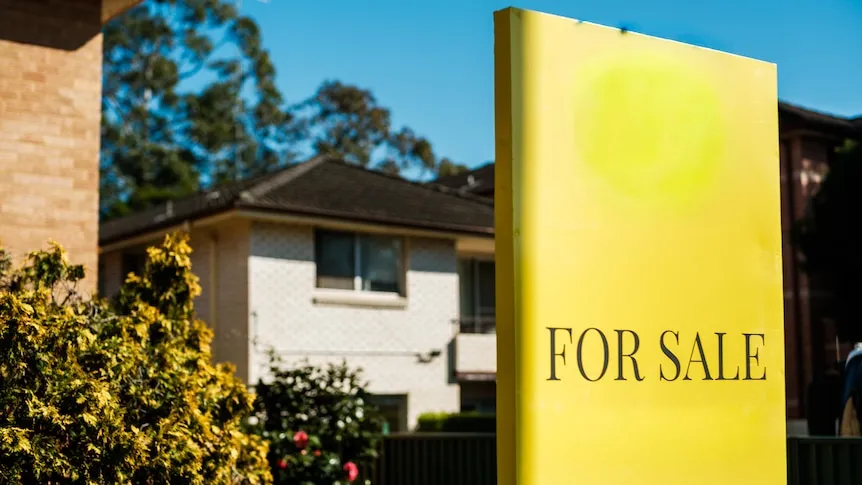
Even with recent declines in property prices, national housing affordability has hit an all-time low. (ABC News: Kelsey Reid)
Housing affordability rates are at a record low, with households earning $125,000 able to afford around one in every 10 homes sold.
Mortgage repayments as a share of household income are also at their highest rate since 1989.
Economists say affordability will remain a significant challenge until there is a meaningful increase in housing supply.
Housing affordability has fallen to its lowest rate on record, with households earning a typical income only able to afford about one in every 10 homes sold across the country.
According to data from realestate.com.au, a household earning a median income of about $125,000 a year could afford just 12 per cent of all homes (houses and units combined) sold nationally in the last financial year.
Despite recent falls in property values, stronger prices last year and recent hikes in interest rates have powered the result and reversed the "marginal improvement" from the 2025 financial year.
The company's senior economist, Angus Moore, said housing affordability is "challenged" as the central bank has increased the cost of borrowing money and repayments on loans.
"The three RBA interest rate hikes made in February, March and May increased mortgage rates and further constrained household borrowing capacity amid an already difficult cost-of-living environment," he said.
"Looking ahead, affordability may improve marginally if home prices continue to soften, but this is unlikely to be a turning point for many buyers.
Property price declines of 7 per cent will not solve Australia's housing affordability issues, NAB chief economist says.
The figures included in the report were based on a household spending 30 per cent of their gross income on mortgage repayments, with a 2.5 per cent buffer, meaning a household earning just over $125,000 annually could afford to make loan repayments on just 12 per cent of homes sold in the past year.
The data also relies on the median household income instead of the average household income.
For example, if the nation was made up of 99 households ranked from lowest-earning to highest-earning, the amount earned by the 50th one would be the median.
An average figure, however, would add up the earnings of all the 99 and divide them by 99, meaning the result is skewed by some wealthy households. According to analysis of HILDA data by the Grattan Institute, the average Australian household earns $161,000.