You have reached your maximum number of saved items.
Coles will cut ties with Palantir, the controversial US data giant whose software underpins American deportation raids and battlefield targeting systems.
The supermarket has confirmed its contract with the company will not extend beyond 2027, ending a partnership signed in early 2024 that gave Palantir access to more than 10 billion rows of data covering every store, every shift and each of the retailer’s 120,000 employees.
“Coles and Palantir have agreed to conclude their partnership after three years of collaboration,” the two companies said in an identical statement. Coles said a transition plan was under way and the final timing was not settled.
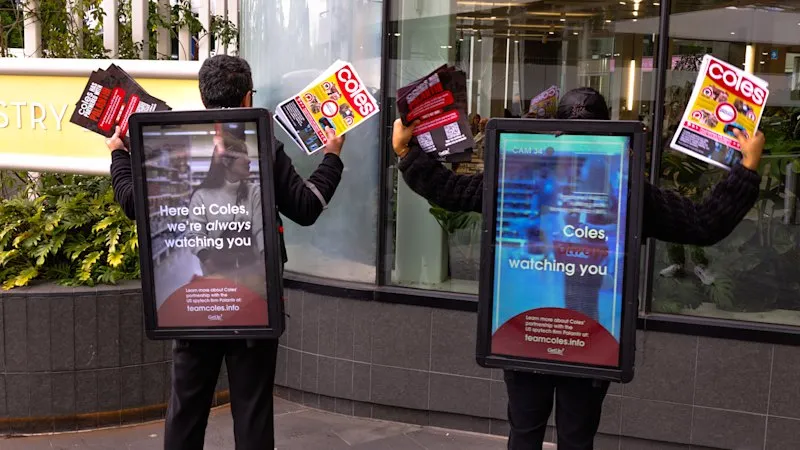
The confirmation follows a campaign launched in February by activist group GetUp, which claimed the outcome as a win.
“Nobody should need a national campaign to find out whether military-grade surveillance tech is watching them buy bread and milk,” interim chief executive Paul Ferris said.
“It’s a shame it took 85,000 people, 700 billboards and a shareholder resolution before Coles did what it should have on day one.”
Neither company would say when the decision was made.
The campaign gathered more than 85,000 signatures and put digital billboards outside close to 700 stores. One video accusing Coles of watching its shoppers was viewed 3 million times.
Palantir, co-founded by Peter Thiel, built its business inside the US national security apparatus and sells to militaries, intelligence agencies and Immigration and Customs Enforcement. Thiel has said he no longer believes freedom and democracy are compatible. The company is worth about $US330 billion ($459 billion).
Its chief executive, Alex Karp, holds a doctorate in social theory from a German university, practises tai chi, and has published a manifesto arguing Palantir is the democratic West’s best hope of staying ahead of authoritarian rivals.
Surveillance technology has become a flashpoint in Australian retail since the Administrative Review Tribunal ruled in February that Bunnings could keep using facial recognition to fight theft, while affirming it had breached privacy law by failing to tell customers.
Coles has rejected the surveillance characterisation throughout, and says the campaign traded in misinformation.
A spokesman said the software was used for rostering, store operations and supply chain planning, and ran inside Coles’ own environment under Coles controls.
“Palantir does not control the data, nor can it independently repurpose it,” the spokesman said.